WASHINGTON — War Secretary Pete Hegseth said Monday that American ground forces are not currently deployed inside Iran but declined to rule out the possibility of deploying troops there in the future as the conflict with Tehran continues.
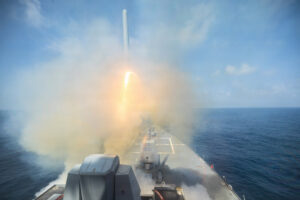
At a Pentagon press briefing alongside Joint Chiefs Chairman Gen. Dan Caine, Hegseth described the ongoing U.S. and allied military campaign against Iranian targets as “laser-focused” and designed to degrade Tehran’s missile, naval, and other strike capabilities. He reiterated that the operation is not intended to be “endless” or resemble large-scale occupations such as the Iraq war, while stressing that the mission’s objectives remain clear and time-bound.
When specifically asked whether U.S. troops were fighting on the ground inside Iran, Hegseth said, “No,” but added that he would not engage in “the exercise of what we will or will not do” regarding future military options. The defense secretary called it “foolishness” to publicly outline potential future military decisions and stressed that revealing such details could undermine strategic flexibility.
Hegseth’s remarks come amid heightened conflict in the region, including U.S. and Israeli strikes on Iranian military infrastructure and subsequent Iranian missile and drone attacks on U.S. forces and allied positions across the Middle East. The widening violence has sparked domestic political debate in Washington over the scope of U.S. involvement and congressional war powers, even as senior officials emphasize that ground troops are not currently part of the operations. (RELATED: Trump Says US Destroyed 9 Iranian Warships In Escalating Conflict)
As The Hill reports:
Hegseth referenced his experience fighting in Iraq, saying Trump would not repeat the mistakes of the past.
“You don’t have to roll 200,000 people in there and stay for 20 years. We’ve proven that you can achieve objectives that advance American interests without being foolish. Now, will we be bold about it? Are we going to be decisive about it? Put months and months of planning into what kind of effects we want to achieve? Absolutely,” he said.
“But going forward, why in the world would we tell you, the enemy, anybody, what we will or will not do in pursuit of an objective.”
Hegseth said the objectives of the military operation were clear: “destroy Iranian offensive missiles, destroy Iranian missile production, destroy their navy and other security infrastructure, and they will never have nuclear weapons.”
Analysts and lawmakers continue to closely monitor the U.S. military posture following more than 1,000 aerial sorties. While Hegseth’s comments make clear that no American combat units are currently inside Iran, his refusal to categorically rule out such a step underscores the administration’s intent to retain the strategic initiative as the conflict evolves.
READ NEXT: Massie Calls Iran Strikes Unconstitutional — Here’s The Legal Reply