

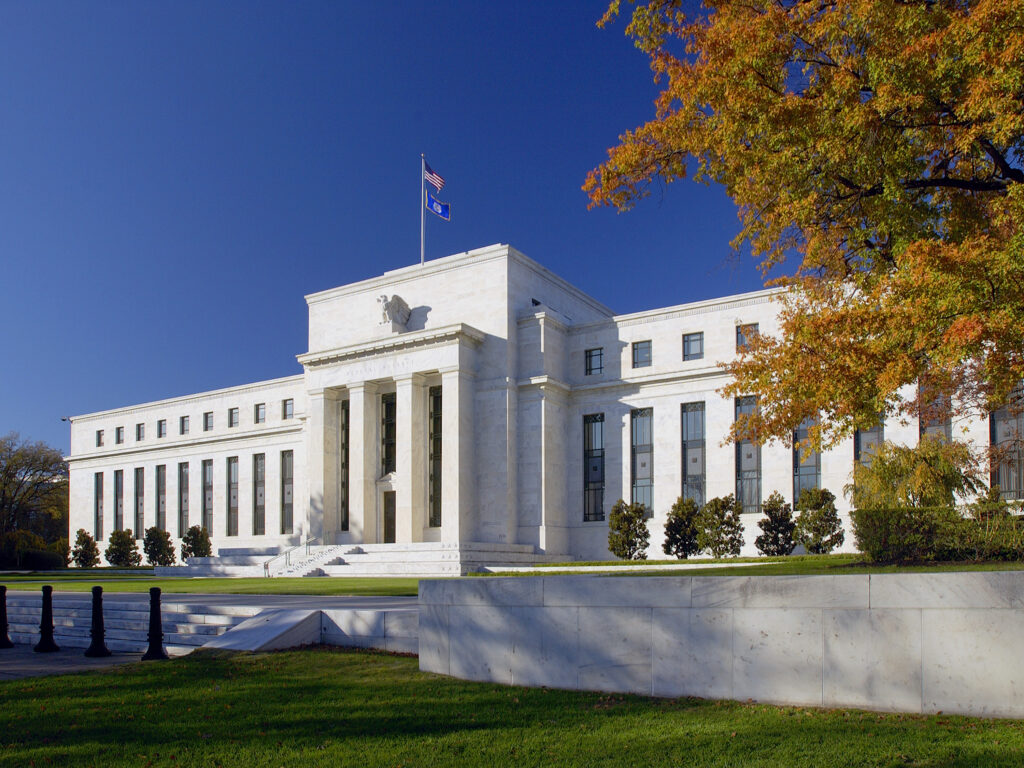
In an unusual declaration of defiance, Federal Reserve Chair Jerome Powell recently announced that he would not resign if President Donald Trump requested him to step down. Powell’s bold statement is not just a surprising show of confidence; it reveals a disturbing level of self-assuredness in the face of policy failures and mounting economic challenges. President Trump has both the authority and, arguably, the duty to remove Powell from his position to safeguard the stability of the U.S. economy and better align the Federal Reserve’s leadership with the nation’s current priorities. While the established statutes governing Federal Reserve appointments do not define what constitutes “cause” for firing, the president could leverage his dissatisfaction with Powell’s performance and his failure to meet the Federal Reserve’s mandate as sufficient grounds for dismissal. Powell’s insistence on remaining at the helm only underscores a troubling awareness that his policies are not producing the desired results, an implicit admission that he fears the reckoning he may well deserve.
The President’s Authority to Remove the Fed Chair
According to the Federal Reserve Act, the president may remove a member of the Board of Governors, including the chair, “for cause.” However, the legislation lacks specifics on what constitutes “cause,” thus granting the president considerable latitude in interpreting it. The ambiguity in the statute allows the president to reasonably argue that Powell’s failure to fulfill the Federal Reserve’s dual mandate—maximizing employment and stabilizing prices—constitutes justifiable cause for removal. In fact, this discretion is essential; the president, as the chief steward of the nation’s executive branch, must be able to address substantial performance deficiencies at the Fed, especially in times of economic distress or persistent policy misalignment.
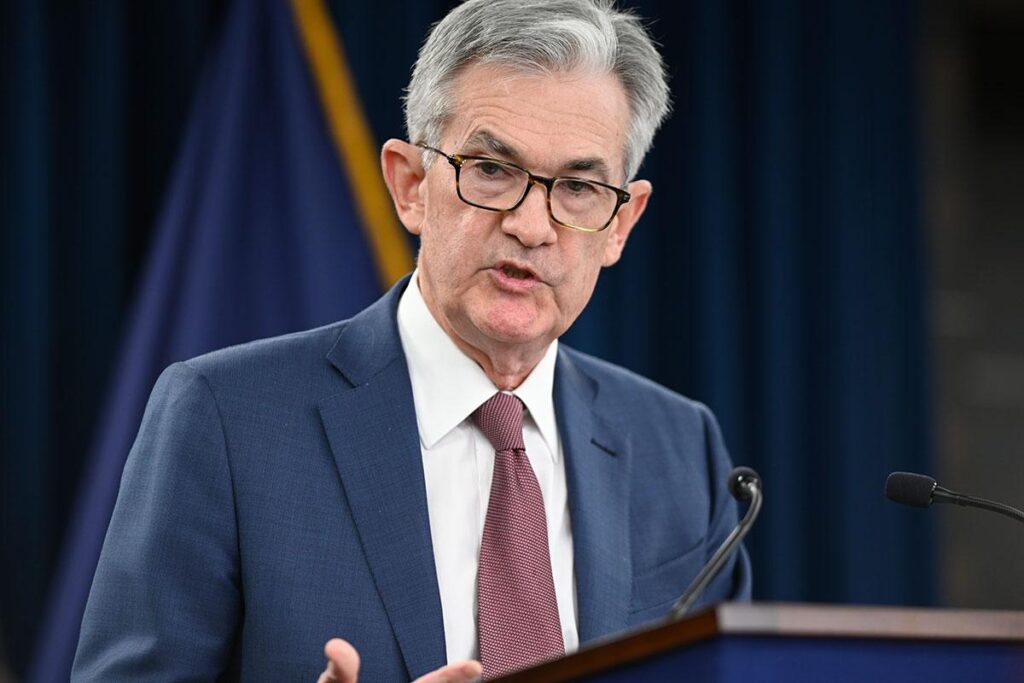
While some critics contend that allowing a president to remove the Fed chair weakens the institution’s independence, this perspective overlooks the primary duty of any officeholder: results. A degree of independence does not equate to immunity from accountability, particularly when the person entrusted with monetary policy has fallen short on the very objectives he is tasked to uphold.
A Failed Record on Inflation and Employment
Jerome Powell’s tenure as Federal Reserve chair has been marked by recurring policy missteps that have directly contributed to inflationary pressures while failing to spur robust, sustainable employment gains. Under Powell’s leadership, the Fed adopted a dovish approach during and after the pandemic, which led to loose monetary policy even as inflationary signals mounted. While he may argue that stimulus was necessary to combat economic stagnation in the early stages of the crisis, Powell’s delay in tapering and his reluctance to act decisively have placed an undue burden on the American public. Families across the nation continue to grapple with rising costs, from groceries to housing, while wages remain stagnant in real terms.
Inflation is now the persistent, uninvited guest in the homes of millions of Americans. The Federal Reserve’s mandate requires it to stabilize prices, but Powell’s policies have exacerbated the exact volatility he was charged with preventing. By allowing inflation to spiral, Powell has effectively transferred the costs of the Fed’s inaction onto households and businesses, disproportionately harming low- and middle-income families. His inability to anticipate or respond adequately to inflationary pressures has rendered his leadership ineffective and costly to the very public he is meant to serve.
The other half of the Federal Reserve’s dual mandate—promoting maximum employment—has also been compromised. Rather than fostering conditions conducive to lasting job creation, Powell’s monetary policy has generated economic uncertainty that discourages business investment. As rates now climb to control inflation, the cost of borrowing is sharply curtailing growth, putting businesses and prospective employees in an economic vise. The result? Employers hesitant to hire and an economy in perpetual limbo.
The Legal and Justifiable Path Forward
The legal framework surrounding the Federal Reserve’s governance supports a strong argument for President Trump to dismiss Powell for cause. Courts have traditionally respected the president’s discretion when it comes to interpreting statutory language that lacks strict definitions. “For cause” is inherently subjective, allowing the President to weigh his own judgment on Powell’s performance without rigid benchmarks. Powell’s public declaration that he would not resign, even if asked, is telling; it signals a keen awareness of his own shortcomings and a tacit admission that his policies do not align with the administration’s goals.
The choice to remove Powell would not only be lawful but would also serve as a vital precedent for holding Federal Reserve leadership accountable. The mandate of price stability and maximum employment is not merely ceremonial; it is a charge that demands concrete results. Should a Fed chair fail to deliver on this mandate, it is the president’s prerogative—indeed, his responsibility—to intervene and restore effective leadership to an institution of critical national importance.
The Case for Cause: Powell’s Own Statement as Evidence of Guilt
Powell’s decision to publicly preempt any calls for his resignation is, at best, highly irregular and, at worst, an admission that he is falling short of the president’s expectations. This defensive posture betrays an awareness that his performance is under scrutiny. Why would Powell feel the need to assert his intention to remain unless he suspected that his leadership was inadequate or unpopular with those empowered to oversee his position? This behavior not only hints at insecurity but also underscores his detachment from accountability.
It is critical for the president to consider that Powell’s declaration reflects a lack of alignment with the administration’s broader economic vision. When a Fed chair is more focused on preserving his position than achieving policy goals, it signals a severe disconnect that threatens the efficacy of monetary policy and the well-being of the American economy. By firing Powell for cause, President Trump would be well within his legal rights to rectify this imbalance and place the Federal Reserve back on a path that prioritizes the American people over institutional complacency.
Conclusion: A Necessary and Justifiable Step
President Trump’s potential removal of Jerome Powell as Federal Reserve chair is not merely a question of executive power—it is a matter of responsibility. Powell’s tenure has been marred by an inability to control inflation, a failure to promote sustainable employment, and an apparent detachment from the administration’s objectives. The ambiguous definition of “for cause” grants the president the discretion needed to address this ongoing failure in leadership, restoring accountability to an office too often viewed as untouchable.
The president has both the authority and the justification to fire Powell. It is an action that would not only reaffirm the expectations of accountability but also send a powerful message: the Federal Reserve chair, like any other public servant, is beholden to the results of his stewardship. Should President Trump choose this path, he would be acting decisively in the national interest, proving that independence does not mean freedom from the consequences of failed leadership.
Sponsored by the John Milton Freedom Foundation, a nonprofit dedicated to helping independent journalists overcome formidable challenges in today’s media landscape and bring crucial stories to you.
READ NEXT: [WATCH] Trump Promises Relentless Crackdown To Wipe Out Brutal Epidemic















The Fed needs to be abolished. It never should have existed. It was created illegally by Eoodtow Wilson while Congress was on Christmas vacation without a quorum.
Need Cause to remove the head of the Fed? OK, here it goes, CAUSE the POTUS wants it done.
The job of monitoring and controlling the economy has been Congresses responsibility since 1776. When was the Fed introduced, during Edward Wilsons term when Congress was out on Christmas vacation. It should have been eliminated long ago. Today Congress is too busy stuffing their pockets to deal with their Constitutional job of controlling the economy. Who is the FED? It is the banking organizations in the USA who conspire to make more money for themselves. Do you trust the banks? If you don’t why do you trust the Fed? Remember we had a stable economy when the Dollar was backed up by gold from 1776 to 1932, then we went off the gold standard. At that time a $20 gold piece (a double eagle) was 1 ounce and worth $20. In 1934 gold was reevaluated at $36 an ounce. Hummm, our first inflation. Value of the dollar dropped to about half of what it was only 2 years before. Why, to pay off WW1 with cheaper dollars worth half as much. Who got screwed, those who financed the war. Then we were on the Silver Standard from 1932 to 1959 where a dollar was worth 1oz. of silver. We quietly got off the silver standard, and look at what happened to the price of silver, it went up even more percentage than Gold did. Oh, Gold went up too. Today the dollar is backed by a promise by the FED, who was the Fed again, the Banks. Remember that trust you quesitoned. Now look at the price of Gold and Silver which has specific value? Oh, but wait, all currencies are valued around the value of precious metals. Its like a large building with every nations currency elevators surrounding it, and as the elevators pass by the floors of precious commodities we see changes. As the elevators go up each commodit is worth more, as the elevators go down the commodies are worth less. Bankers and commoditiy dealers us that concept to amass fortunes in their daily trades while you try to scrape by. In the mean time the dollar you had yesterday goes down in value due to the descent of the elevator and what you wanted to buy will now cost more. Who is controlling this, the bankings of the world including our own special people at the FED. Feel confused or screwed, its natural because we live in a bubble created to cover up their actions and dealings now that they banks control our economy. Its no wonder they have created a Fort Knox bubble around them so that they seem to have the power to control Congress, and our economy, and ultimately us. Smile and enjoy what Congress did to us who never voted for this to happen.
The job of monitoring and controlling the economy has been Congresses responsibility since 1776. When was the Fed introduced, during Edward Wilsons term when Congress was out on Christmas vacation. It should have been eliminated long ago. Today Congress is too busy stuffing their pockets to deal with their Constitutional job of controlling the economy. Who is the FED? It is the banking organizations in the USA who conspire to make more money for themselves. Do you trust the banks? If you don’t why do you trust the Fed? Remember we had a stable economy when the Dollar was backed up by gold from 1776 to 1932, then we went off the gold standard. At that time a $20 gold piece (a double eagle) was 1 ounce and worth $20. In 1934 gold was reevaluated at $36 an ounce. Hummm, our first inflation. Value of the dollar dropped to about half of what it was only 2 years before. Why, to pay off WW1 with cheaper dollars worth half as much. Who got screwed, those who financed the war. Then we were on the Silver Standard from 1932 to 1959 where a dollar was worth 1oz. of silver. We quietly got off the silver standard, and look at what happened to the price of silver, it went up even more percentage than Gold did. Oh, Gold went up too. Today the dollar is backed by a promise by the FED, who was the Fed again, the Banks. Remember that trust you quesitoned. Now look at the price of Gold and Silver which has specific value? Oh, but wait, all currencies are valued around the value of precious metals. Its like a large building with every nations currency elevators surrounding it, and as the elevators pass by the floors of precious commodities we see changes. As the elevators go up each commodit is worth more, as the elevators go down the commodies are worth less. Bankers and commoditiy dealers us that concept to amass fortunes in their daily trades while you try to scrape by. In the mean time the dollar you had yesterday goes down in value due to the descent of the elevator and what you wanted to buy will now cost more. Who is controlling this, the bankings of the world including our own special people at the FED. Feel confused or screwed, its natural because we live in a bubble created to cover up their actions and dealings now that they banks control our economy. Its no wonder they have created a Fort Knox bubble around them so that they seem to have the power to control Congress, and our economy, and ultimately us. Smile and enjoy what Congress did to us who never voted for this to happen.
We have been needing someone just like Trump now for a very long time. Stupid actions and decisions should always have accountability, if not then stupid people will continue to to do as they wish, even when their jobs should be at stake! Bureaucrats make poor decisions and should held accountable for their idiot actions and be fired and made to pay with their assets if necessary, and or prison or both! We as the citizens of our once great country are sick and tired of the poor sick leadership in most government agencies!
So whatta expect? Of course he’s not gonna quit because ‘ol Jerry-boy “IS OWNED AND OPERATED BY SCHWAB’S WEF, THE ILLUMINATI, BLACKSTONE and MOST LIKELY BY ROTHCHILD FAMILY” and just doing just exactly THE DAMAGE TO AMERICA that these above mentioned participants want to happen in our country so they can create so much chaos that they will be able to come in and TAKE OVER. ‘Ol Jerome Powell is just merely “A BOUGHT N’ PAID FOR HOOD JUST DOING WHAT HE IS TOLD TO DO!”…………………Just like so many other HOODLUMS in D.C.