In a dramatic policy shift, Canada abruptly withdrew its planned 3% Digital Services Tax (DST) targeting major U.S. tech companies, including Amazon, Google, Meta, Uber, and Airbnb. The tax, which was set to take effect on Monday, aimed to levy a 3% charge on revenues from digital services provided to Canadian users by companies with global revenues exceeding €750 million and Canadian revenues over C$20 million. The tax would have applied retroactively to revenues earned since January 1, 2022.
Ottawa’s decision to rescind the tax came after President Trump labeled it a “direct and blatant attack” on the United States on Friday and suspended trade negotiations with Canada. In response, Canadian Prime Minister Mark Carney and Finance Minister François-Philippe Champagne announced the withdrawal of the DST to facilitate the resumption of trade discussions. Carney’s decision came mere hours before the tax was set to go into effect.
As CNBC reports:
The first payments from Canada’s digital services tax, which was enacted last year and applies retroactively to 2022, were initially set to be collected Monday. The tax would have applied to both domestic and foreign tech companies, including U.S. giants such as Amazon, Google and Meta with a 3% levy.
This decision from Ottawa was an about-turn from Canadian officials earlier this month, who said they would not pause the digital services tax, despite strong opposition from the U.S.
Canada’s minister of finance and national revenue, Francois-Philippe Champagne, added, “Rescinding the digital services tax will allow the negotiations of a new economic and security relationship with the United States to make vital progress and reinforce our work to create jobs and build prosperity for all Canadians.”
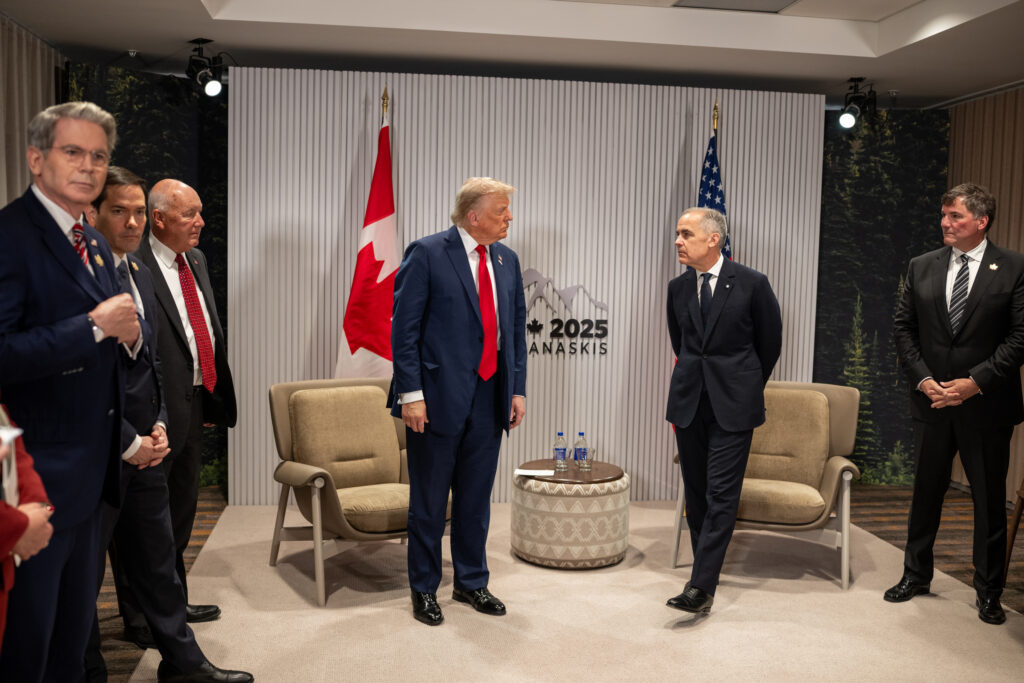
Carney reportedly agreed to aim for a new trade agreement by July 21, 2025, a timeline established during the recent G7 Leaders’ Summit in Kananaskis, Alberta. The Canadian government emphasized that rescinding the DST would support the negotiation of a new economic and security relationship with the United States, aiming to create jobs and build prosperity for Canadians.

The reversal is widely seen as a major diplomatic concession by Canada, with analysts highlighting it as a clear sign of U.S. pressure shaping Canadian policy. Canada’s Finance Ministry emphasized that Carney “has been clear that Canada will take as long as necessary, but no longer, to achieve that deal.”
With trade talks set to resume, Ottawa says it will work to resolve lingering issues with the Trump administration and strengthen its economic partnership with Washington.
READ NEXT: Foreign Leader Targets Trump With Chilling Decree