
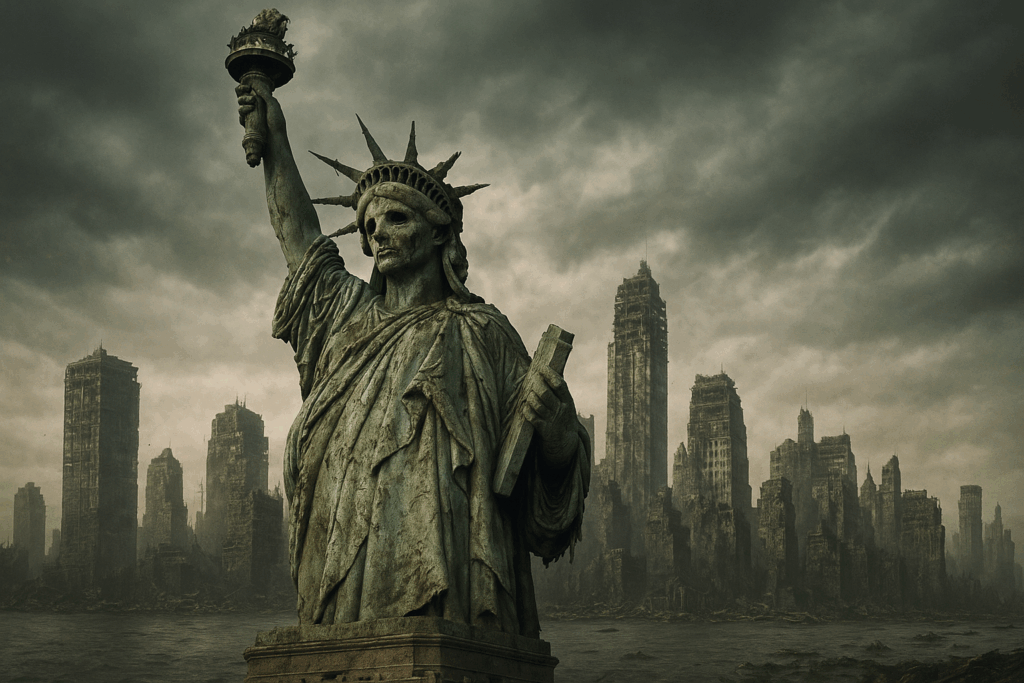
New York City Mayor Zohran Mamdani has unveiled a new tax targeting high-value properties owned by non-residents, marking a significant step in his broader effort to increase taxes on wealthy individuals and reshape the city’s revenue system.
Announced on Tax Day, the policy introduces what is commonly referred to as a “pied-à-terre” tax; an annual levy on luxury properties valued above $5 million that are not used as primary residences. Mamdani framed the measure as a way to address what he described as an imbalance in how wealth tied up in New York real estate contributes to the city.
“These units are often sitting empty,” Mamdani said, arguing that owners still benefit from rising property values and the city’s economic strength without contributing proportionally to its upkeep. He added that the tax is expected to generate at least $500 million annually, funding initiatives such as expanded childcare, sanitation services, and public safety programs.
The proposal specifically targets ultra-high-end properties, including units like the Manhattan penthouse purchased by hedge fund executive Ken Griffin for a record-setting price. Mamdani described the measure as focusing on “the richest of the rich” who treat New York real estate as an investment rather than a place of residence.
The new tax is part of a broader fiscal agenda that Mamdani has advanced since his campaign that depends on increasing contributions from wealthy residents and corporations. Earlier this year, he proposed raising income taxes on high earners and increasing levies on profitable businesses, while insisting that failure to do so could result in widespread property tax increases affecting millions of residents.
In February, Mamdani introduced a $127 billion preliminary budget that sought to close a multibillion-dollar gap through a combination of savings, revised revenue projections, and state support from Kathy Hochul. He has argued that raising taxes on top earners—particularly the roughly 33,000 New Yorkers making more than $1 million annually — is the “fairest path” to maintaining city services without placing additional strain on middle-class residents.
The mayor has also tied his tax policies to broader concerns about “inequality” and affordability. In a recent and controversial racial equity plan, Mamdani highlighted disparities in household wealth, noting that median white household wealth in the city significantly exceeds that of black households. He argued that the city’s affordability crisis disproportionately affects minority communities and that policy changes should reflect those disparities.
During his campaign, Mamdani proposed shifting the property tax burden away from homeowners in outer borough neighborhoods and toward higher-value properties in more affluent areas. He has maintained that the current system is inequitable, pointing to assessment caps that can result in comparatively lower tax burdens for expensive properties.
Critics, however, have raised concerns about the cumulative impact of such policies. Some warn that higher taxes on property owners and high-income residents could discourage investment, reduce housing supply at the high end, or prompt wealthy individuals to relocate. Others have questioned whether targeting part-time residents could have unintended consequences for the city’s real estate market.
During a 2025 appearance in Washington, Mamdani denied claims that his proposals amounted to race-based taxation, saying his references to “whiter neighborhoods” were descriptive rather than prescriptive, though his “Racial Equity Plan” seemed to contradict those claims.
As New York City continues to grapple with affordability challenges and budget pressures, Mamdani’s new tax represents a high-profile test of his approach — one that seeks to shift more of the financial burden onto the city’s wealthiest property owners while funding expanded public services. Whether the policy achieves its intended goals or produces unintended economic effects will likely shape elections for progressive candidates in the months to come.
READ NEXT: DOJ Responds To Mamdani’s ‘Racial Equity Plan’
















Commie monsters should NEVER be allowed to run for anything in our country. He’s completely bogus and should be removed – NOW.
Communists will be communists. And the illegals, junkies, bureaucrats, and welfare recipients (Mandamn’s voters) are sooooo needy.