






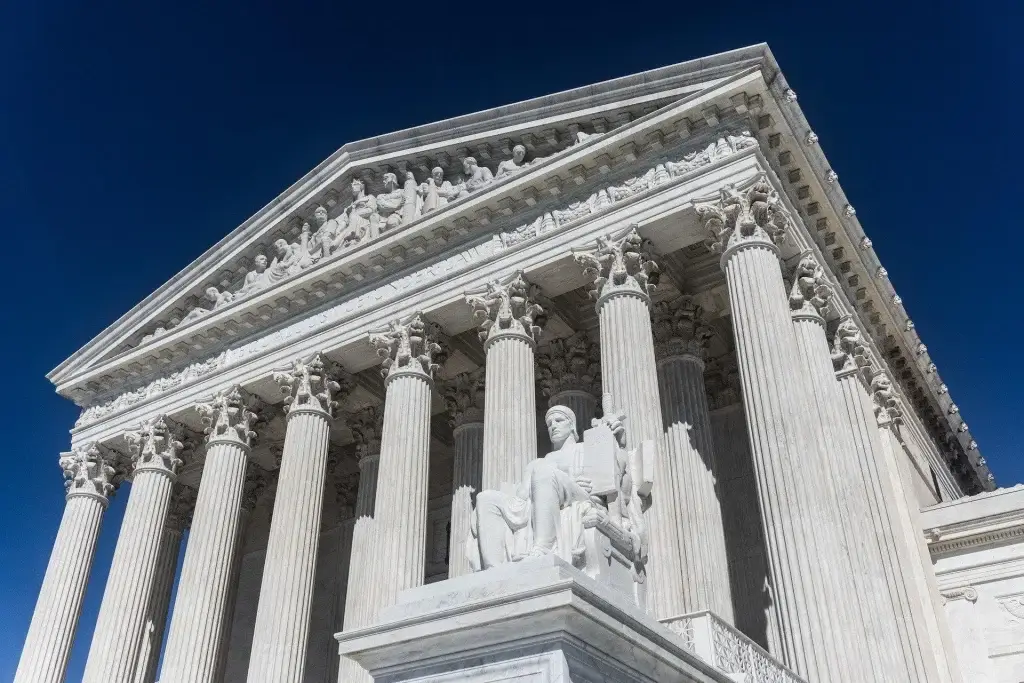
Justices Question Use of Emergency Powers for Broad Tariff Regime
WASHINGTON — The Supreme Court on Wednesday showed pointed skepticism — including from its conservative members — toward President Donald Trump’s use of emergency powers to impose sweeping tariffs on imports during his administration.
At issue is whether Trump overstepped constitutional limits by invoking the International Emergency Economic Powers Act (IEEPA) to justify broad-based tariffs. The law has typically been used to impose sanctions and freeze foreign assets — not to rewire U.S. trade policy or set import duties.
Legal Foundations Under Fire
Trump’s legal team argues that the IEEPA gave him authority to act unilaterally after declaring a national emergency related to economic threats from abroad. His administration used that reasoning to slap tariffs on goods from nearly every major trading partner.
The challengers — a mix of trade groups and legal scholars — counter that:
- Tariffs are taxes, and under the Constitution, taxing and spending powers belong to Congress, not the executive branch.
- The IEEPA says nothing about tariffs, and its historical use has focused on narrow financial measures, rather than comprehensive trade policies.
- Allowing this interpretation, they say, would violate the “major questions” doctrine, which demands clear congressional authorization for major shifts in policy — especially ones that affect the U.S. economy so directly.
- It also risks violating the non-delegation doctrine, which bars Congress from handing over its core powers without clear limits.
Conservative Justices Show Doubts
During oral arguments, even justices who typically back strong executive authority appeared unsettled by Trump’s legal position.
Justice Amy Coney Barrett asked, “Has there ever been another instance in which a statute has used that language to confer the power?” signaling unease with the lack of precedent.
Justice Neil Gorsuch pressed on separation of powers: “Are we just saying the president can take Congress’s taxing power and run with it?”
Chief Justice John Roberts was blunt: “The vehicle is the imposition of taxes on Americans, and that has always been a core power of Congress.”
The tone across the bench — especially from right-leaning justices — suggests that the Court is not inclined to accept the administration’s reading of the IEEPA at face value.
More Than Just Tariffs
The stakes go beyond Trump’s trade war. If the Court rules against him, it could unravel key parts of his tariff regime and potentially trigger refunds for duties already collected. A ruling in Trump’s favor, on the other hand, would expand presidential power in both trade and emergency contexts — allowing future presidents to unilaterally reshape economic policy without waiting on Congress.
For constitutional conservatives, this is a defining moment. It pits core structural principles — like congressional control over taxation and the limits of executive power — against the realpolitik of protecting Trump-era policies.
Legal analysts expect that some of the Court’s conservatives may break with the former president, not out of partisanship, but in defense of the constitutional balance of power.
Bottom Line
Trump’s team argues the tariffs were regulatory and necessary. But the justices — including key conservatives — aren’t buying that argument without scrutiny. The case could become a landmark test of how far a president can go in using emergency powers to sidestep Congress — even when the Court is dominated by justices who usually back executive strength.
This is a breaking news story. Please check back for updates.
READ NEXT: Ukraine Rushes Special Forces As Key City Nears Collapse



















Here is another take on Tariffs. They are to accomodate fair trade between nations and though they money paid by other countries hits the treasury it is all related to markets and services between nations. Currently Trump is using it to make things fair between nations not to just raise money for congress to spend. And he is doing a good job of that.
This is not just a tax issue, it is of national interest and about international business where Trump as president is our negotiator. So my thought is this is not in congresses’ purview. They cannot even manage this in their time frame to help our nation achieve the balance Trump is obtaining. Just observe the current government shutdown!!!
Additionally congress never gave a damn even to look in this area. For decades or centuries the tariffs remained basically a LOSS for the nation and utterly no fair reciprocation from nations that had heavy tariffs on the USA. And I am sick of seeing it.
China was treated until Trump like it was a new developing nation that it was after their civil war to communism. But that was DECADES ago! Get a clue judges and CONGRESS espeicially Rand Paul. DAH! Just how dumb are you or is your itty bitty ego hurt Rand?
Think BEYOND taxes when you discuss tariffs SC Judges! And let Trump do what he does far better than congress can or WILL!
There is more involved than the question of taxation, and that is the power to control foreign policy. Trump has used the tariffs not expressly to impose “taxes” on the public, but to manage overall foreign policy with other countries. This aspect alone demands to be considered in the decision of the court.