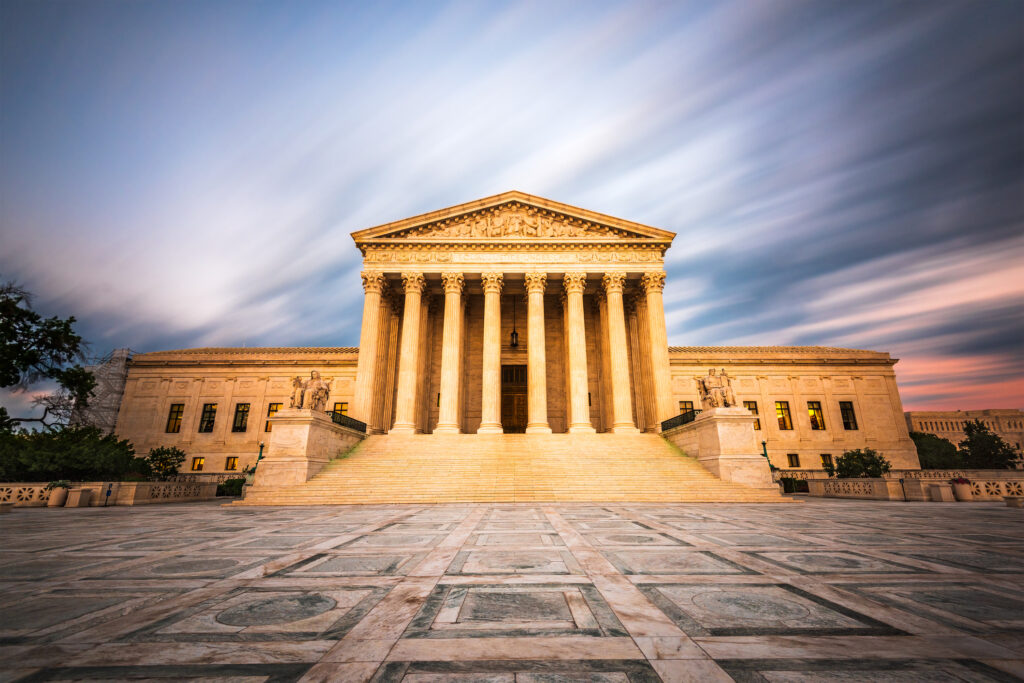
The U.S. Supreme Court issued a 6-3 ruling on April 29, 2026, striking down Louisiana’s congressional map as an unconstitutional racial gerrymander. The decision invalidates the state’s second majority-Black district and revives a years-long legal fight that has repeatedly moved between lower courts and the nation’s highest court.
LANDMARK DECISION — The Supreme Court has narrowed Section 2 of the Voting Rights Act with their decision in Louisiana v. Callais, opening the door to sweeping redistricting changes across the South that could erase up to 10 majority-Black seats and flip them from blue to red.
— VoteHub (@VoteHub) April 29, 2026
How the Legal Battle Unfolded
The dispute dates back to the aftermath of the 2020 census, when Louisiana’s Republican-led legislature approved a congressional map with only one majority-Black district, despite Black residents making up roughly one-third of the state’s population.
In 2022, a group of Black voters sued under the Voting Rights Act, arguing the map diluted their political influence by concentrating many Black voters into a single district while dispersing others across multiple districts.
A federal court agreed, blocking the map for failing to include a second majority-Black district that better reflected the state’s demographics.
In response, lawmakers passed a revised map during a January 2024 special session, signed by Gov. Jeff Landry (R), creating a second majority-Black district stretching diagonally across the state.
New Map Triggered Fresh Lawsuits
The revised map quickly faced new legal challenges, this time from non-Black voters who argued race had been used too heavily in drawing district lines, violating the Equal Protection Clause.
A three-judge panel sided with those challengers and blocked the map. However, the Supreme Court later allowed it to be used in the 2024 election, when Democrat Cleo Fields won the newly created district.
Court: Race Was the Predominant Factor
In its latest ruling, the Supreme Court determined that race was the predominant factor in designing the second majority-Black district, rendering the map unconstitutional.
During oral arguments, challengers pointed to the district’s unusual shape as evidence of racial sorting. Defenders argued it reflected political compromises aimed at preserving existing districts held by Republican lawmakers.
Map Must Be Redrawn — Again
With the ruling, Louisiana will once again need to redraw its congressional map, likely under close judicial oversight.
The decision highlights a longstanding legal tension between:
- Requirements under the Voting Rights Act to ensure minority representation
- Constitutional limits on using race as a primary factor in redistricting
High Stakes for Congress
The decision could have significant political implications, reshaping Louisiana’s congressional delegation and influencing redistricting disputes in other states. It is also expected to create uncertainty for similar districts designed to enhance minority representation.
Supreme Court Voting Rights Act Ruling Opens Door for Southern States to Redraw Maps, Dismantle Majority-Black Districts pic.twitter.com/yQztULszhm
— NewsWire (@NewsWire_US) April 29, 2026
Bottom Line
The ruling underscores the challenge states face in drawing congressional maps: ensuring fair minority representation without making race the dominant factor.
Louisiana’s latest attempt to comply with one legal standard has now been struck down under another — leaving the redistricting battle unresolved.
This is a breaking news story. Please check back for updates.
READ NEXT: House Republican Makes Abrupt Reelection Announcement