
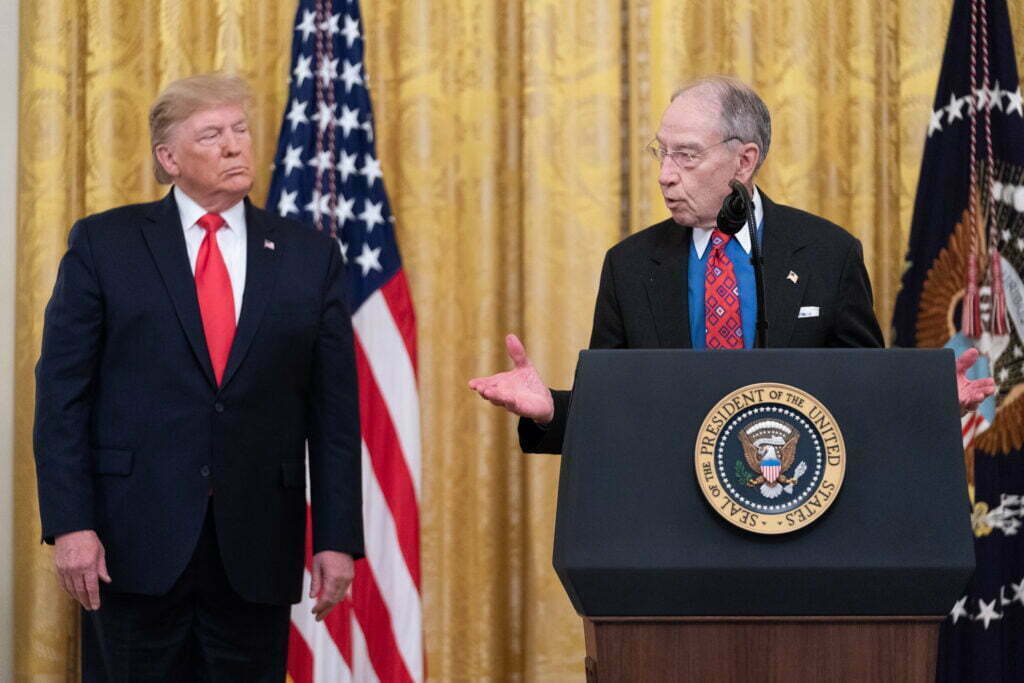
President Donald Trump is demanding that Senate Republicans abolish the century-old “blue-slip” practice that allows home-state senators to stall federal judicial and U.S. attorney nominees.
In a Truth Social broadside aimed squarely at Judiciary Committee Chairman Chuck Grassley (R-IA), Trump called the process a “ridiculous custom” and a “hoax,” accusing Democratic senators — including Chuck Schumer, Cory Booker, Tim Kaine, and others — of wielding it to block “Great Republican Candidates” in states like New York, New Jersey, and California.
Trump further urged Grassley to eliminate the practice with “a mere flick of the pen,” asserting that Democrats have exploited it to create an “ironclad stoppage” on his conservative nominees.
Mediaite continues:
The president concluded his lengthy screed by writing, “Chuck, I know you have the Courage to do this, DO IT!”
In 2023, The New York Times called on then-Judiciary Chairman Dick Durbin (D-IL) to end blue slips so the Democratic-controlled Senate could confirm then-President Joe Biden’s nominees, whom red-state Republicans were blocking. Durbin resisted that call and kept the custom.
The demand comes after former Trump personal attorney Alina Habba’s 120-day interim appointment as U.S. Attorney expired on July 22.
A panel of New Jersey federal judges then selected Desiree Leigh Grace — Habba’s first assistant and a career prosecutor — to succeed her. Just hours later, however, Attorney General Pam Bondi fired Grace, calling the judges’ move an overreach by “rogue judges” and citing executive authority under the Vacancies Reform Act to reassert control.
Habba was promptly reappointed as acting U.S. Attorney through a Justice Department action and a procedural workaround, despite her formal nomination having been previously withdrawn. The reappointment went forward despite objections from both of New Jersey’s U.S. senators.
Background: What Is the Blue‑Slip Tradition?
Originating from senatorial courtesy dating back to the early 1900s, the blue slip is an informal paper used by home-state senators to express favor or opposition to judicial or U.S. attorney nominees. If a senator withholds or submits a negative slip, it can block committee consideration.
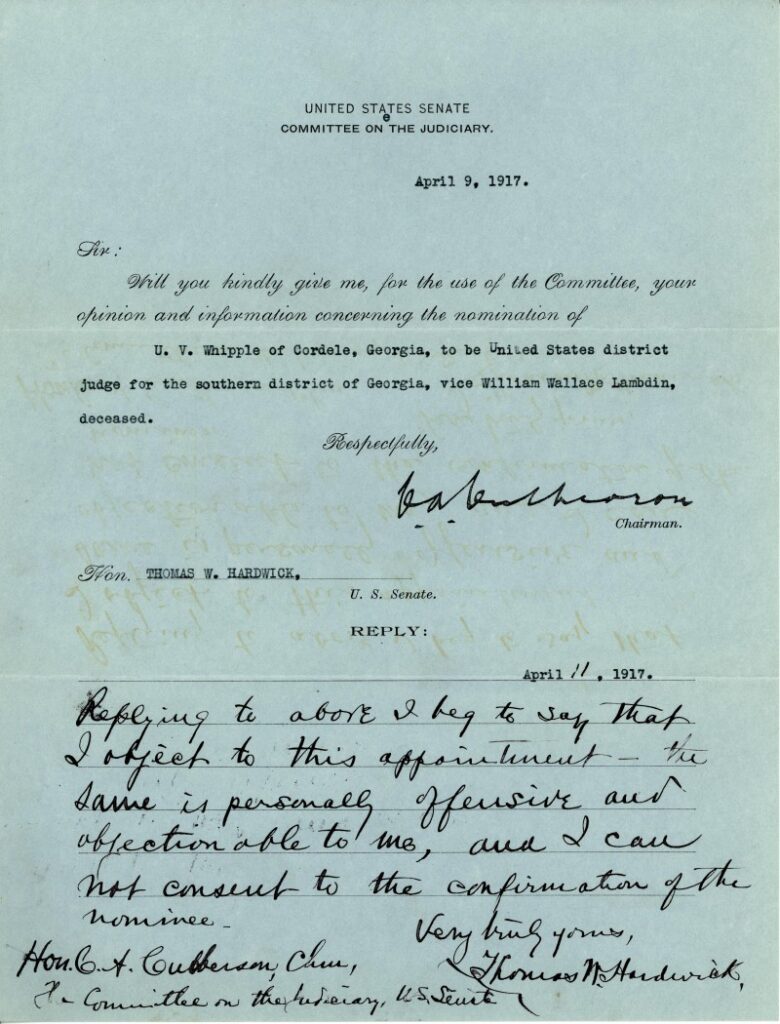
Over the decades, the weight of a single negative slip has shifted. Between 1956–1978, a solo veto could halt a nomination outright, while later chairmen allowed committee action despite opposition. Most recently, circuit court nominees may proceed without both slips, but district court and U.S. attorney picks often still require home-state buy-in.
READ NEXT: Trump Finally Reveals ‘Inappropriate’ Behavior That Got Epstein Banned From Mar-A-Lago