

A President Confronts Judicial Gridlock
On Wednesday, President Trump suggested he is considering a highly controversial legal maneuver to advance deportation efforts that have faced repeated court challenges: suspending the writ of habeas corpus.
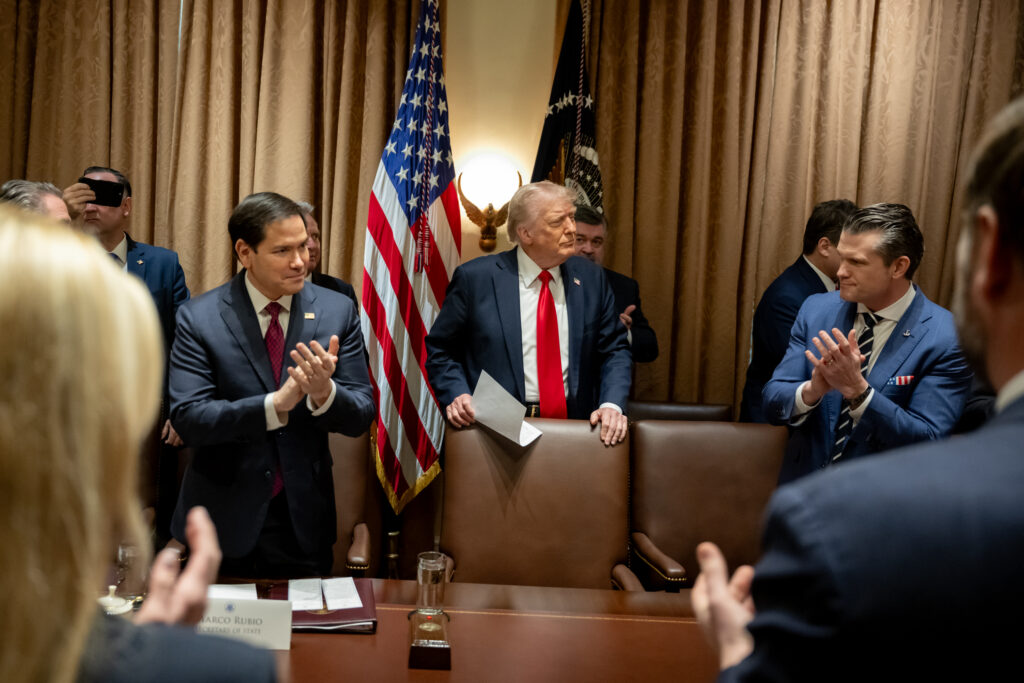
Trump’s statement came during a Cabinet meeting, following a line of questioning about the legal barriers his administration has faced in executing deportation orders. “There are very strong ways… one way that’s been used by three very highly respected presidents,” Trump said — a remark that left little ambiguity for some users on X (formerly Twitter) about what he meant.
What Prompted the Discussion?
Earlier in the week, a conservative new media figure posed a provocative question at a White House press briefing: Would the president consider suspending habeas corpus to bypass the courts that are currently blocking certain mass deportation efforts?
🚨BREAKING: President Trump hints at suspending the Writ of Habeas Corpus to conduct mass deportations🚨
— DC_Draino (@DC_Draino) April 30, 2025
2 days ago I went to the White House Press Briefing and asked if President Trump planned to suspend the writ of habeas corpus to circumvent radical judges blocking his mass… pic.twitter.com/CRVekWa8MD
The reference wasn’t offhand. Historical precedent exists. Abraham Lincoln famously suspended habeas corpus during the Civil War. Ulysses S. Grant did so during Reconstruction. Franklin D. Roosevelt relied on it in wartime. All three did so in moments of national crisis — raising a legitimate, if controversial, legal and constitutional debate.
What Is Habeas Corpus, and Why Does It Matter?
Habeas Corpus, found in Article I, Section 9 of the U.S. Constitution, protects against unlawful detention. In short, it gives individuals the right to appear before a judge and challenge their detention.
It can only be suspended “in cases of Rebellion or Invasion,” and even then, it’s traditionally seen as a legislative power, not an executive one. That’s where legal scholars raise red flags. Trump floating the idea — even without taking action — reignites a long-standing question: In a border crisis that undermines national sovereignty, can this clause be invoked?
Key Points to Watch
- Trump’s Language: He didn’t directly say he would suspend habeas corpus — he hinted at it. That distinction matters.
- Historical Precedent: Lincoln, Grant and FDR used it during extreme unrest or war.
- Legal Controversy: Critics argue Trump lacks constitutional authority; supporters argue unchecked migration qualifies as a modern-day invasion.
Final Thoughts
For tens of millions of Americans, this debate is less about legal technicalities and more about national security and restoring lawful immigration processes. To them, it seems only logical that the executive branch would eventually seek alternative paths to uphold its constitutional duty to protect the country — especially if the courts continue to block controversial enforcement measures introduced by the new administration.
Whether or not Trump pulls this legal lever, the message is clear: he’s preparing to act decisively if forced.
READ NEXT: Ruling Upends Crucial White House Argument In Court



















JESUS!!
BEFORE HE GOES ANYWHERE, HE MUST REMEMBER HE PROMISED TO FOCUS ON CRIMINALS FIRST: IE: MURDERERS, RAPISTS, ETC.
FOR THE REST, HE AND THE REST FIRST NEED TO ANSWER THE QUESTION: “WHO IS GOING TO DO THIEIR JOBS.
HE IS DESTROYING LIVELIHOODS ON BOTH SIDES OF THE BORDER, AND IT IS NOT FUNNY.
There were no legal proceedings for the illegals to invade our country so there should be no legal proceedings to remove them. Get them out the same way they came in.