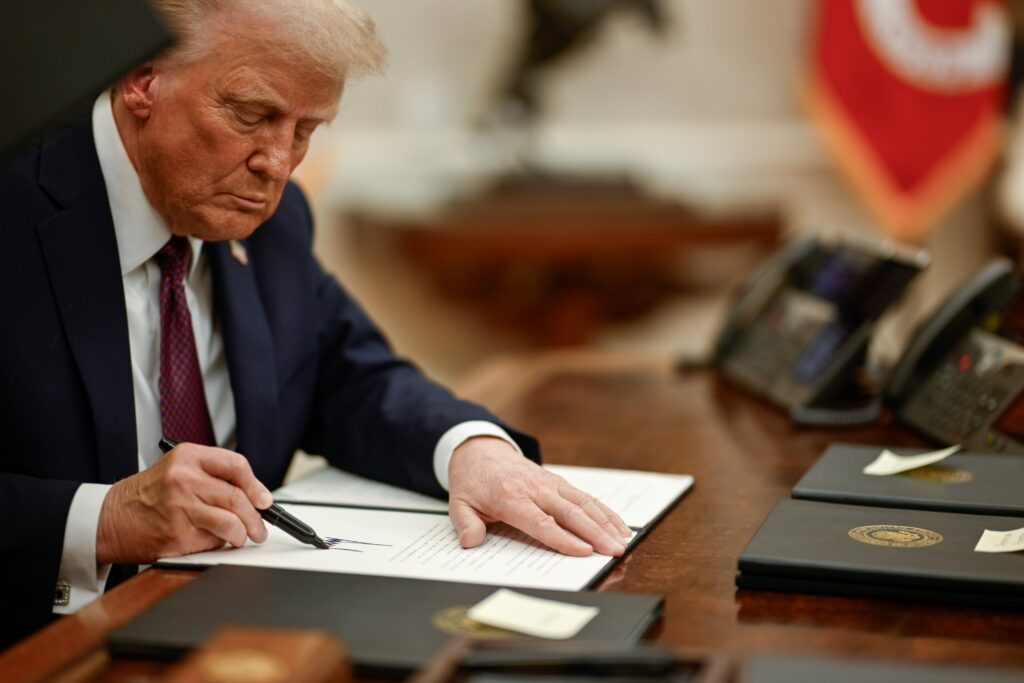
WASHINGTON — President Donald Trump on Thursday signed an executive order directing federal agencies to accelerate the reclassification of marijuana under federal drug law, a move aimed at easing restrictions on research and parts of the legal cannabis industry.
The order instructs the attorney general to accelerate the process of moving marijuana from Schedule I to Schedule III under the Controlled Substances Act. Schedule I drugs, which include heroin and LSD, are deemed to have no accepted medical use. Schedule III drugs, such as ketamine and certain anabolic steroids, are considered to have medical value and a lower potential for abuse.
The action does not legalize marijuana at the federal level or automatically change criminal penalties. Any impact would depend on the completion of the formal rule-making process, which can take months and may face legal challenges.
Once finalized, the change could lower barriers to scientific research and medical studies involving marijuana. It could also reduce banking and tax burdens for cannabis businesses, particularly by limiting the application of Section 280E, which restricts tax deductions for companies tied to Schedule I substances.
At a signing ceremony in the Oval Office, Trump emphasized the benefits poised to impact our veterans, as reported by Stars and Stripes:
Trump cited the benefits that veterans with chronic pain have experienced by using cannabis as an alternative to opioid painkillers, which carry risks of overdose and addiction.
Dan K. Wiley, National commander of The American Legion, on @POTUS' executive order to reschedule marijuana to a Schedule III controlled substance: "I want to thank you on behalf of the veterans who are going to benefit from potentially the research regarding this issue." pic.twitter.com/JTtgRHIC25
— Rapid Response 47 (@RapidResponse47) December 18, 2025
“This action has been requested by American patients suffering from extreme pain, incurable diseases, aggressive cancers, seizure disorders, neurological problems and more — including numerous veterans with service-related injuries and older Americans who live with chronic medical problems that severely degrade their quality of life,” Trump said during a White House ceremony attended by Cabinet officials, doctors and veterans’ groups.
Not everyone supported the change, particularly within the president’s own party, where a group of House Republicans urged him to reconsider and reverse course.
In a letter to the president, the lawmakers, led by Rep. Pete Sessions (R-Texas) and House Freedom Caucus Chairman Rep. Andy Harris (R-Md.), warned that reclassifying marijuana could worsen addiction and public safety problems.
The letter argued that downgrading marijuana’s status would send the “wrong message to America’s children,” increase substance abuse risks, and strengthen drug cartels. The lawmakers rejected claims that rescheduling would produce significant public health or economic benefits.
Trump brushed aside the objections, pointing to broad public support for marijuana reform and citing potential medical benefits for patients with chronic and serious conditions.
The legal marijuana industry, which generated an estimated $32 billion in sales last year, has long pushed for changes to cannabis’s federal classification. Industry advocates say rescheduling would expand research, improve access to financial services, and reduce regulatory hurdles.
Federal agencies must now carry out the administrative steps required to reclassify marijuana. Until that process is complete, current federal law remains in effect, and broader criminal justice changes would require congressional action.
READ NEXT: Legendary Pro Athlete And Family Reported Dead