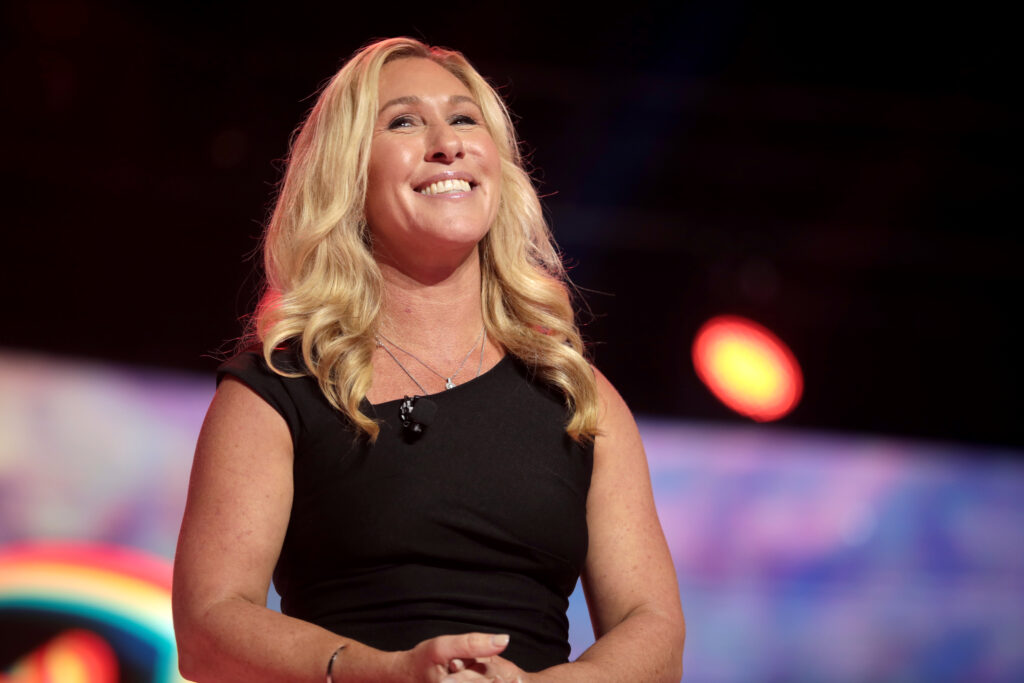
In a tense and high-stakes hearing on Capitol Hill Wednesday, NPR CEO Katherine Maher and PBS CEO Paula Kerger were put on the defensive as they faced intense scrutiny from Republicans over accusations of political bias in their organizations’ programming. The hearing, convened by Rep. Marjorie Taylor Greene (R-Ga.) and the House Oversight and Government Reform Committee’s DOGE Subcommittee, focused on what Greene and other Republicans described as blatantly ideological and partisan coverage from taxpayer-funded media outlets.
Greene, a fierce critic of both PBS and NPR, invited Maher and Kerger to defend the federal funding they receive and address allegations of left-wing bias. Throughout the hearing, GOP lawmakers did not hold back, accusing the two public broadcasters of advancing progressive political agendas, particularly on hot-button issues like gender identity and the Hunter Biden laptop story.
Fox News reports:
Maher said NPR’s newsroom should operate with the highest standards and said it was their responsibility to serve Americans across the political spectrum. She told the subcommittee that NPR last year launched an initiative to improve its editorial review process to ensure all content is “fair and comprehensive,” and that new editors and analysts have been hired to ensure different voices and issues are heard.
One of the most significant moments in the hearing came when Maher, who took over as CEO of NPR in 2024, conceded that NPR had made a “mistake” in its initial dismissal of the Hunter Biden laptop story during the 2020 presidential election. NPR had previously downplayed the importance of the laptop, which contained documents revealing Hunter Biden’s overseas business dealings, as well as troubling personal images and videos. The story originally came to light ahead of the 2020 election, and was not only ignored and discredited by prominent outlets like NPR, but suppressed on every major social media outlet. The New York Post — who originally broke the story — had their own Twitter account suspended as a result, and users on Facebook and Instagram weren’t able to privately message each other links to the story, let alone post it publicly. Long after the 2020 election, law enforcement confirmed the validity of the laptop, and publications that previously dismissed it, including The New York Times and The Washington Post, began acknowledging its authenticity.
“I do want to say that NPR acknowledges we were mistaken in failing to cover the Hunter Biden laptop story more aggressively and sooner,” Maher said, responding to questions from Rep. Michael Cloud (R-Texas). This admission marked a rare moment of contrition from Maher, who was also pressed on previous social media posts that had expressed progressive views, including calling former President Donald Trump a “deranged, racist sociopath.”
REP FALLON: "In 2020, NPR branded Hunter Biden's laptop story a 'waste of time.' Do you know how many times NPR interviewed Adam Schiff about the Russia Collusion hoax?"
— KanekoaTheGreat (@KanekoaTheGreat) March 26, 2025
NPR CEO: "Idk."
REP FALLON: "25 times. How many times did NPR interview Chairman Comer about the Biden… pic.twitter.com/EoOGHAZrPW
“The federal funding that your outlet receives comes from all American taxpayer dollars. Not just from your viewers who support such statements as these. Let me inform you that your federal funding is also paid for by the other half of the country. The 77 million Americans who voted for President Trump. Someone you called a deranged, racist sociopath,” Greene said.
Throughout the hearing, both Maher and Kerger were accused by Republicans of fostering political bias in their outlets’ editorial choices. Greene specifically pointed out a report by former NPR editor Uri Berliner, who had criticized the lack of viewpoint diversity within NPR’s newsroom. Berliner’s 2024 essay in Free Press revealed an overwhelming ideological imbalance, with NPR’s Washington newsroom reportedly comprising 87 Democrats and zero Republicans.
In addition to the criticism of editorial bias, Greene brought up Maher’s past social media comments, accusing her of holding “pro-censorship and anti-free speech views.” The tensions boiled over when Greene asked Maher whether NPR was responsible for “cracking down on bad information.” Maher, a strong advocate for free speech, firmly rejected the idea. “Absolutely not,” she responded, stating that NPR’s role was to provide fair and balanced reporting rather than police misinformation.
“In 2021, you called the First Amendment the No. 1 challenge in American journalism because it makes it hard to crack down on bad information. You said in a Ted Talk that our reverence for the truth might be a distraction. You’ve also expressed support for deplatforming individuals you view as fascist,” Greene continued. “Who do you think should be charged with cracking down on so-called bad information? Is it NPR? Is it the government? Is it you?”
Radical leftist @NPR CEO Katherine Maher claims she never read “The Case for Reparations”
— Congressman Brandon Gill (@RepBrandonGill) March 26, 2025
Yet publicly tweeted about reading it.
Was she lying then or is she lying now? pic.twitter.com/WXHPK5qmMY
PBS also came under fire, with Republicans accusing the outlet of pushing leftist ideologies, particularly regarding gender identity. One example cited was a PBS documentary called Real Boy, following a transgender teen as they navigated adolescence and the physical and emotional impacts of changing gender identity. Greene, who has long been critical of gender-related content on public broadcasting, charged PBS with being “one of the founders of the trans child abuse industry.”
“There’s nothing more American than PBS. It’s a membership organization. Our local service is at the heart of our work. Our job at PBS is to support our stations so that local stations can serve their communities. We’ve been proudly fulfilling our mission for nearly 60 years, using the public airwaves and other technologies to help educate, engage, and inspire the American people,” Kerger said.
The stakes of the hearing were high, especially considering President Trump’s previous statements suggesting he would be “honored” to cut off federal funding to NPR and PBS. Rep. Greene, in her closing remarks, reiterated this stance, suggesting that if NPR and PBS wanted to push progressive agendas, they should do so without taxpayer support.
READ NEXT: NPR Whistleblower Resigns After Suspension