





Good morning. Across Washington, questions of power are taking center stage. From a looming legal clash over gun rights, to rare insight into Supreme Court secrecy, to the passing of a longtime lawmaker, today’s stories reflect institutions under strain and transition.
DOJ Signals New Front in Gun Rights Fight
The Justice Department is drawing a hard line on the Second Amendment, warning Virginia that it will take legal action if a slate of new firearm restrictions are signed into law.
At issue are more than 20 bills passed by the state’s legislature, including measures targeting AR-15-style rifles and other commonly owned weapons. In a formal letter, the DOJ argued such firearms are protected under existing Supreme Court precedent and said it is prepared to seek an injunction.
The announcement represents a notable shift. Rather than waiting for private lawsuits, the federal government is now positioning itself as an active enforcer of gun rights and protecting the Second Amendment as a core civil liberty.
For Virginia, the path forward could lead quickly to a courtroom showdown. For the country, it signals a new phase in the already deep national divide over gun policy, where battles could be increasingly fought not just in legislatures, but through federal intervention.
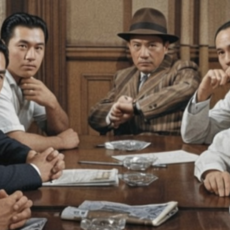
Supreme Court Leak Exposes Longstanding Internal Divisions
A rare leak of internal Supreme Court documents is pulling back the curtain on one of the court’s most controversial practices—and revealing that tensions over it run deeper than many realized.
The memos, tied to a 2016 decision halting a major federal climate rule, show just how divided the justices were over using emergency powers to intervene before full arguments were heard. That decision is now widely seen as an early example of the court’s expanded use of what’s often called the “shadow docket.”
At its core, the debate is about speed versus transparency. Some justices argued for swift action in urgent cases, while others warned that bypassing the court’s usual process could undermine public trust.
The leak itself is now part of the story. Supreme Court deliberations are traditionally kept tightly guarded, and repeated breaches in recent years are raising new concerns about internal cohesion and confidentiality.
What emerges is not just insight into a single case, but an ongoing institutional debate that continues to shape how the court exercises its power today.
Passing of Rep. David Scott Marks End of a Long Political Career
The death of Rep. David Scott closes a chapter in Congress defined by longevity, influence, and steady presence in agricultural policy.
Representing Georgia’s 13th District for more than two decades, Scott rose to become chairman of the House Agriculture Committee as well as the first black lawmaker to hold the role. Over a career spanning nearly 50 years, he built a reputation as a pragmatic voice, often aligned with the more moderate wing of his party.
His passing leaves both a political and practical gap. In Georgia, a special election will determine his successor in a reliably Democratic district. In Washington, it adds new complexity to an already tight balance of power in the House, where margins are slim and every seat carries weight.
Scott’s career bridged eras of politics from state legislatures in the 1970s to modern congressional battles, making his loss not just a moment of transition, but a reminder of how much the political landscape has changed.
READ NEXT: Virginia Gun Owners Defeat $500 Suppressor Tax