


In the months since President Trump returned to the White House, a quiet but consequential shift has taken root in America’s approach to disaster response. This time, the transformation does not involve bulldozing bureaucracy from the top, but rather, redirecting power downward. His administration’s emerging plan to fund states directly during emergencies, bypassing the historically inefficient Federal Emergency Management Agency (FEMA), has already ignited predictable opposition among the professional catastrophists of the federal apparatus. Yet upon closer inspection, Trump’s proposal is not only practical, it is philosophically and fiscally sound.
The case for abolishing FEMA as we know it rests on one striking fact: FEMA is a middleman that spends more to shuffle paper than to save lives. While the agency’s direct operational overhead may appear modest on paper, hovering around 13 to 18 percent, the fuller picture reveals a grotesque inefficiency. When one includes the network of private contractors, NGO intermediaries, and padded emergency agreements, less than half of every dollar allocated to FEMA makes it into the hands of the people and places in need. During Hurricane Katrina, for instance, a septic contractor charged $245 per service while paying subcontractors just $45. That 81.6 percent profit margin was not the exception, it was emblematic. In another contract, the GAO found $4 million in FEMA expenses for work worth perhaps $800,000. A 400 percent markup, paid by taxpayers, delayed by bureaucracy, and absorbed by profiteers.
It is often assumed that national crises demand national solutions. That assumption is rooted more in sentiment than logic. In practice, it is the states, not the federal government, that are first on the scene. Every state maintains emergency management agencies, operational plans, standing contracts with local contractors, and access to manpower via the National Guard. These agencies are not theoretical appendages, they are practiced arms of state governance. In crisis, they act immediately, whether the paperwork from Washington arrives or not. Yet until now, their ability to respond has been handcuffed by the sluggish pace and Byzantine protocols of FEMA’s approval process.
The Trump administration’s insight is thus elegant in its simplicity: the states have the tools, the training, the manpower, and the experience. What they often lack is the cash. By rerouting funds directly to state governments during federally declared emergencies, Trump’s plan acknowledges what the Founders understood instinctively: that local governance is more responsive, more accountable, and more efficient than distant centralized control.
Predictably, skeptics have raised alarms about the potential for mismanagement at the state level. But this critique, while superficially plausible, ignores the empirical record. Under FEMA’s existing Public Assistance program, states are already entrusted to administer large-scale emergency projects with only a 5 percent administrative cost allowance. That’s a fraction of FEMA’s total overhead. Moreover, state-level responses to events such as Hurricane Helene in North Carolina illustrate the effectiveness of this decentralized model. Local emergency agencies deployed the National Guard, arranged temporary shelter, and coordinated supply chains, all while awaiting the delayed FEMA disbursements. It is not an exaggeration to suggest that lives were saved by the initiative of state actors and lost to the inaction of federal red tape.
The bureaucratic inertia of FEMA is not merely inconvenient. It is dangerous. In the case of Hurricane Helene, multiple sources, from NPR to local mayors, documented weeks-long delays in federal aid. In some instances, victims reported still waiting for FEMA assistance eight months after the storm made landfall. The delays were not caused by malice, but by structure. FEMA must navigate legal requirements, contracting processes, and multi-agency coordination protocols. In contrast, state agencies can act in minutes, not weeks.
Even FEMA’s defenders quietly admit the limits of their system. The agency itself classifies its mission as supplemental, not primary. Its purpose is to assist when state and local capacity is overwhelmed. But if the states are already on the ground, and already managing the logistics, then why not equip them directly with the funds necessary to finish the job?
Some have raised concerns that direct funding would politicize disaster response. But here again, the existing model fares no better. Consider the case of Marn’i Washington, a FEMA supervisor fired in November 2024 for instructing her disaster relief team to bypass homes with Trump campaign signs while canvassing in Florida after Hurricane Milton. Internal correspondence revealed she told her team to “avoid homes advertising Trump,” claiming it was a safety precaution. FEMA Administrator Deanne Criswell condemned the action as a “clear violation of FEMA’s core values” and the incident was referred to the Office of Special Counsel for a Hatch Act violation. While FEMA called this an isolated case, Washington herself alleged that similar conduct had occurred repeatedly, further reinforcing the concern that political bias may shape federal relief efforts. It would be naive to believe that a federal agency staffed by political appointees and DC insiders is somehow immune from such partisanship. If anything, relocating funding decisions to the states, where elected governors and legislatures must answer directly to constituents, would serve to reduce, not increase, the influence of politics.
Critics of Trump’s proposal would do well to remember that the current model is not merely broken, it is hostile to reform. FEMA’s sprawling contractor bureaucracy has become a self-perpetuating organism. Its incentive structure rewards inefficiency. High-dollar contracts, often awarded under emergency provisions, incentivize delay. Oversight mechanisms are limited. And public scrutiny is easily deflected by the optics of urgency. A state-centric model, in contrast, would allow for transparent legislative oversight, comparative benchmarking between states, and localized accountability.
It is tempting, in a media environment addicted to outrage, to treat any Trump initiative as presumptively radical. But this particular reform echoes a deeper constitutional principle: federalism. The founders did not vest emergency management in the central government. They presumed that states, closer to their citizens and their geography, would act first. FEMA, born in 1979 during the Carter administration, is a relatively recent contrivance. It has become bloated not because the concept of federal aid is flawed, but because the execution has drifted far from its original purpose.
Trump’s plan is not to eliminate federal support, but to reconfigure its delivery. The Army Corps of Engineers, for example, will remain available to states requiring specialty expertise. Likewise, mutual aid agreements between states allow for the transfer of National Guard units and resources when needed. The infrastructure of emergency response already exists in a distributed form. All Trump’s policy seeks to do is fund that structure more directly and efficiently.
Ultimately, the question is not whether Washington or Raleigh or Sacramento should bear the burden of disaster response. The question is: who can act most swiftly, most efficiently, and most responsibly when lives are on the line? The record speaks for itself. FEMA cannot. The states can. Give them the funds, and they will deliver the aid.
If you enjoy my work, please consider subscribing: https://x.com/amuse.
Sponsored by the John Milton Freedom Foundation, a nonprofit dedicated to helping independent journalists overcome formidable challenges in today’s media landscape and bring crucial stories to you.
READ NEXT: House GOP Chair To Retire







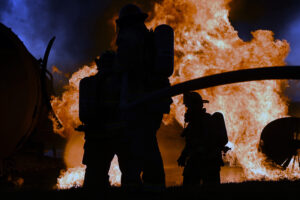











Disasters by Local, State County then Fed for last line
Executive summary: Giving funds directly to those actually doing the work would get more done faster at less cost.