




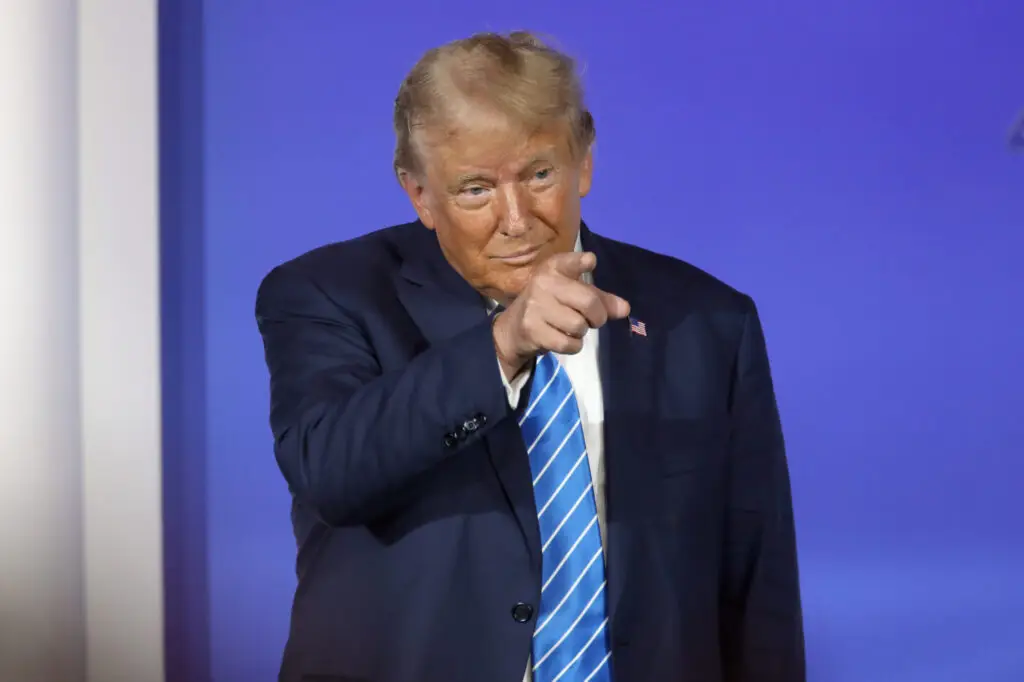
In a recent interview with Lukas Thimm on his late-night talk show So Many Issues, MSNBC host Stephanie Ruhle shared an insightful—and at times humorous—anecdote about her experience reaching out to President-elect Donald Trump during the 2024 election. Her story challenges popular narratives suggesting that Trump is a direct threat to a free press and is hostile to the media. In fact, Ruhle’s account paints a picture of a candidate who, despite his brash demeanor, was remarkably accessible to journalists—especially when compared to his Democratic rivals, Vice President Kamala Harris and President Joe Biden.
Ruhle recalled how, after attending the infamous rally at Madison Square Garden in New York City in October, she was able to reach the candidate directly by simply dialing his phone number. “I rolled the dice and I called him on the phone and he answered,” she recounted. The conversation, while off-the-record and not yielding an interview, showcased Trump’s willingness to engage with the press in a way that is uncommon in the modern political climate. “I said, ‘Mr. President, this is Stephanie Ruhle, you made a lot of comments last night,'” Ruhle continued, explaining that she asked for an interview, but was eventually turned down.
The anecdote is particularly striking when contrasted with Ruhle’s experience trying to reach the Democratic candidates. As she pointed out, contacting Biden or Harris involves navigating through layers of bureaucratic barriers. “I was able to get to him by dialing his phone. If I were to want to connect with VP Harris or President Biden, there’s 50 people between me and that. I could write a note that maybe could get to somebody to get somebody, then through Pony Express and a pigeon something might end up in a mailbox near them.”
Ruhle’s candid recollection highlights a glaring contradiction to the narrative frequently pushed by some media outlets and political commentators, which frames Trump as an adversary of the free press. However, Ruhle’s account suggests a different reality: Trump was often more directly accessible to journalists, giving them the opportunity to engage with him on their own terms.
By contrast, figures like Kamala Harris and Joe Biden, while often lauded as more “traditional” in their political approaches, have typically surrounded themselves with layers of intermediaries. Journalists and media outlets often have to work through press secretaries, communications teams, or other officials to get direct access. This structure, while standard in many political campaigns, is less conducive to the kind of direct accountability that Ruhle experienced with Trump. The layers of bureaucracy can make it difficult for journalists to ask timely questions for breaking stories.
Harris’s media strategy was widely criticized during her campaign and in its autopsy. In the early stages, she missed key opportunities to establish a personal connection with voters through direct media appearances or unscripted interactions with the press. She tried to make up for this by taking a flurry of interviews in the weeks leading up to the election, but polls showed that those appearances hurt her more than they helped.
Some argued that Harris’s lack of engagement allowed her opponents to control much of the narrative about her, particularly in a time when social media and news outlets were driving the public discourse.















“Infamous Madison Square rally”? that political rally was only made an issue by left wing biased reporters and outlets. Should instead have used a better descriptive term such as, “widely panned”, or “controversial”, or even “remarkable”.