

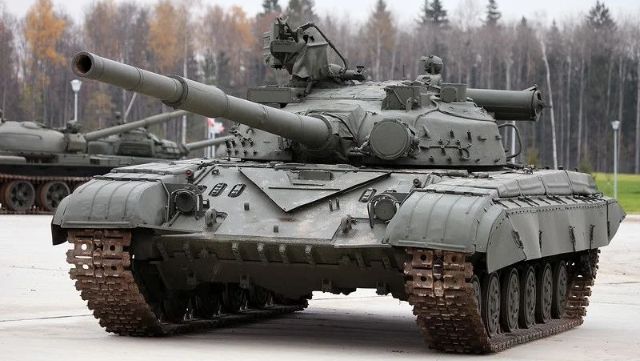
[As of 4 December] the Pentagon has officially confirmed that U.S. military forces are engaged in the ongoing conflict in eastern Syria. According to a statement from U.S. Central Command, on the morning of December 3rd, U.S. forces successfully targeted and destroyed several weapon systems posing a direct threat to American and coalition personnel in the region.
By Boyko Nikolov for BulgarianMilitary.com
The Pentagon press secretary, Air Force Major General Pat Ryder, stated that the destroyed assets included three truck-mounted multiple rocket launchers, a T-64 tank, and several mortars. Ryder emphasized that while the Department of Defense is still assessing the identity of those operating the weapons, Iran-backed militia groups have been active in the region and have previously attacked the MSS Euphrates.
The airstrike was prompted by the activation of some of the weapon systems, which launched rockets that landed near the MSS Euphrates, as well as mortars fired at U.S. forces. Ryder explained that these actions made it necessary for the U.S. to neutralize the threats to safeguard personnel on the ground.
NEW: US says it carried out strike against ‘imminent threat’ in Syria
— Clash Report (@clashreport) December 4, 2024
The Pentagon has confirmed a US strike on military sites in eastern Syria after a rocket attack near a base.
Pentagon spokesman Pat Ryder said US forces had struck a 'clear and imminent threat' in the area:… pic.twitter.com/R7QWaaCrau
The confirmation of U.S. involvement in Syria comes just days after reports emerged of an American A-10 Warthog attacking an enemy target in the region. Initially, the Pentagon refrained from commenting on the reports, but later issued a correction. Meanwhile, video footage surfaced showing the low-flying A-10, proving that the U.S. Air Force had deployed the aircraft in the area.
Ryder defended the A-10’s role in the mission, describing the strike as a justified act of self-defense. The target of the attack was identified as “individuals preparing a missile launcher.”
But who was the operator of the T-64 tank? There are three possibilities. The T-64 tank, a relic from the Soviet era, is not the most commonly seen tank on the modern battlefield, but it still plays a role in the ongoing conflict in Syria.
#Syria
— Boris Alexander Beissner (@boris_beissner) December 3, 2024
A-10, somewhere near Deir ez-Zor, Syria. pic.twitter.com/3ru8QivBLG
While the Syrian Arab Army predominantly uses a mix of Soviet-era T-55 and T-72 tanks, the T-64, though rare, has made its way into the hands of various factions within the region.
The Syrian military, with significant support from Russia, has utilized a wide range of weaponry, and the T-64 is one of the tanks that occasionally appears in Syrian arsenals. However, it’s not as ubiquitous as other Soviet designs, such as the T-72, which are more frequently seen in Syria’s ranks.
Still, the presence of the T-64 is notable, as it represents a sophisticated and more modern variant in the Syrian military’s fleet, one that might be leveraged for key operations.
Iranian-backed militia groups operating in Syria, including those supported by Hezbollah, have also acquired T-64 tanks through various supply channels. These groups have received a wide range of weaponry from Iran, including older Soviet designs, making the T-64 a viable asset for their operations in the region.
As these militias continue to strengthen their presence, especially in areas critical to the Iranian sphere of influence, the T-64 serves as a reminder of the diverse arsenal these groups possess, often supplied by Tehran or other state actors in the region.
Russia, too, has deployed its own T-64 tanks in Syria, though in much smaller numbers compared to other models like the T-72 or T-90. These tanks are used primarily to support Syrian forces and demonstrate Russia’s military capabilities in the region.
In a theater where modern warfare is intertwined with legacy systems, the T-64’s presence in Syria highlights the complex web of military support and armament exchanges that continue to shape the conflict.
While the T-64 may not be the frontline workhorse it once was, its continued deployment in Syria underscores the strategic importance of maintaining a diverse and robust military inventory to adapt to shifting operational needs on the ground.
Military column of Iraqi Iranian-supported Shiite PMU forces entering Syria to join Assad’s fight against the Turkish-backed rebels.
— Visegrád 24 (@visegrad24) December 2, 2024
It’s possible that parts of this column were strafed last night by U.S. Air Force A-10 Warthogs pic.twitter.com/zJsWlgqjLC
The T-64, developed in the Soviet Union during the 1960s, represents one of the most advanced tank designs of its time, setting a high bar for Soviet armored warfare.
This tank was the first to feature composite armor, offering superior protection compared to its predecessors, and it was also equipped with the powerful 125mm smoothbore gun, capable of firing both conventional shells and guided missiles.
The T-64’s fire control system was cutting-edge for its era, with an integrated laser rangefinder and ballistic computer, allowing for more precise engagements in varied conditions. Additionally, its compact design and innovative autoloader system allowed for a smaller crew size, with a three-man crew instead of the traditional four.
Over the years, the T-64 underwent several upgrades, resulting in various models with differing capabilities. The T-64A, for example, featured an improved turret and better armor, while the T-64B introduced the 9M112 Kobra missile system, making it one of the first tanks capable of firing ATGMs.
The T-64BVM, a later upgrade, boasts improved reactive armor and modernized electronics, offering better battlefield survivability.
Despite being replaced by more advanced models like the T-72 and T-90 in many regions, the T-64 remains in service with some post-Soviet states and various factions, showing that its design still holds value, particularly in conflict zones where older but reliable tanks are put to use.
When asked whether last week’s engagements in Syria indicate a broader collaboration between U.S. forces and the Syrian Democratic Forces [SDF] amid the ongoing regional civil conflict, Pentagon spokesperson Major General Pat Ryder made it clear that the primary focus of U.S. military actions remains the protection of American personnel and continued counter-ISIS operations in partnership with the SDF.
Ryder emphasized that these recent actions were a direct response to immediate threats posed to U.S. forces and were not part of any larger strategy involving other groups in northwest Syria.
He stated unequivocally, “To be clear, these defensive actions successfully neutralized immediate threats to U.S. personnel and were not related to broader activities in Northwest Syria involving other factions.”
This statement reinforces the U.S. military’s narrow and defensive focus in the region, particularly when it comes to protecting personnel and sustaining efforts to combat ISIS, a common enemy of both U.S. forces and the SDF.
Ryder further clarified that the ongoing U.S. operations were centered on ensuring the safety of American forces and maintaining cooperative efforts with the SDF in the fight against ISIS.
These operations reflect a tactical focus on counterterrorism rather than involvement in the broader, multifaceted conflict that has been raging in Syria for over a decade.
By framing the actions as purely defensive, the Pentagon has continued to downplay any expansion of its role in Syria beyond the ongoing mission to support local partners in defeating ISIS.
Despite the complexity of the Syrian civil war, the U.S. military’s goals remain limited, with a clear emphasis on counterterrorism and force protection, rather than engaging in the broader political and military struggles involving a multitude of actors in the region.
The War in Syria
The Syrian Civil War, which erupted in 2011, began as part of the broader wave of the Arab Spring. What started as peaceful protests against the regime of President Bashar al-Assad quickly escalated into a brutal, multifaceted conflict after the government’s violent crackdown on demonstrators.
Over the years, Syria became a battleground for various factions: the Assad regime, rebel groups, Kurdish forces, Islamist extremists like ISIS, and foreign powers, including Russia, Iran, Turkey and the United States.
The war has seen the rise of proxy warfare, with each external actor supporting their own interests and allies, which has only complicated efforts for peace.
The humanitarian toll has been staggering. Hundreds of thousands of Syrians have been killed, and millions more have been displaced, either within Syria or as refugees abroad. Cities have been reduced to rubble, with infrastructure destroyed and the economy in shambles.
In addition to the physical devastation, the conflict has caused a severe humanitarian crisis, with millions in need of aid and medical care. The international community has been divided on how to approach the war, with diplomatic efforts frequently stymied by competing interests.
Despite numerous ceasefires and negotiations, there has been little real progress toward a lasting peace settlement.
As of today, Assad’s regime has regained control of most of the country, thanks to support from Russian and Iranian forces, but pockets of resistance remain, particularly in the northwest.
The Kurdish-led Syrian Democratic Forces continue to control large swaths of the northeast, backed by the U.S. in their fight against ISIS. However, tensions between Turkey and the Kurds persist, as Turkey views the Syrian Kurdish militias as terrorists linked to the PKK.
While the intensity of fighting has decreased, Syria is far from stable, and the situation remains a complex, ongoing crisis with no clear end in sight.
READ NEXT: Ready For Battle? Radically Simple Ideas To Boost Our Military
















Shhhh! It’s the Pentagon’s private war!