











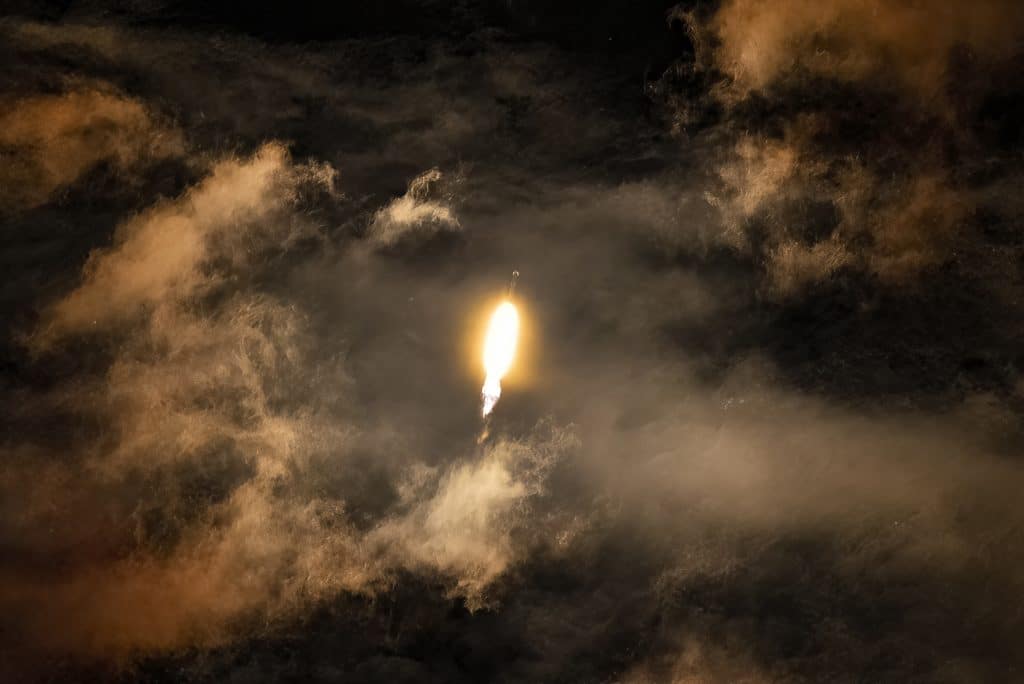
ANALYSIS – We are currently seeing a developing war of potentially biblical proportions. An all-out battle between tiny, nuclear-armed Israel, which I consider home of God’s chosen people, against the larger and numerically stronger Islamic Republic of Iran, a regime I consider evil incarnate.
Israeli Prime Minister Benjamin Netanyahu has vowed to retaliate against Iran after the Islamic republic fired more than 180 ballistic missiles at Israel October 1st, while Tehran says it will hit infrastructure across Israel if its territory is attacked, driving the region even closer towards all-out war.
Iranian state TV said Iran had fired 200 missiles towards Israel. These included hypersonic weapons, it said, while the Islamic Revolutionary Guard Corps (IRGC) said the strikes were in retaliation for the killings of the leaders of its allies Hezbollah and Hamas.
So, how close is this from becoming armageddon?
Well, without getting into biblical prophecy, we can review where things stand in the recent and growing conflict.
While the two countries do not share a common border, each has missile, aerial and naval forces that can cause each other serious harm if tensions turn hot.
According to the London-based International Institute for Strategic Studies (IISS), the Iranian Armed Forces are the largest in the Middle East in terms of troop numbers.

They count 587,000 active personnel and 200,000 reservists. Meanwhile, Israel has 169,500 active personnel and 465,000 combat hardened reservists, around two-thirds of whom have been stationed near the Gaza Strip since Hamas’ attacks of October 7.
The Stockholm International Peace Research Institute has calculated Israel’s defense budget at about $23.4 billion (including $3.18 billion in annual U.S. military aid), dwarfing Iran’s annual military spending of less than $7 billion.
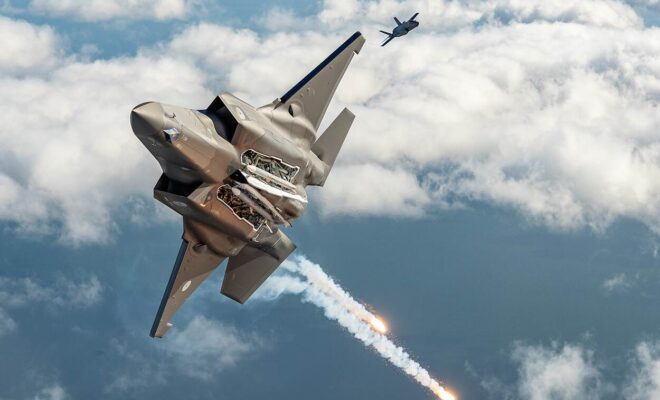
The IISS says Iran has around 334 combat aircraft despite more than 25,000 personnel. In contrast, Israel has 339 combat-ready aircraft, 309 fighter jets, 50 F-35 stealth fighters and 142 helicopters.
But these numbers don’t help much, since Israel’s qualitative advantage in technology, personnel, training and experience also dwarfs that of Iran in virtually every category.
Recall that in 2018 three F-35s flew undetected in a “test mission” over Iran’s capital, Tehran.
Pentagon officials have also previously stated that Iran possesses over 3,000 conventionally armed ballistic missiles. But Israel has around 90 nuclear-capable Jericho III ICBMs, although the actual number is classified.
Israel’s F-35s and F-15s are also nuclear capable, as well as its six Dolphin-class submarines carrying long range, nuclear tipped cruise missiles.
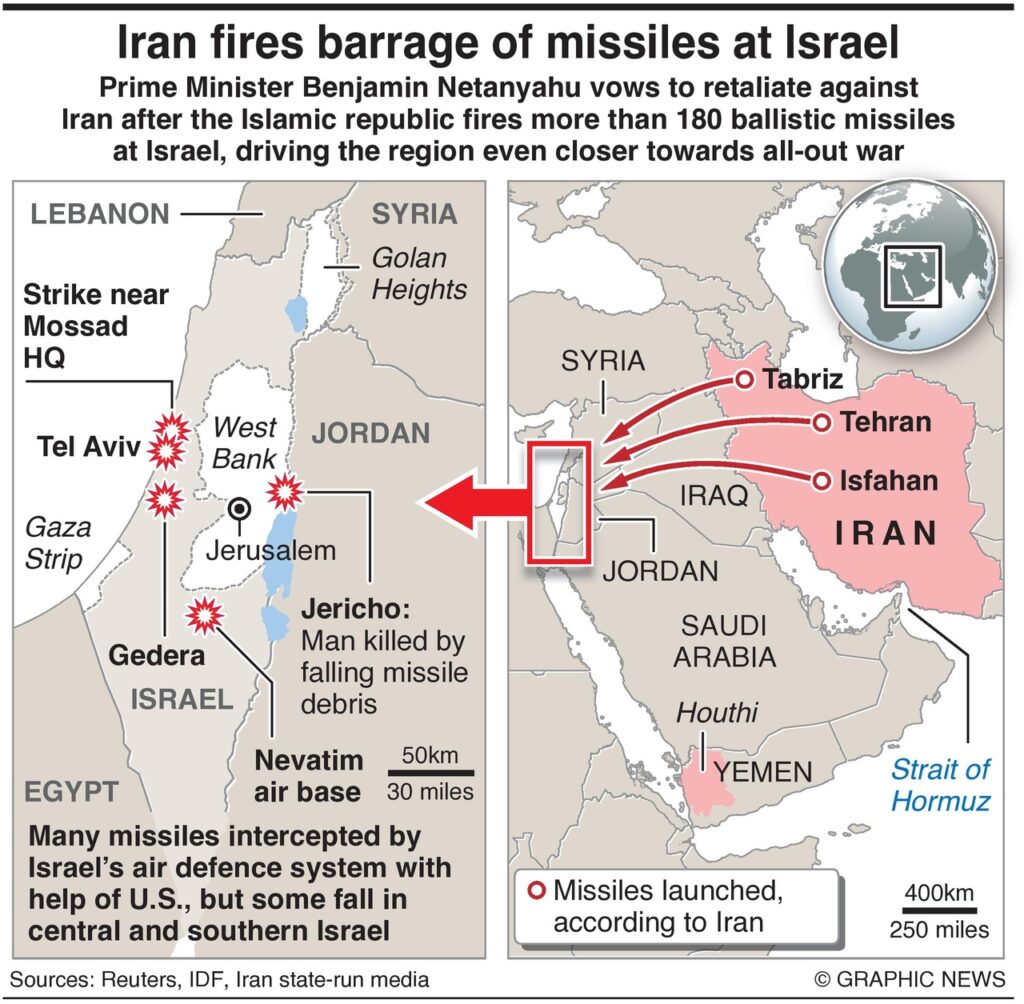
When Iran fired a barrage of at least 180 ballistic missiles toward Israel on Oct. 1, Israel’s air defense systems, with some help from the U.S., largely staved off the attack.
The Israel Defense Forces (IDF) said the majority of missiles were “intercepted by Israel and a defensive coalition led by the United States,” but it also said that “there were a small number of hits in the center of Israel, and other hits in Southern Israel.”
However, videos show numerous Iranian strikes hitting areas near Tel Aviv and Israeli miliary bases. And Israel is accused of concealing the damage from the strikes.
Israel has several air defense systems, each one designed to intercept incoming missiles at different altitudes and distances.
The outer layer of Israel’s defense system, called Arrow 2 and 3, is specifically designed to defend against long-range ballistic missiles by intercepting them outside the earth’s atmosphere.
Israel’s second layer of defense is known as David’s Sling, and its remit is to shoot down heavier rockets and tactical ballistic missiles, in the range of up to 160 miles.
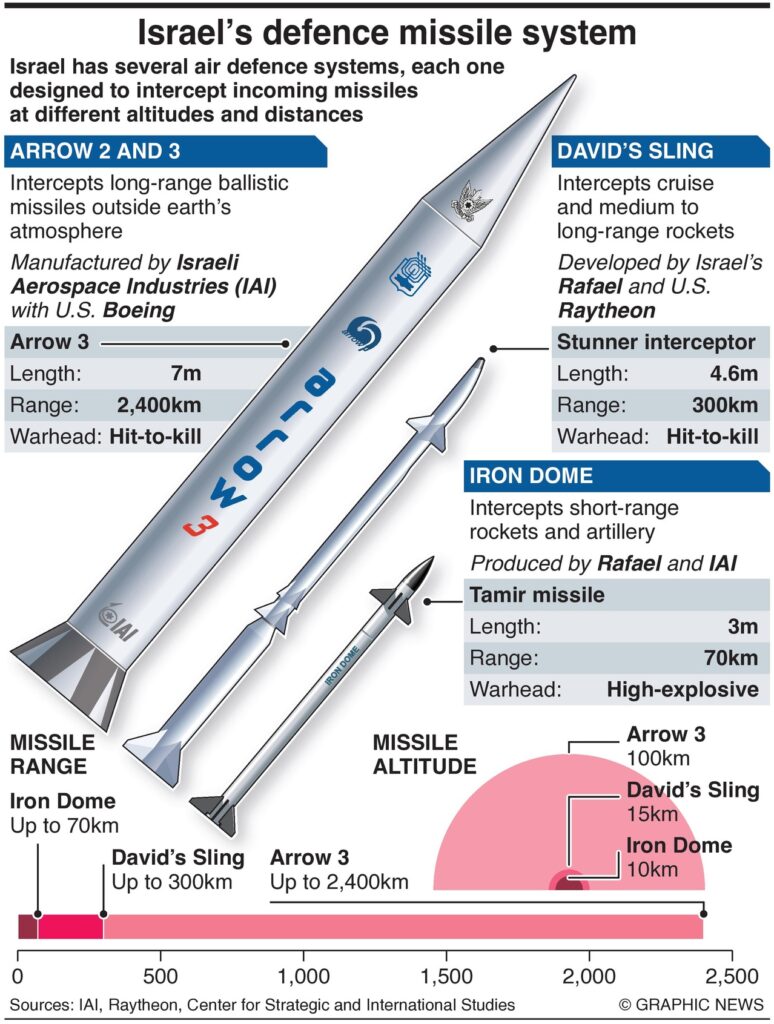
The centerpiece of Israel’s air defense is the Iron Dome. Introduced in 2011, it has since intercepted thousands of short-range artillery rockets fired by Hamas and other Palestinian militant groups.
The sophisticated, multilayered defenses were developed with billions in U.S. funding.
As I describe earlier, Israel is considering numerous response options including hitting Iran’s nuclear weapon development sites. This is something Joe Biden has said he opposes.
More likely, at least initially, Israel may strike Iran’s oil and energy ingratitude, with US acquiescence and help.
Meanwhile, a follow-up Israeli strike on Beirut has targeted Hashem Safieddine, widely regarded as the heir of slain Hezbollah leader Hassan Nasrallah, killed by Israel Sept. 27.
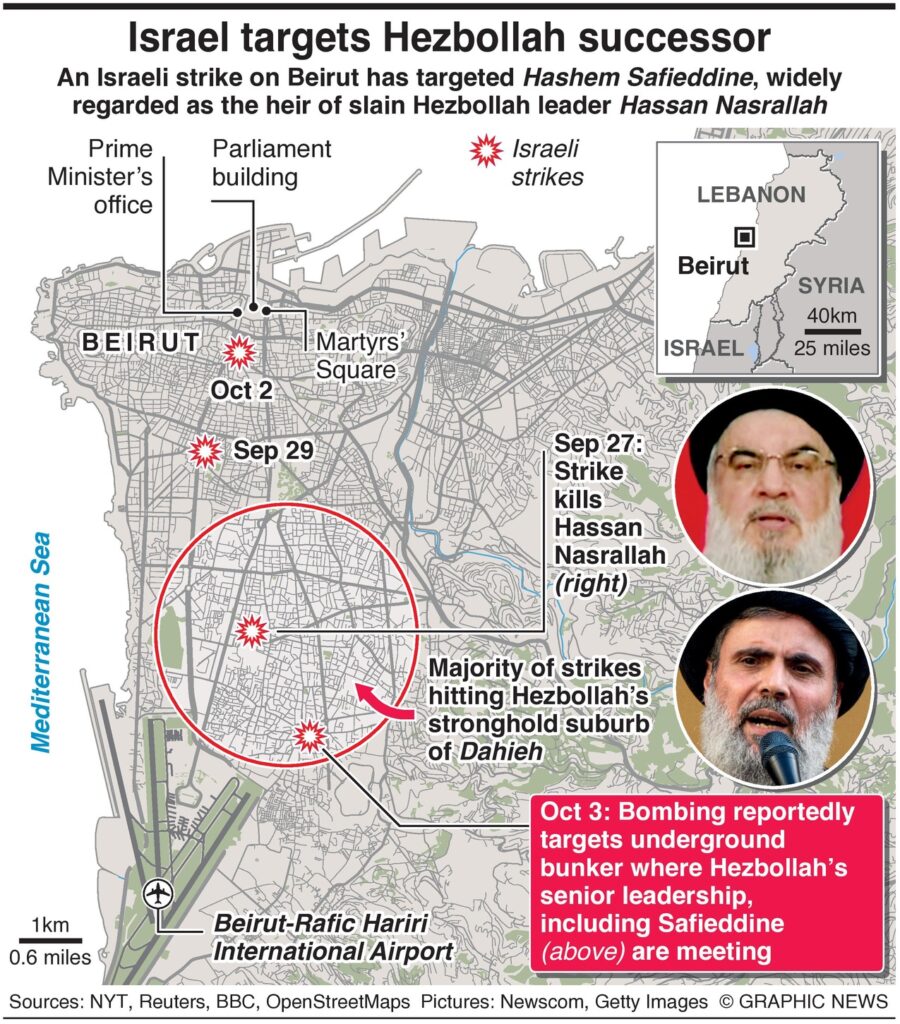
The New York Times quotes Israeli officials as saying the military had information suggesting Safieddine, Nasrallah’s cousin, and other Hezbollah leaders were meeting in a bunker in the southern district of the Lebanese capital.
Safieddine heads Hezbollah’s executive branch, which oversees the group’s political affairs. He is also a member of the decision-making Shura Council as well as the Jihad Council, which runs the group’s military operations.
It is not yet clear whether he was killed in the strikes.
We will soon know what will come next. But it is clear things are only going to get worse.
READ NEXT: Why This Deep Red State Could Be In Play For The Democrats






















WW3
It’s NOT Armageddon….. This is not the right prophetic season yet for Armageddon to occur…..That occurs at the end of the Tribulation period…. and we’re not in the Tribulation period.