

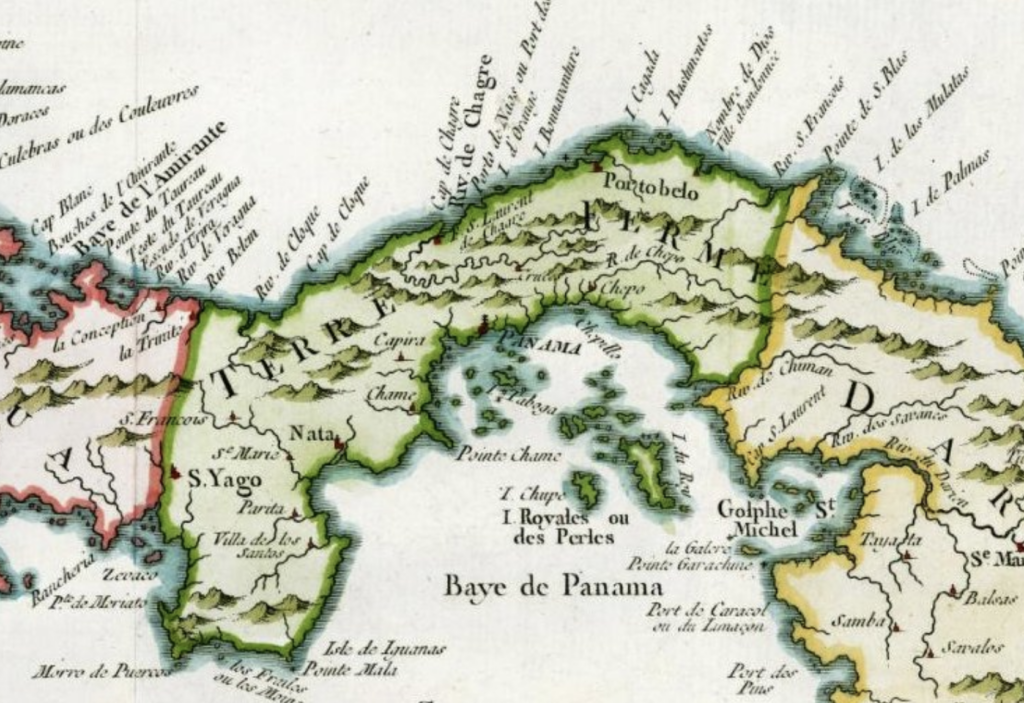
“A nation which controls the seas controls the world,” Alfred Thayer Mahan once asserted, highlighting the unparalleled strategic importance of maritime supremacy. Few places embody this truth as vividly as the Panama Canal, a lifeline of global commerce and a lynchpin of American security. Its significance is underscored by its role in facilitating the transit of over 13,000 ships annually, carrying goods vital to the U.S. economy and global supply chains. Militarily, the canal enables rapid deployment of U.S. naval forces between the Atlantic and Pacific Oceans, a capability critical in both peacetime logistics and wartime strategy. The strategic importance of the canal cannot be overstated, as any disruption would reverberate through both economic and security frameworks. Today, that critical artery is under threat, not by overt military aggression, but through the subtle encroachment of Chinese influence. With dual-use ports on either side of the canal controlled by Chinese-linked entities, the United States faces an unsettling reality: in times of crisis, our economic and military mobility could be strangled at the behest of Beijing. Should Panama refuse to evict these entities, the United States has no recourse but to retake decisive control of this vital waterway.
The Strategic Value of the Panama Canal
The Panama Canal, a marvel of engineering and a testament to American ingenuity, is more than a shortcut between oceans. It is a lifeline for trade and military logistics. Over 70% of its traffic directly impacts U.S. markets, from essential commodities to military supplies. Ronald Reagan captured the canal’s symbolic and strategic significance when he famously declared, “We bought it, we paid for it, we built it and we intend to keep it!” This sentiment resonated deeply with Americans who viewed the canal not just as a marvel of engineering but as a testament to national pride and a critical strategic asset. Reagan’s assertion reflected broader public opposition to the treaty transferring control to Panama, as many feared it would compromise U.S. sovereignty and security in a region vital to its interests. Yet, the canal’s neutrality, guaranteed by the U.S.-Panama Neutrality Treaty, is now compromised by Chinese-controlled dual-use ports at both entrances. These facilities, while ostensibly civilian, are ominously positioned to serve military objectives.
During his confirmation hearing as secretary of state, Marco Rubio underscored these risks, citing observations from military officials and bipartisan reports. He emphasized that Chinese-controlled ports at both ends of the canal could act as strategic choke points during a conflict. While such disruption might not occur daily, the mere potential for interference represents a significant economic and security concern for the United States. Rubio’s testimony laid bare the gravity of allowing Beijing such a foothold in a region so central to American interests.
A History of American Vigilance
America’s involvement in Panama has always been rooted in strategic necessity. From Theodore Roosevelt’s audacious backing of Panamanian independence to the construction of the canal itself, the U.S. has historically understood its indispensability. The Carter administration’s 1977 decision to transfer control to Panama—albeit controversial—was predicated on assurances of neutrality and accessibility, including guarantees that the canal would remain open to all nations and free from interference. These assurances were meant to allay fears that handing over control would compromise the canal’s strategic importance or disrupt global trade routes. But as Strom Thurmond warned, “This treaty is nothing less than a complete surrender of vital American interests.” Time has proven Strom Thurmond right as Chinese influence over Panama’s ports erodes the very foundation of the agreement.
History offers lessons for today. The Monroe Doctrine, asserting American opposition to foreign interference in the Western Hemisphere, was crafted to prevent precisely the kind of scenario we now face. To allow China to tighten its grip on such a pivotal chokepoint would betray this enduring principle and risk ceding the hemisphere’s strategic balance to a rival power.
The Risks of Chinese-Controlled Ports
Chinese dual-use ports in Panama are not merely commercial ventures; they are instruments of geopolitical strategy. As General Laura Richardson of U.S. Southern Command has pointed out, these ports can facilitate intelligence gathering, logistics support for naval operations and potential disruption of maritime traffic. In a crisis scenario, Beijing could deploy military assets under the guise of civilian operations, leveraging its proximity to neutralize U.S. responses.
Rubio’s hearing also highlighted China’s broader strategy in the Western Hemisphere. This strategy includes leveraging economic influence through debt-trap diplomacy, as seen in nations like Venezuela and Ecuador, where Beijing’s loans have come with steep geopolitical strings. Additionally, China has heavily invested in critical infrastructure projects, from 5G networks to port facilities, tying regional governments to its economic and technological ecosystems. These actions are part of a calculated effort to expand its influence and undermine traditional U.S. alliances in the region. From debt-trap diplomacy to infrastructure investments tied to conditions like 5G technology control and resource exploitation, Beijing’s multifaceted influence extends far beyond Panama. Particularly concerning is China’s growing military and surveillance presence, exemplified by activities in Cuba, where proximity to U.S. installations compounds the strategic threat.
The implications extend beyond trade. The canal’s utility as a conduit for U.S. Navy operations between the Atlantic and Pacific Oceans makes it irreplaceable. A compromised canal threatens our ability to project power globally, undermining alliances and emboldening adversaries.
The Case for U.S. Intervention
Diplomacy is, of course, the preferred path. The United States should use its considerable economic and political leverage to urge Panama to terminate concessions to Chinese-controlled entities. However, if diplomacy fails, the stakes are too high for passive acquiescence. A decisive assertion of control over the Panama Canal would not be an act of aggression but a legitimate measure of self-defense and hemispheric stability.
Critics will inevitably decry such actions as imperialistic or destabilizing. However, such critiques often ignore the broader context: failing to act could lead to even greater instability, as China’s unchecked influence in the region threatens to undermine the neutrality of the canal and compromise global trade routes. Moreover, history demonstrates that U.S. intervention in defense of strategic assets has often served to maintain international stability rather than disrupt it. Yet history and morality favor intervention when the alternative is the subjugation of vital interests to authoritarian ambitions. Just as Ronald Reagan supported anti-communist movements to prevent Soviet domination, the U.S. must now act to forestall a similar encroachment by Beijing. Sovereignty, while important, cannot shield Panama from the consequences of enabling a foreign power’s strategic overreach.
Conclusion
The Panama Canal, carved from the jungles by American hands, remains an enduring symbol of ingenuity and determination. Today, it is a flashpoint in the great power struggle between freedom and authoritarianism. The dual-use ports operated by Chinese interests threaten not only the canal’s neutrality but also the economic and security interests of the United States and its allies.
Panama’s leaders must decide whether they stand with freedom or capitulate to coercion. Should they choose the latter, the United States must act—not with the timidity of compromise but with the resoluteness of a nation that understands its destiny. As Jesse Helms observed, “The United States is abdicating its responsibility and its rightful role as the protector of the canal.” It is our duty to ensure that the next generation inherits a world where freedom navigates unimpeded through the Panama Canal.
Sponsored by the John Milton Freedom Foundation, a nonprofit dedicated to helping independent journalists overcome formidable challenges in today’s media landscape and bring crucial stories to you.
READ NEXT: Kamala’s Shocking Choice: Seeks Advice From A Notorious Loser














There is an axiom that states; “YOU ARE EITHER TRADING GOODS OR BOMBS.” The United States is one China’s largest clients, and it would be better for the Chinese to seriously consider giving up control over the Panama Canal to continue trading with us. The alternative should be a non-sequitur.
Once again, Thank You Jimmy Carter. He always meant well, but was about about clueless as anyone who ever was in the Oval.
WE Built the Canal & now Panama charges OUR ships top $$ to cross Canal vs other nations
NO More
Chinese have bases in the Pacific & Caribbean side of Canal Zone area
Another situation where the second worst U.S. president was allowed to give away something of strategic importance to our country. Our country cannot tolerate Chinese control over the canal., period. Whatever it takes it cannot be controlled by China.
I love your articles!!! This one was absolutely brilliant. Please don’t stop your well thought out pieces that are well written and supported by actual facts. Thank you so much!!!
Simple SOLUTION!!! Seems that who ever controls the CANAL, controls the WORLD. This issue is one that NO COUNTRY SHOULD EXCEPT!! So in all FAIRNESS, Every one and their brother should place a NUKE in CANAL. That way any MORON tries to RULE THE WORLD, NO ONE WINS. I can not use it, best NO ONE DOES. 100% % Bi-partisan. PLAY FAIR or find a different ball field ?????????????