




The Public Broadcasting Service (PBS) filed a federal lawsuit last week against the Trump administration, arguing that a new executive order cutting federal funding to public media is unconstitutional and politically motivated.
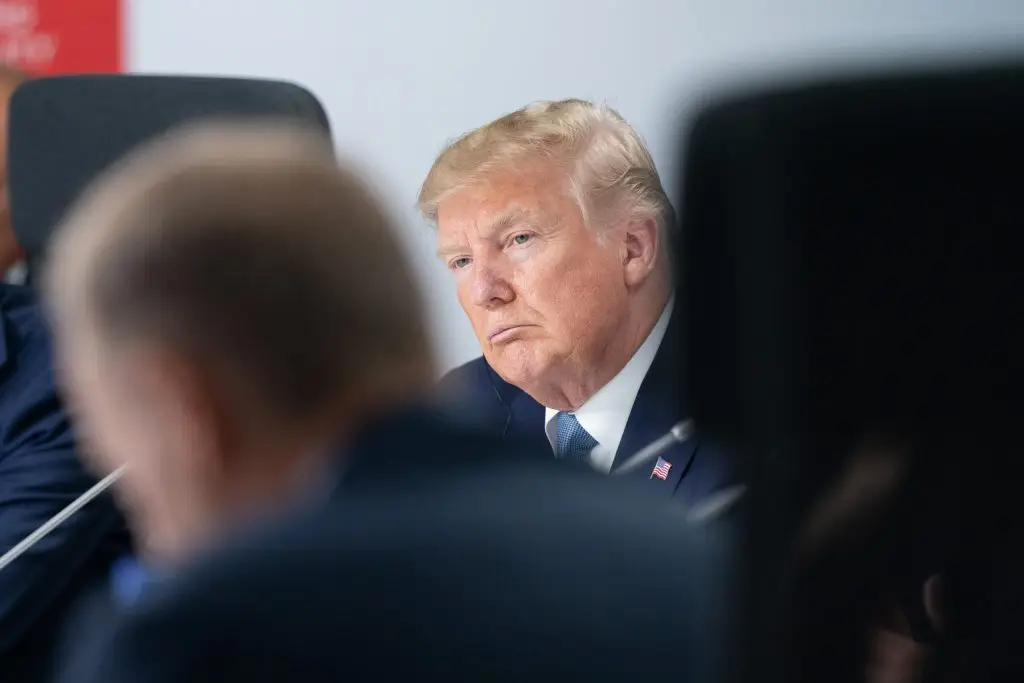
The suit, filed in the U.S. District Court for the District of Columbia, challenges President Donald Trump’s May 1 executive order, which seeks to eliminate federal funding for both PBS and National Public Radio (NPR), citing concerns about bias and a lack of neutrality in their programming.
In its court filing, PBS argued that the executive order violates the First Amendment by attempting to suppress public broadcasters’ editorial independence. The filing states, “PBS disputes those charged assertions [of bias] in the strongest possible terms. But regardless of any policy disagreements over the role of public television, our Constitution and laws forbid the President from serving as the arbiter of the content of PBS’s programming, including by attempting to defund PBS.”
The lawsuit names multiple senior officials as defendants, including President Trump, Office of Management and Budget Director Russ Vought, Treasury Secretary Scott Bessett, Education Secretary Linda McMahon, and Homeland Security Secretary Kristi Noem. Northern Minnesota Public Television has joined PBS as a co-plaintiff.
At the heart of the legal challenge is PBS’s claim that the defunding effort is “blatant viewpoint discrimination.” The lawsuit points to long-standing congressional safeguards that shield public media funding from political interference through the Corporation for Public Broadcasting (CPB), a nonprofit intermediary intended to preserve editorial independence.
“The EO makes no attempt to hide the fact that it is cutting off the flow of funds to PBS because of the content of PBS programming and out of a desire to alter the content of speech,” the suit contends.
It further argues that the order imposes an “unconstitutional condition” on PBS stations’ ability to receive federal support, effectively punishing them for broadcasting content the White House disagrees with.
The Trump administration stands by the order as a necessary move to ensure taxpayer dollars are spent efficiently and not used to promote political agendas under the guise of journalism.
“The Corporation for Public Broadcasting is creating media to support a particular political party on the taxpayers’ dime,” a White House spokesperson said in a statement to Fox News Digital. “The President is exercising his lawful authority to limit funding to NPR and PBS.”
The administration also emphasized that Trump was elected with a mandate to reduce waste and bias in federal spending, including public broadcasting.
Critics of PBS and NPR contend that both organizations have increasingly embraced overt ideological programming that veers from their intended role as nonpartisan, publicly funded media. Many taxpayers argue that their money is being used to subsidize content they believe reflects a specific political or cultural agenda—often left-leaning—and not the broad, balanced public service journalism federal funding was meant to support. To them, the idea that any reduction or withdrawal of funding constitutes a First Amendment violation seems more like institutional ego and entitlement than a legitimate legal claim. These critics maintain that while PBS and NPR have every right to broadcast the content of their choosing, they are not constitutionally entitled to taxpayer support for doing so—especially if the programming appears to reflect partisan viewpoints under the guise of neutrality.
Earlier this week, NPR and several Colorado public radio stations filed a similar lawsuit, calling the executive order a “clear violation of the Constitution.” NPR CEO Katherine Maher criticized the move as a direct assault on press freedom.
“It is an affront to the rights of NPR and NPR’s 246 Member stations, which are locally owned, nonprofit, noncommercial media organizations serving all 50 states and territories,” Maher said.
PBS President Paula Kerger insisted that defunding public media would devastate local stations, especially in rural and underserved communities that rely on PBS for educational and cultural programming.
READ NEXT: NPR and PBS CEOs Grilled In Congressional Hearing















The left wants the court to believe that if the taxpayers are not forced to pay them to spread their view, that it is a violation of free speech. No judge, other than a Clinton, Obama, or Biden appointed judge is going to do anything but laugh at that argument. Of course, one of the Clinton, Obama, or Biden appointed judges will not only say it is valid, but they will also put Donald Trump in jail for ever trying to save the taxpayer money.
DEFUND PBS, because THEY practice blatant viewpoint discrimination.
NPR and PBS 1st Amendment rights are NOT BEING VIOLATED!!! They have EVERY right to broadcast and nobody is taking that away from them. Taxpayers do NOT have to fund them so they can broadcast so THAT is why President Trump is taking funding away. FIND YOUR OWN MONEY or get SUBSCRIBERS you PARASITES!!!