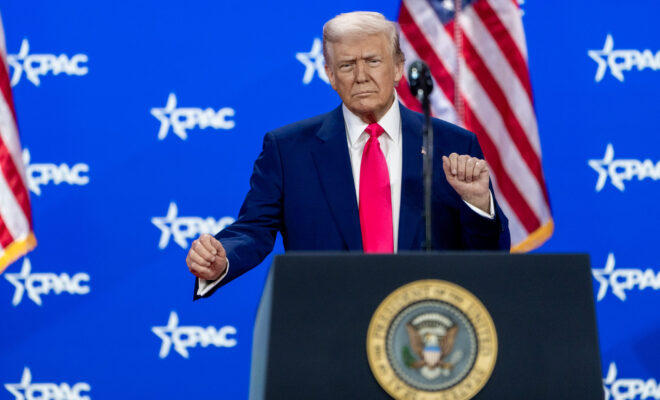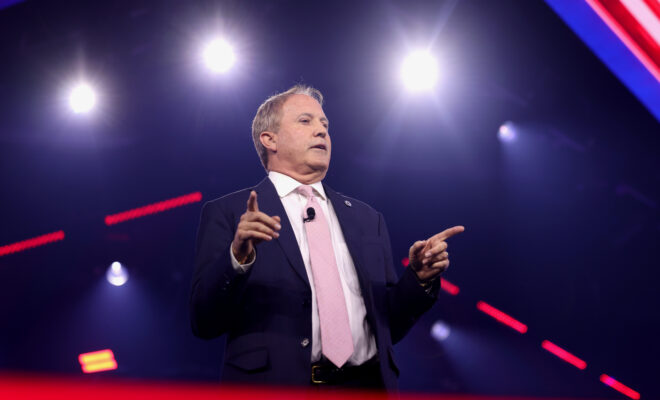



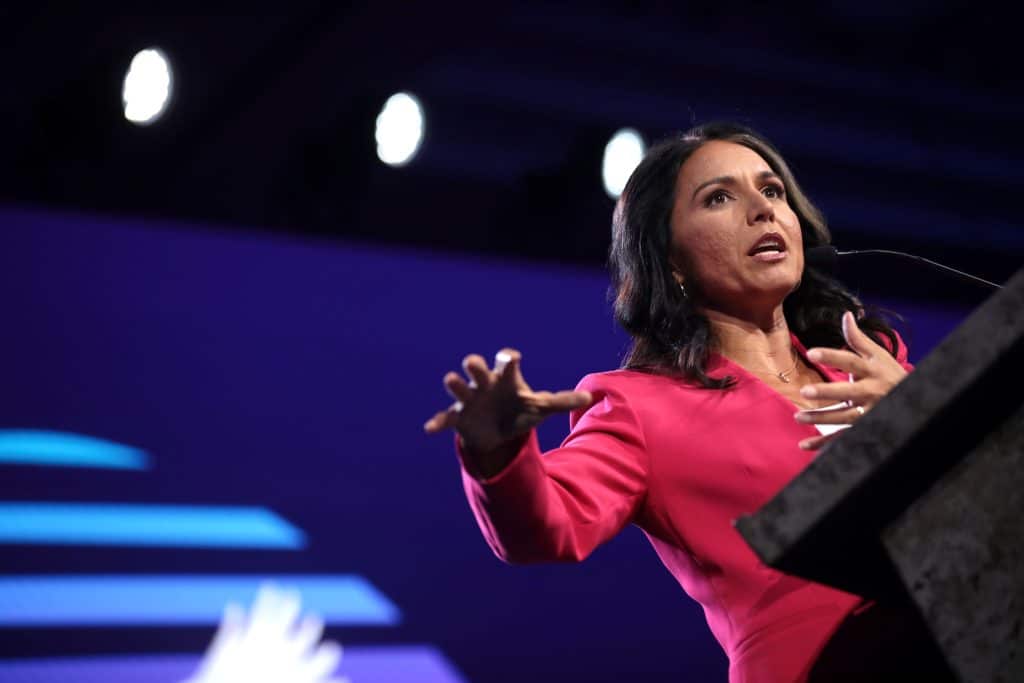
Speaking to reporters aboard Air Force One after departing the G7 summit in Canada, President Donald Trump offered a sharp rebuke of his director of national intelligence (DNI), Tulsi Gabbard, highlighting a growing rift within his administration over Iran’s nuclear intentions.
When asked about Gabbard’s recent statement asserting that Iran is not actively pursuing nuclear weapons, Trump replied bluntly: “I don’t care what she said. I think they were very close to having them.”
CNN: You’ve always said you don’t believe Iran should have a nuke. Tulsi Gabbard testified in March that Iran wasn’t building a nuclear weapon.
— Townhall.com (@townhallcom) June 17, 2025
Trump: I don’t care what she said. They were very close to getting a nuke. pic.twitter.com/YJKMGNlvlz
This divergence underscores a significant internal disagreement over Iran’s nuclear ambitions. Gabbard, in her role as DNI, had testified before the Senate Intelligence Committee that the intelligence community “continues to assess that Iran is not building a nuclear weapon, and Supreme Leader Khamenei has not authorized the nuclear weapons program that he suspended in 2003.”
US intelligence assessed just weeks ago that Iran is not building a nuclear weapon
— WikiLeaks (@wikileaks) June 14, 2025
“The IC [Intelligence Community] continues to assess that Iran is not building a nuclear weapon and Supreme Leader Khamanei has not authorized the nuclear weapons program he suspended in 2003.… pic.twitter.com/jtNw3d3xgR
While Iran has not officially resumed a nuclear weapons program, its recent actions have intensified global concern. According to reports, Tehran has amassed approximately 408.6 kilograms of uranium enriched to 60% purity — dangerously close to weapons-grade. If further enriched, that stockpile could yield material for multiple nuclear warheads.
Iran has also installed thousands of advanced centrifuges at fortified sites like Natanz and Fordow, accelerating its uranium enrichment capabilities. At the same time, Tehran has curtailed the International Atomic Energy Agency’s (IAEA) access to its nuclear facilities, limiting transparency and making it harder to verify the nature of its activities.
🚨 U.S. MAY STRIKE IRAN'S FORDOW REACTOR WITH THE WORLD’S MOST POWERFUL NON-NUCLEAR BOMB
— Defence Index (@Defence_Index) June 17, 2025
🇺🇸 Under pressure from Israel, President Trump is weighing use of the GBU-57 "bunker buster", a 30,000 lb monster bomb that can obliterate underground nuclear sites.
🧨 Here’s how it works… pic.twitter.com/PihNrZYuP9
Some analysts have estimated that Iran could produce enough weapons-grade uranium for a nuclear bomb in as little as one week, with the capacity to fuel several warheads within a month. However, developing a deliverable nuclear weapon would likely require more time and technical advancement. That said, Tehran’s ability to strike Israel quickly with nuclear weapons may have already been severely compromised.
Very clear explanation of the damage to Natanz and Isfahan, and what it could mean, by @laurnorman pic.twitter.com/WyfBk3byc0
— Elliot Kaufman (@ElliotKaufman6) June 16, 2025
Despite Gabbard’s cautious intelligence assessment, Trump has doubled down on the urgency of stopping Iran. He has repeatedly declared that Iran cannot have a nuclear weapon, signaling a willingness to consider all options to prevent that outcome.
This stark contrast between the president and the more libertarian-leaning members of his Cabinet — as well as the isolationist wing of the Republican Party — raises pressing questions about the coherence of the administration’s America First policy. The internal divide could have far-reaching consequences not only for the GOP but also for global stability, economic interests, and American security.
READ NEXT: Trump Issues Chilling Iran Warning At Midnight — Fallout Begins