

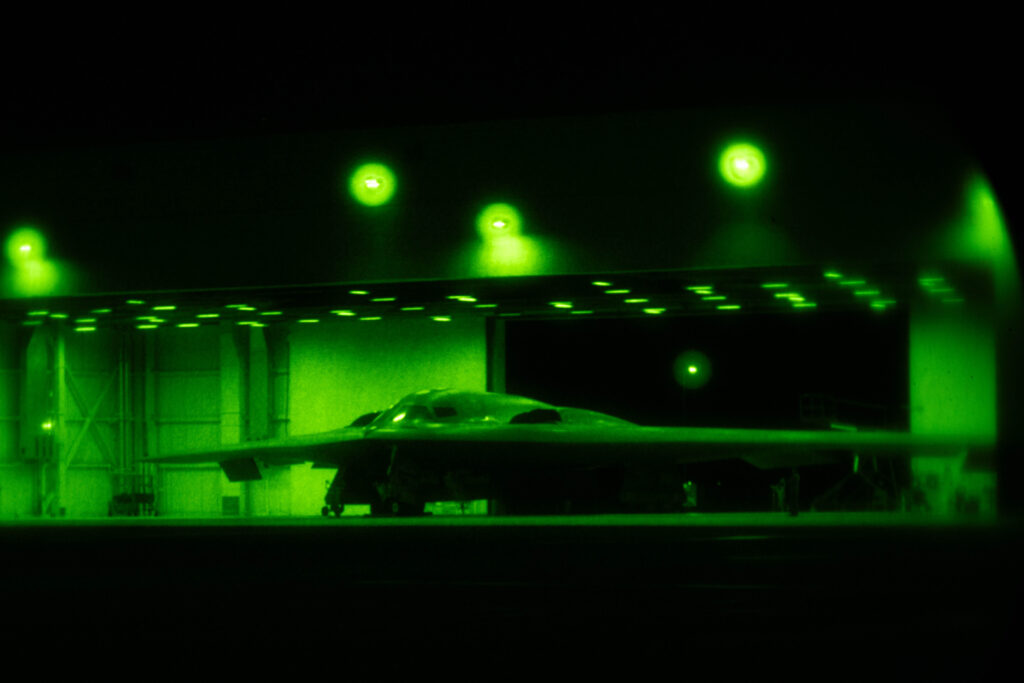
On June 22, 2025, the United States struck deep. Using bunker-buster bombs, Operation Midnight Hammer targeted Iran’s most fortified nuclear facility, Fordow, along with a constellation of related sites. Within hours, a new narrative emerged. According to some analysts and media commentators, Iran had foreseen the strike and whisked its highly enriched uranium out of harm’s way just days before the bombs fell. It is a seductive story, part thriller, part geopolitical chess game. But it is also, on closer inspection, fiction.
Fordow is not a shipping warehouse. It is a subterranean stronghold. Situated 2,500 feet beneath the mountains near Qom, the site is more than a nuclear lab. It is a fortress built precisely to defy attack. Iran spent more than a decade and upwards of two billion dollars to design a facility whose central purpose was to shelter its enriched uranium. So any theory suggesting that the uranium was hastily removed before the strike must explain why Iran would choose, at the critical moment, to abandon the one place specifically engineered to protect it.
The story begins with satellite imagery. On June 19 and 20, sixteen large dump trucks were observed at Fordow. They were not empty, nor discreet. These were trucks of a kind suited to hauling construction materials, cement, earth-moving equipment, steel sheeting. Analysts who reviewed the imagery noted bulldozers actively placing cement covers over air shafts. These shafts are the known weak points in any deeply buried complex, where pressure and airflow must meet engineering limits, but where adversaries might also insert precision-guided munitions. To harden these vulnerabilities is to reinforce the very purpose of Fordow: to endure.
Crucially, none of the observed trucks were the type required to transport nuclear material. Not one matched the profile of the secure, shielded 18-wheelers required by nuclear handling protocols. Nor did they appear to be departing the facility. Most were simply repositioned about a kilometer northwest of the core site, well outside the blast radius, but still within operational range. One truck stood near the main entrance, but again, not the kind of vehicle suited to carry fissile material. There is no visual evidence of loading, no convoy, no escort vehicles, no attempt to obscure or evade. In short, there is no movement that even faintly resembles a uranium exfiltration.

To understand the impossibility of the uranium having been removed, one must first understand what moving enriched uranium entails. Iran is believed to have had approximately 900 kilograms of uranium enriched to 60 percent at Fordow. That quantity, in powder form, must be stabilized into uranium oxide and then sealed into thirty separate Type B(U) containers. Each container stands four feet tall, nearly two feet wide, and weighs between 1,100 and 1,760 pounds. These are not tossed in the back of a truck like crates of fruit. They require fixed cradles, meticulous spacing of at least three to four feet to avoid criticality risks, and strict handling by trained nuclear engineers and radiation safety officers. Criticality risk arises when excessive fissile material, like enriched uranium, is placed too closely together under certain configurations, such that it could support a self-sustaining nuclear chain reaction. Even though each container is subcritical on its own, improper spacing or environmental conditions could elevate the risk. Therefore, these containers must be spaced deliberately and isolated by materials designed to absorb or block neutrons, ensuring absolute containment and safety.
Even in ideal conditions, the logistics are Herculean. A standard 53-foot trailer can carry, at most, 10 to 12 such containers given weight and spacing requirements. So, three fully loaded 18-wheelers are the bare minimum. But those trucks would require armed escorts, route coordination, radiation scanning, and site-to-site secure handoff, all of which are impossible to conceal. And all of which were absent. There is not a single satellite image, civilian witness, or even Iranian media report to support such a convoy ever departing Fordow.
What would it take to move those thirty containers from 2,500 feet underground to surface-level trucks? A subterranean ballet, under ideal circumstances. That would mean sixteen to twenty specialized personnel: radiation technicians, nuclear handlers, riggers, elevator operators, and logistics supervisors. Each container would be robotically handled, slowly ascended via freight lifts or service elevators, tracked, logged, and placed into its cradle. But those conditions were not present. Instead, what satellite imagery showed were a couple of dozen surface-level construction workers, laborers moving dirt, cement, and steel. There were no cranes, no forklifts, no elevators in operation. The equipment needed to safely and efficiently transfer nuclear material was not in place. Under such circumstances, even if Iran had foolishly attempted to begin such a transfer, it could have taken a week or more to complete. And even then, the trucks required to carry the uranium were simply not there.
This is not a job that begins with a backhoe and ends with a shovel. It is not something one does in a panic, or covertly. It requires discipline, coordination, and visible machinery. It is a logistical symphony, not a sleight-of-hand. And yet, in the days leading up to the airstrike, no such operation was visible. Instead, what we saw were trucks hauling cement and bulldozers covering vents, a last-minute attempt to bolster the fortification, not empty it.
Nor would it make strategic sense for Iran to move the uranium. Had it been relocated, any new site would, by definition, be less protected than Fordow. Even if dispersed into multiple civilian facilities or mobile units, the movement itself would expose the material to satellite surveillance and immediate destruction. Given the increasingly tight Israeli and US ISR (intelligence, surveillance, reconnaissance) coverage, any convoy carrying nuclear material would have been a ripe and legally justifiable target for drone strikes.
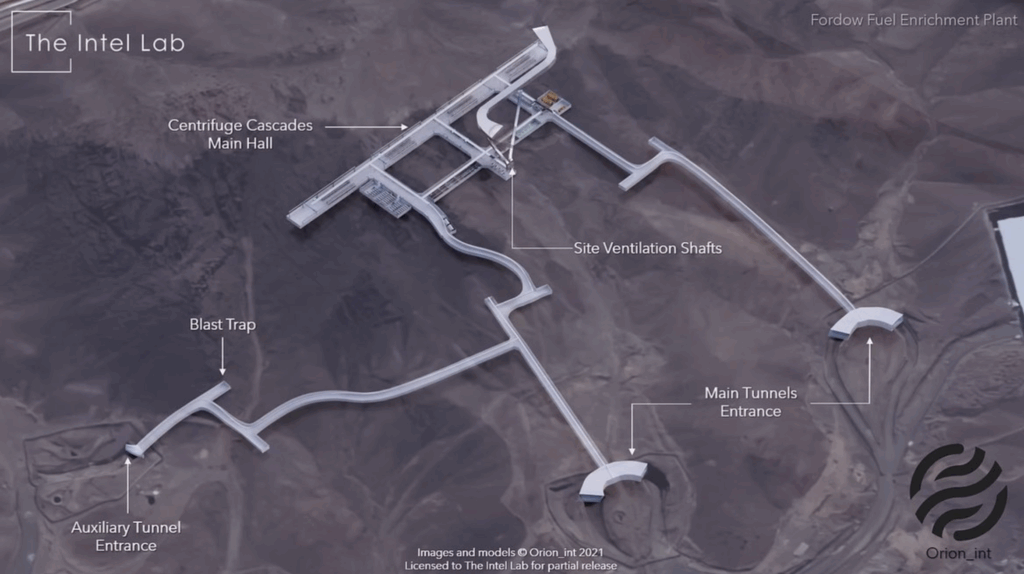
Moreover, Iran knows this. Fordow was built after Israel took out Syria’s nascent nuclear facility in 2007 with a single sortie. It was designed precisely because surface-level concealment no longer sufficed. To move the uranium from Fordow is to abandon its very raison d’être.
So what explains the disinformation? Likely, it is a classic tactic: inject doubt into the aftermath. Suggest that the uranium may still be intact. Foster fear, uncertainty, and doubt. The acronym is apt: FUD. And FUD is a tool of both state propaganda and media opportunism. By seeding the idea that the strike failed to eliminate the core threat, Iran preserves psychological deterrence. It invites domestic pride, foreign caution, and diplomatic ambiguity. But propaganda is not proof. Narratives are not facts. Trucks moving cement are not trucks moving uranium.
Skeptics may ask: is it possible that Iran anticipated the strike and removed the uranium in secret? Possible in the abstract, perhaps, like supposing a magician slipped the card out of your pocket. But we are not dealing with cards, nor with illusionists. We are dealing with 900 kilograms of weapons-grade uranium and a bunker designed to absorb attack. If Fordow cannot protect that material, nothing can. And Iran knows it.
The simplest explanation is the correct one. The uranium remained in place. The reinforcements observed on June 19 and 20 were desperate attempts to patch weak points, to survive the coming assault. Fordow did not empty, it braced. And when the bunker-busters landed, they hit their mark.
Anyone asserting otherwise bears the burden of proof. So far, they have not offered it. Instead, we are left with rumors, conjecture, and speculative interpretations of satellite shadows. The physical, technical, and strategic realities all point in one direction: the uranium stayed put.
If you enjoy my work, please consider subscribing: https://x.com/amuse.
Sponsored by the John Milton Freedom Foundation, a nonprofit dedicated to helping independent journalists overcome formidable challenges in today’s media landscape and bring crucial stories to you.
READ NEXT: Shock Poll Rocks Dems — Longtime Frontrunner In Free Fall


















Fordow keeps getting deeper and deeper. First it was 260 feet. Now it’s 2500. Quite an engineering feat!