

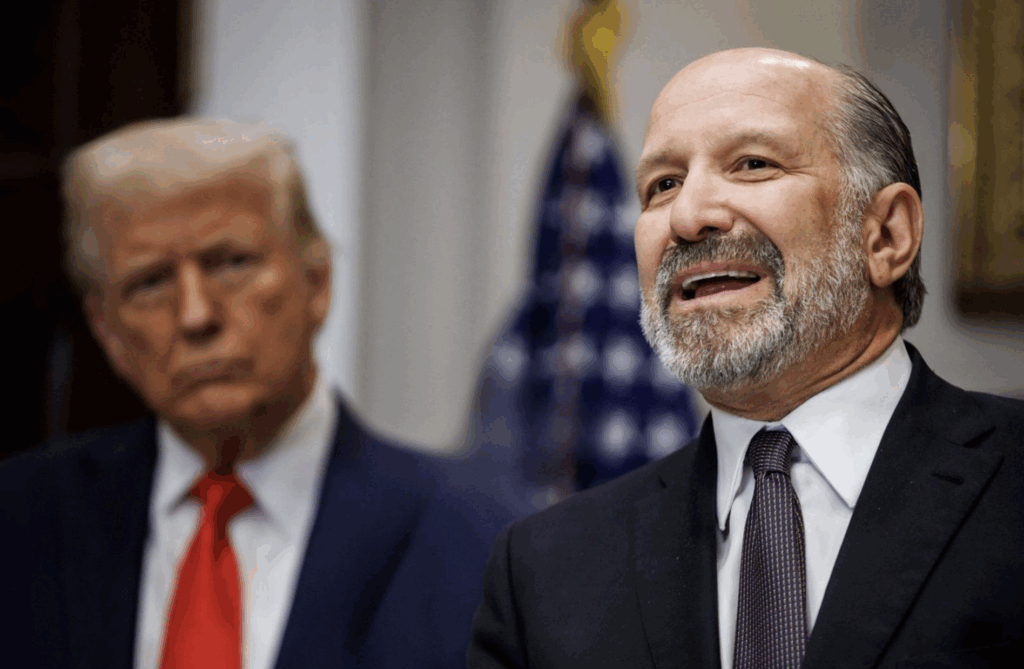
The Trump-Japan trade agreement announced on July 22, 2025, has been many things to many people: controversial, bold, unprecedented. But above all, it is brilliant. It redefines the architecture of global trade, establishing a model that future US deals would do well to emulate. Through this agreement, President Trump and Secretary of Commerce Howard Lutnick created something strikingly novel: a virtual sovereign wealth fund capitalized not by US taxpayers, but by one of our closest allies. This is not mere diplomatic optics or bureaucratic tinkering. It is an economic transformation with metaphysical depth, a reconfiguration of what it means to negotiate on behalf of a sovereign nation.
.@howardlutnick: "What's special about the deal with Japan is this is not traditional investment… this is literally the government of Japan giving @POTUS and the American people $550B to invest, at his direction, on things that are important to America and national security." pic.twitter.com/ZLJYN1vqO7
— Rapid Response 47 (@RapidResponse47) July 24, 2025
Let us begin with the fundamentals. Trade deficits have long haunted American politics, most often serving as cudgels wielded by opposing factions. Economists debate their significance. Politicians weaponize them. Meanwhile, the public rightly senses that an imbalance exists when goods flow in and factories shut down. Traditional trade deals attempt to remedy this by offering future concessions, increased market access, or vague commitments to “level the playing field.” But these promises are paper tigers, easily ignored, impossible to enforce. Trump’s Japan deal breaks that pattern by inverting it. Instead of asking for concessions in the future, he demanded compensation upfront: a $550 billion infusion of Japanese capital to finance American infrastructure and industry.
This is a paradigmatic shift. Imagine, if you will, a wealthy guest who has long overstayed their welcome, consuming more than they contribute, finally agreeing to help renovate the house. That is what Japan has agreed to do. Rather than merely apologizing for the trade imbalance, they have provided a signing bonus that allows the US to reinvest in itself, without begging Congress for a dime.
Critics may ask: why would Japan agree to such terms? The answer is simple, and it is twofold. First, Trump’s judicious application of a 15% tariff on Japanese imports, a strategic retreat from higher threatened rates, signaled credible resolve. Second, Japan understands the geopolitical stakes. A strong, self-sufficient United States is the linchpin of Pacific stability. Financing American energy, manufacturing, and AI facilities is not charity. It is insurance against Chinese hegemony.
But it is the structure of the deal that makes it revolutionary. Lutnick has explained that this is not a conventional investment where Japan chooses projects or demands managerial control. Instead, the US selects the infrastructure priorities: nuclear plants, LNG terminals, roads, AI labs, shipyards. The Japanese capital follows the American blueprint, not the reverse. Once built, these assets are leased to American operators, ensuring that the control, innovation, and job creation remain domestic. The profit-sharing arrangement, which grants 90% of the profits to the US and only 10% to Japan, reflects the success of Trump’s strategy: empowering Secretary Lutnick to craft the framework, then stepping in personally to secure terms that overwhelmingly favor the American people.
Here, the analogy to a sovereign wealth fund becomes apt. Most nations fund such investment vehicles using oil revenues (Norway, Saudi Arabia) or tax surpluses (Singapore). The United States has long lacked one, and for good reason. Entrusting vast capital to Washington bureaucrats would be like asking arsonists to guard a match factory. Trump’s model resolves this problem by using foreign capital and American discretion, merging strategic capital allocation with democratic accountability. The American people, through their elected executive, determine how the funds are used. And unlike typical deficit spending, this model produces assets, not liabilities.
Historical context further vindicates this approach. In 1947, Secretary of State George Marshall proposed a $13 billion recovery plan to rebuild postwar Europe. The logic was clear: help our allies stabilize, and America will benefit from global stability and trade. Trump has flipped the script. Now it is our allies who invest in us, stabilizing American strength as a bulwark against global disorder. And instead of the vague hope of future returns, this deal provides hard assets and measurable profits.
Let us not ignore the multiplier effects. Every road paved, every plant constructed, every ship built will generate domestic employment, tax revenue, and technological innovation. This is industrial policy without central planning, capitalism without the cronyism. Foreign capital, domestic execution. American profits. Japanese gratitude. And all of it orchestrated by a team that understands that power respects leverage, not platitudes.
Compare this to the European Union’s habitual dithering, or to South Korea’s endless attempts to renegotiate trade terms without skin in the game. Trump’s model demands immediate performance, not long-term evasion. The Japan deal is not merely a one-off victory. It is a precedent. Secretary Lutnick has rightly signaled that this model will be applied to other allies, compelling them to repay decades of trade imbalances with real capital, not empty promises.
Now, a skeptic might ask whether this constitutes a form of economic coercion. Is Japan truly a willing partner, or are they capitulating under pressure? But that question presumes a false dichotomy. In geopolitics, coercion and consent often coexist. When Washington imposed tariffs, it was not out of spite, but to realign incentives. Japan understood that maintaining privileged access to the American market required meaningful reciprocity. That is not coercion. It is negotiation.
Nor should we worry that such arrangements erode free market principles. Quite the opposite. They prevent the kind of managed trade that bureaucrats and multilateral organizations prefer. There is no World Bank here, no IMF, no committee of unelected technocrats determining how billions should be spent. There is simply a sovereign nation asserting its interests and inviting its allies to invest in mutually beneficial outcomes.
The broader philosophical point is this: sovereignty is not merely a legal status. It is a material condition. A nation that depends on foreign goods, foreign capital, and foreign goodwill is not sovereign. By flipping the trade script, Trump has begun restoring true sovereignty, not just in rhetoric but in deed. Infrastructure built with foreign money, controlled by American operators, and yielding profits to American taxpayers is the very definition of national self-determination.
In this respect, Trump’s model resembles a kind of patriotic capitalism. It is not isolationist. It is not exploitative. It is the logical extension of fair trade. Foreign nations have benefited from access to the US market for decades. Now they must help strengthen the very foundation of that market. In so doing, they ensure its continued vitality. And we, the American people, get a return on what was once a one-way transaction.
It is no accident that this deal emerged during a Trump administration that views leverage, not consensus, as the proper basis for diplomacy. Consensus has produced decades of stagnant promises and vanishing manufacturing. Leverage, used intelligently, yields results. What matters is not whether the global commentariat approves. What matters is whether American workers have jobs, whether our roads and ports function, whether our industries innovate.
It is fitting that Howard Lutnick, a man with both Wall Street acumen and patriotic fervor, was the architect of this plan. He understood that the private sector builds wealth when capital is directed with precision. He simply applied that logic to the state. And Trump, uniquely unencumbered by globalist dogma, provided the political will.
In sum, the Trump-Japan deal is not just a trade pact. It is a conceptual revolution. It marks the end of impotent negotiation and the beginning of profitable partnership. It demonstrates that allies must do more than offer diplomatic platitudes. They must invest.
If you enjoy my work, please consider subscribing: https://x.com/amuse.
Sponsored by the John Milton Freedom Foundation, a nonprofit dedicated to helping independent journalists overcome formidable challenges in today’s media landscape and bring crucial stories to you.
READ NEXT: Secretary Of State Draws Line In The Sand With This Foreign Adversary














It is such a positive experience reading the Amuse commentaries, especially ones such as the “Art of the Deal” regarding our new agreement with Japan. Explained in simple, thoughtful language, I become more aware of the nuances in these negotiations on behalf of the United States. I am firmly convinced that President Trump’s Cabinet is comprised of the best people for this time. History is in the making and we have the privilege of watching it happen! Thank you, Amuse, for another outstanding expression of your point of view!