


Let us begin not with sentiment, but with ground truth, literal ground truth. The White House Rose Garden, that picturesque backdrop of American diplomacy and presidential ceremony, had become a hazard. Beneath the cultivated flowers and beneath the gaze of the press corps lay a sodden, temperamental patch of turf better suited to cattle grazing than ceremonial governance. To say that it was merely “muddy” on occasion is to understate the case. Guests in heels sank inches deep. Staffers slipped. Ambulances, summoned for twisted ankles and jarred knees, became frequent and predictable visitors. And all this played out before a global audience.
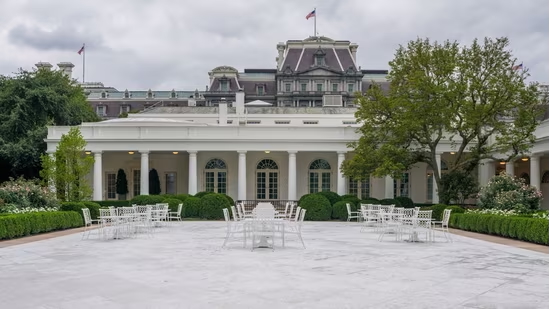
Against this background, President Trump’s decision to replace the grass lawn with a grid of stone pavers should be understood not as desecration, but as correction, and a long-overdue one at that. If anything, the outrage at this change reveals a profound ignorance of the Rose Garden’s true nature. It is not, and has never been, a museum piece. It is a working space. It is a site of activity, visibility, and power. And it has always evolved.
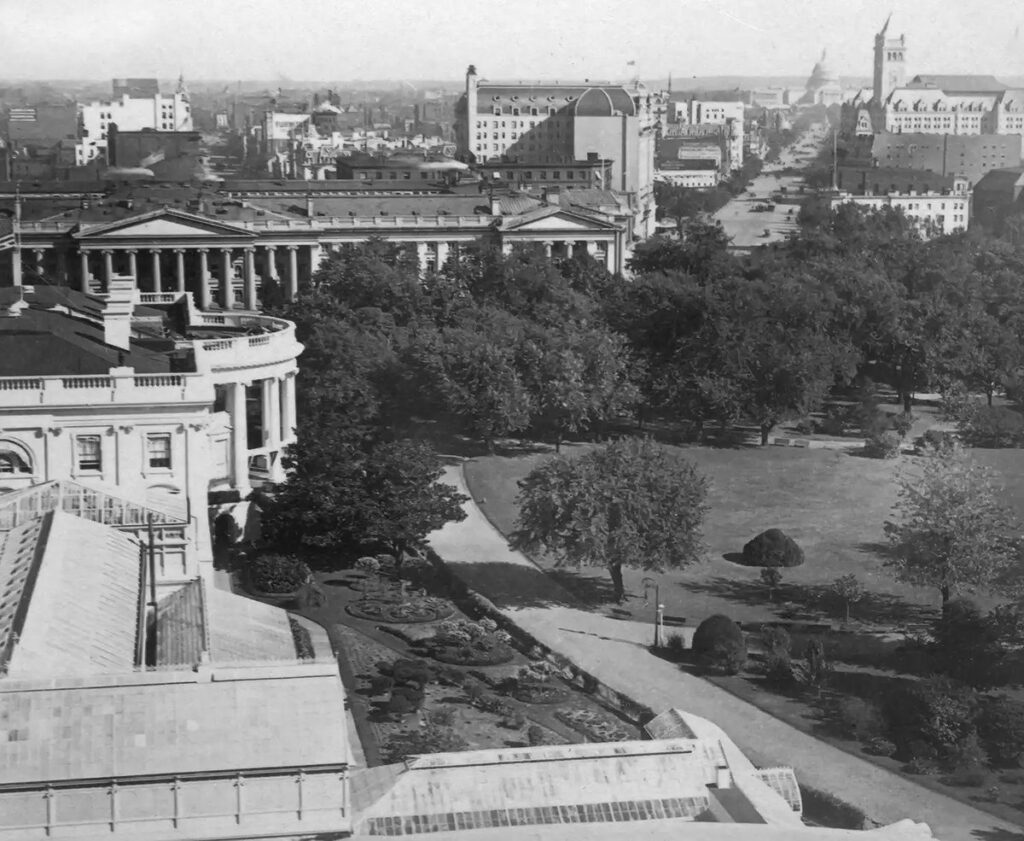
Indeed, the Rose Garden owes its very existence to a prior demolition. In the 1850s, the area west of the White House was occupied not by flora, but by iron and glass. Victorian greenhouses, including a specialized “Rose House,” sprawled across the site. They were dismantled not by cultural vandals, but by President Theodore Roosevelt in 1902, who needed room to expand the West Wing. In their place, First Lady Edith Roosevelt conceived a colonial garden. It was quaint, informal, and in keeping with her romantic sensibilities. She filled it with wildflowers and edged it in boxwoods, arranging the beds in paisley patterns.
That design lasted barely a decade.
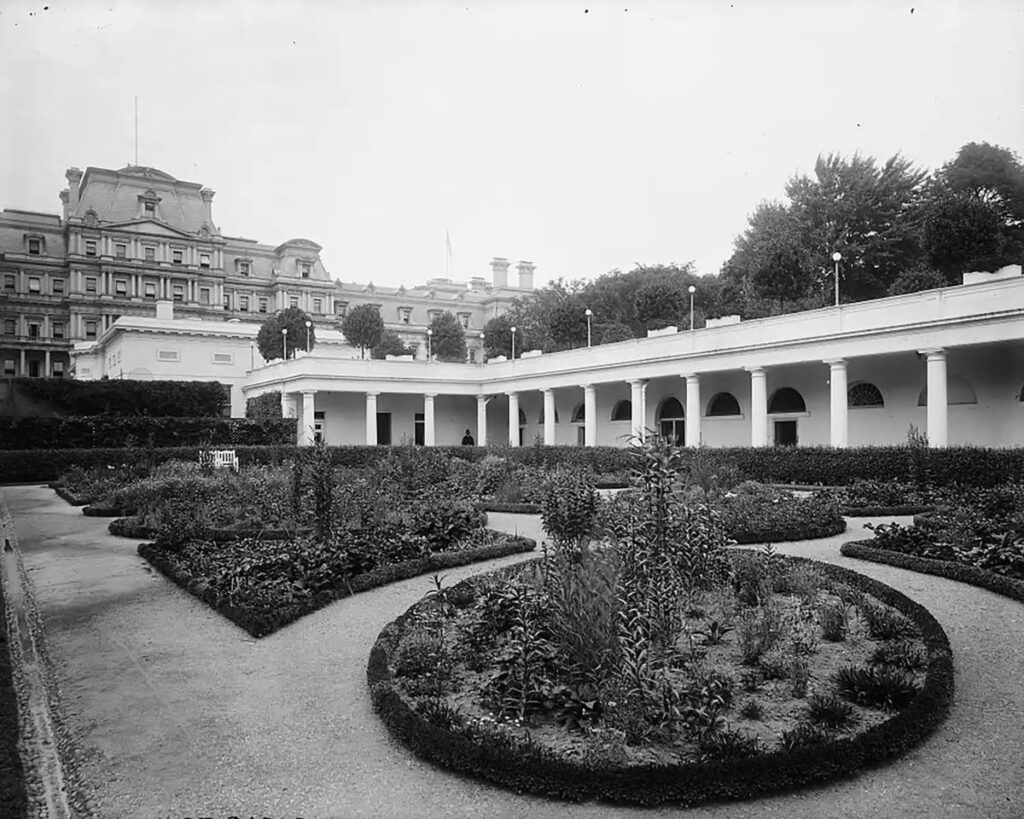
In 1913, First Lady Ellen Wilson, wielding a taste for formality and French geometry, wiped the slate clean. Working with landscape architect George Burnap, she installed symmetrical rose beds and clipped hedges. This was the first garden at the White House that could plausibly claim the title “Rose Garden.” Her design, refined and axial, stayed in place for decades. Even after her early death in 1914, it remained.
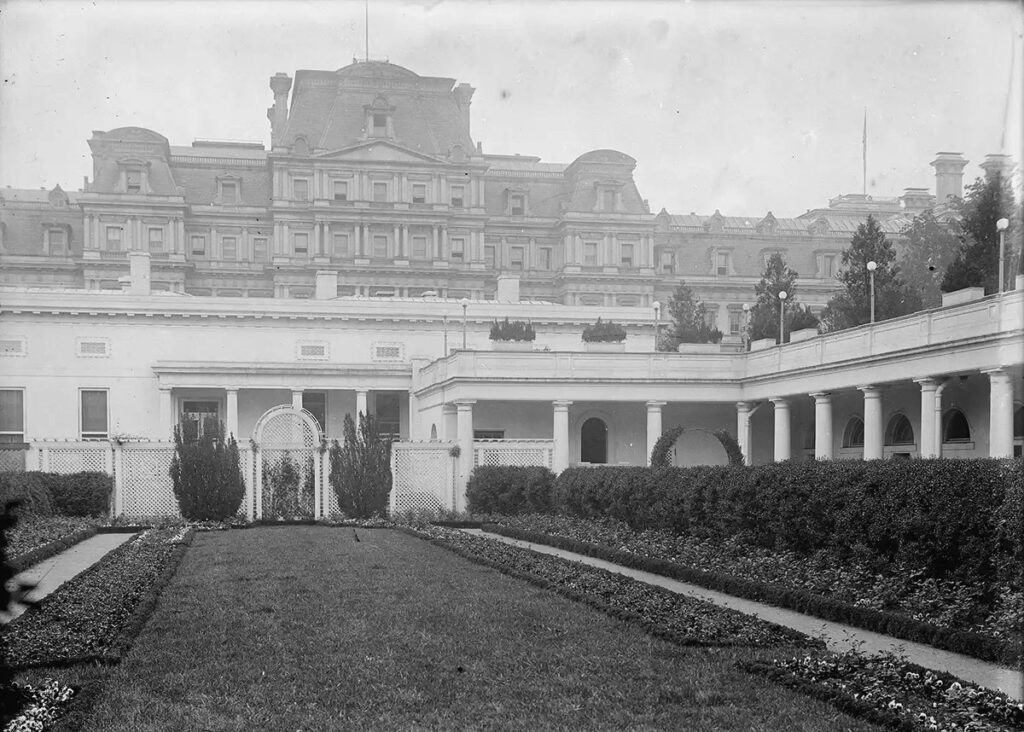
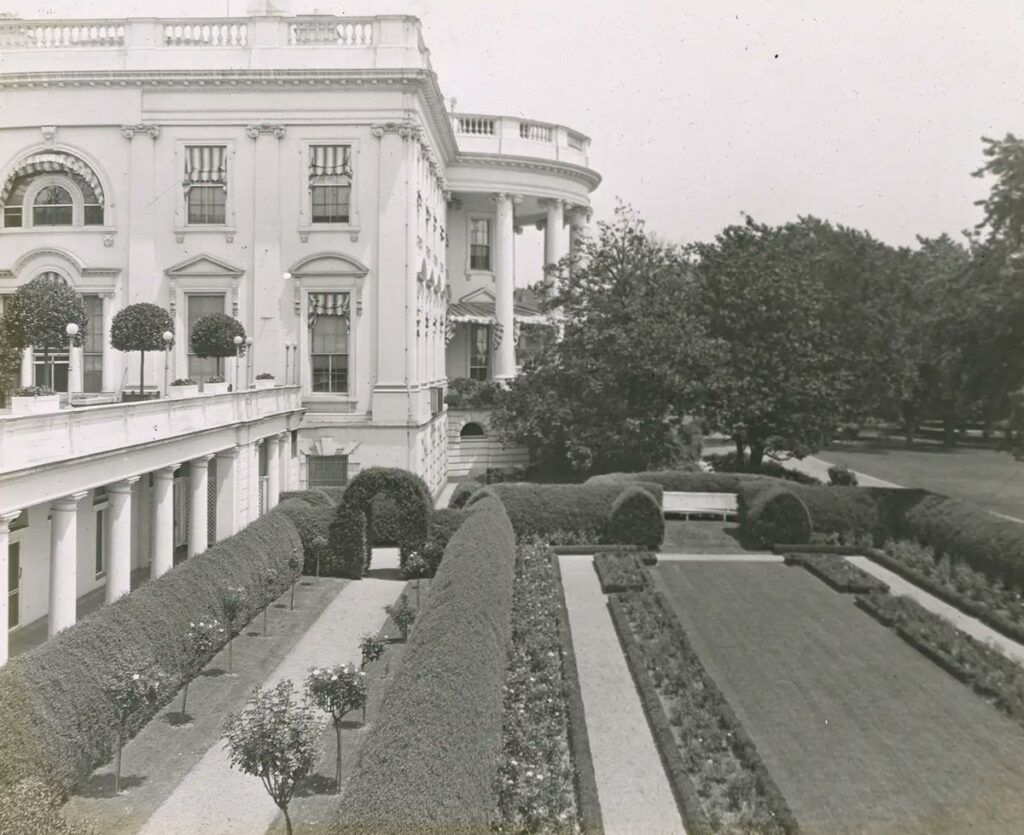
In the 1930s, Franklin D. Roosevelt invited Frederick Law Olmsted Jr. to reimagine the space. Olmsted removed clutter, added benches, and emphasized openness. Then came the Trumans, who tore the whole thing up again, not as an aesthetic choice, but because the entire White House structure was being gutted and rebuilt from the inside out. When it was finally restored, President Eisenhower began clearing hedges to make room for a ceremonial lawn.
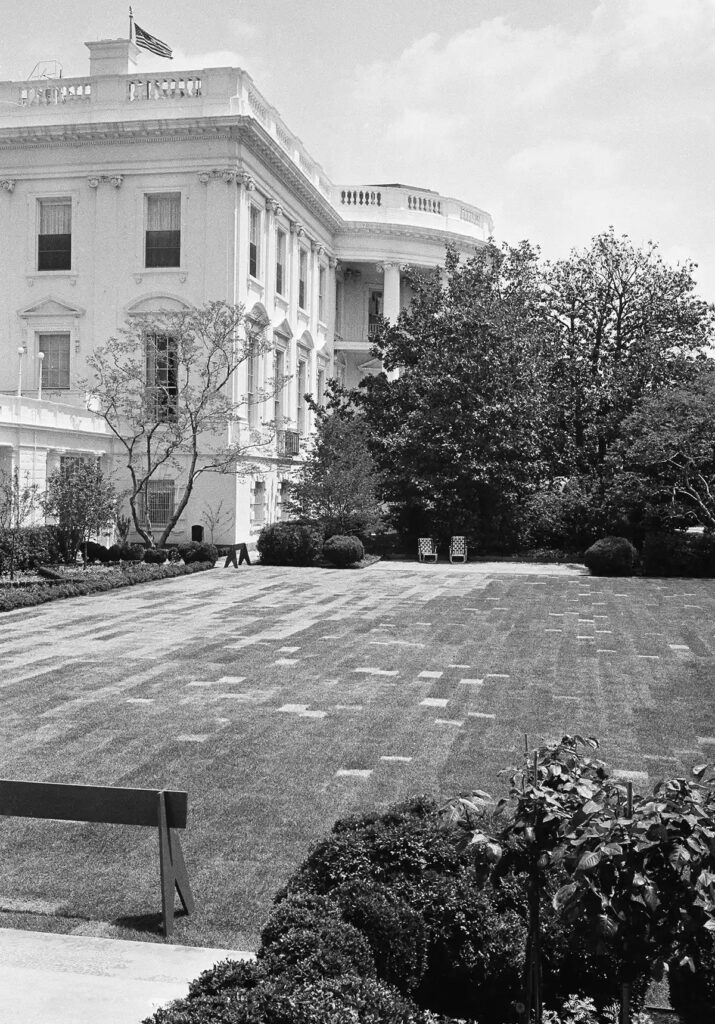
The lawn itself, that verdant expanse that so many now mourn, is not a founding feature. It is a Kennedy-era innovation, the brainchild of Rachel Lambert Mellon. At the behest of President John F. Kennedy, Mellon redesigned the garden in 1962 to host statecraft and showmanship. She created a rectangular lawn flanked by rose beds and anchored by magnolia trees. It was elegant, certainly, and politically functional. But it was not sacred. It was, like every version of the Rose Garden before it, a response to the needs of the time.
Our time, unlike Kennedy’s, requires traction.
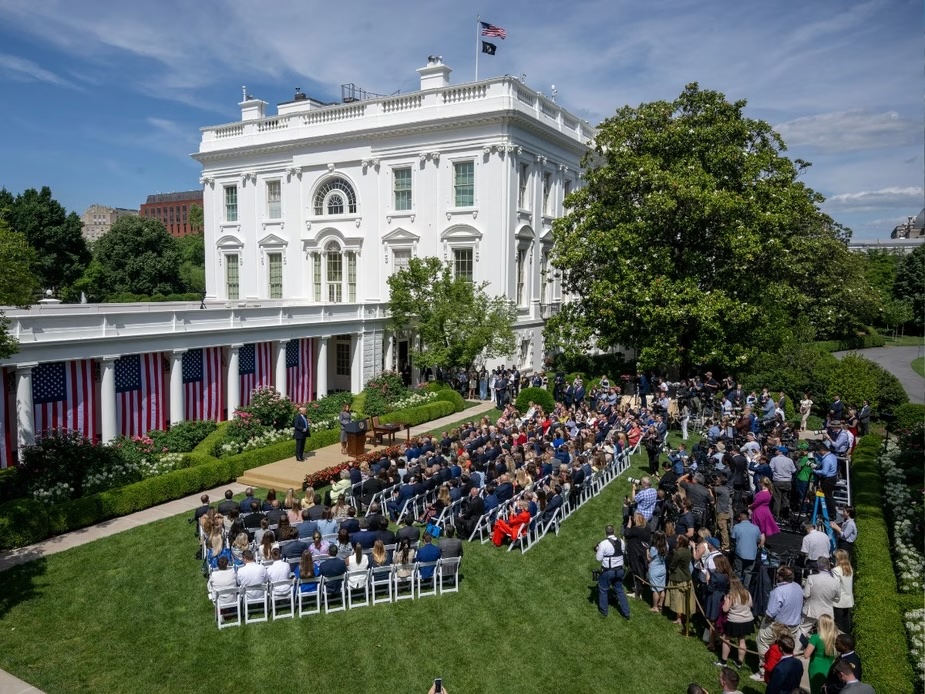
The modern Rose Garden hosts press conferences, executive signings, state dinners, diplomatic announcements, and yes, even weddings. Its ceremonial role has increased, not diminished. And with that comes wear and tear. The soil cannot support a constant trampling. Drainage systems, despite decades of effort, have not kept up with the demands of the schedule. One could aerate, reseed, and hope for the best. But one would be mistaken to think that such horticultural half-measures suffice.
President Trump’s choice to install pavers resolved this. Not only do they provide firm footing, they also permit access for all guests, regardless of shoe or disability. The pavers preserve the beds, protect the flowers, and allow maintenance crews to navigate the space without churning it into muck. It is a triumph of practicality.
And yet critics, especially Democrats, feign reverence for the lawn as though it were hallowed turf. They cast the renovation as a violation of tradition. But one must ask: which tradition? The paisley beds of Edith Roosevelt? The axial symmetry of Ellen Wilson? The open geometry of Olmsted? The hybrid French-American layout of Mellon? The tradition, in fact, is change.
Moreover, the political reaction reveals more than aesthetic discomfort. It betrays a deeper partisanship. Had the renovation been initiated by Michelle Obama, one suspects we would hear paeans to accessibility and equity. Had Joe Biden replaced the sod with solar tiles, we would be told it was a bold climate innovation. But Trump acted. Therefore, the act must be condemned. The garden, in this view, is not a living space, but a battleground.
Let us return, instead, to facts.
According to National Park Service records and interviews with White House staff, the most frequent cause of minor medical intervention on the premises in recent years involved guests falling due to the wet lawn. The problem was exacerbated during spring and autumn, when events are most frequent and precipitation is high. Women in heels were most vulnerable, though not exclusively so. Several foreign dignitaries have stumbled. Security personnel have slipped. In one particularly farcical episode during a 2019 press briefing, a reporter became stuck mid-question and had to be hoisted free by two cameramen.
All of which raises a question: why did it take until 2025 to fix the obvious?
The answer lies not in ignorance, but in inertia. No one wanted to touch the Kennedy-Mellon design, not for fear of horticultural disaster, but for fear of being accused of desecration. This is an error. As even Mellon herself admitted, a garden must serve its purpose, or it will cease to be a garden at all.
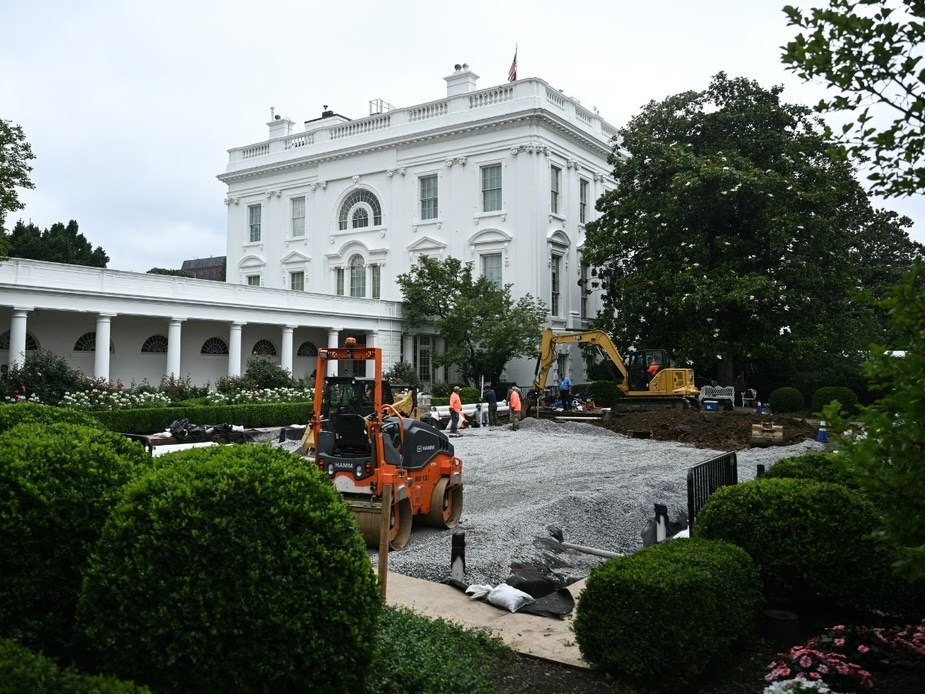
Thus, the new Rose Garden, with its pavers, its roses, its functional elegance, does not break faith with the past. It fulfills the promise of the space: to be both beautiful and usable. It honors the precedent of continuous adaptation. And it respects the needs of the modern presidency, which demands not only symbolism, but stagecraft.
A garden is not a relic. It is a stage. And this one, finally, is safe to stand on.
If you enjoy my work, please consider subscribing: https://x.com/amuse.
Sponsored by the John Milton Freedom Foundation, a nonprofit dedicated to helping independent journalists overcome formidable challenges in today’s media landscape and bring crucial stories to you.
READ NEXT: Trump 2.0 Mobilizes Massive Funds To Build ‘New Army’



















I guess we can count on more TDS piling on as a result.