




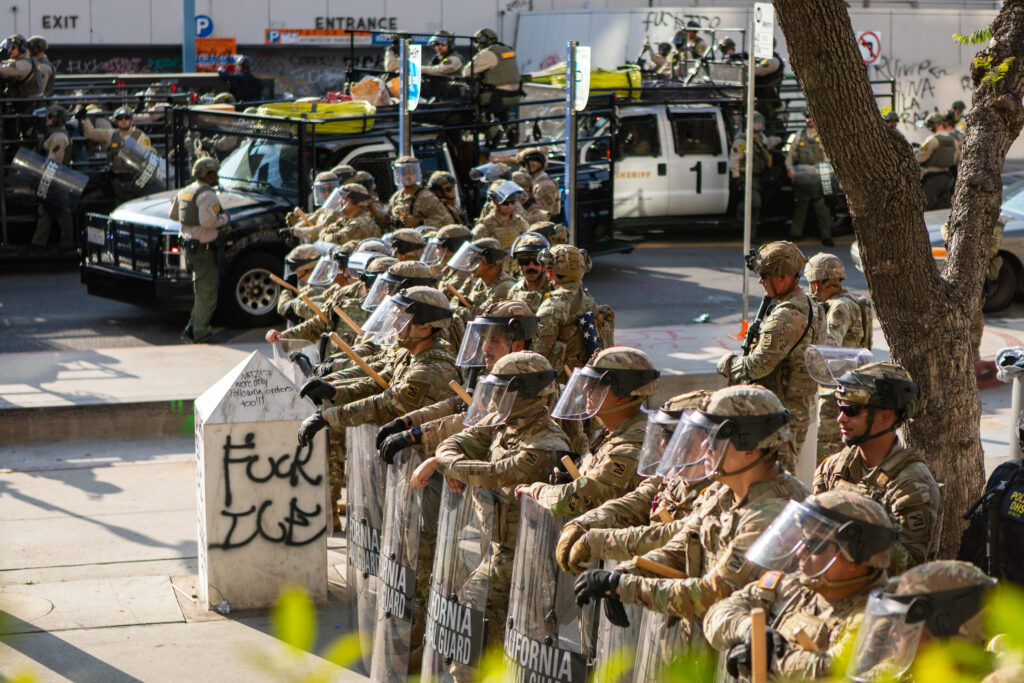
In a 6–3 ruling Monday, the U.S. Supreme Court lifted a lower court’s ban on aggressive immigration enforcement tactics in the Los Angeles area.
The original restriction, issued by Judge Maame E. Frimpong, had barred federal agents — including ICE — from making stops based solely on race, language, accent, occupation, or location unless they had reasonable suspicion.
Although Frimpong ruled that federal authorities engaged in unlawful racial profiling, the Supreme Court rejected that finding.
The Wall Street Journal continues:
The court, in a brief unsigned order, granted an emergency request by the Trump administration to remove the limits while litigation continues. Government lawyers had argued the lower court had improperly interfered with agents’ ability to conduct immigration enforcement in a high-priority metropolitan area that harbors a large population of immigrants who are in the U.S. without permission.
🚨 In a 6-3 decision, the Supreme Court pauses a lower court ruling that had prohibited the Trump administration from conducting roving immigration arrests across Los Angeles. pic.twitter.com/s1KMwyZW2D
— Greg Price (@greg_price11) September 8, 2025
The case has put a focus on the administration’s strategies to ramp up immigration sweeps and deportations. The plaintiffs include immigrant-rights organizations and Latino individuals who said they were stopped because of their appearance during federal patrols that descended upon car washes, bus stops, parking lots and other places with a large Latino presence.
The Court’s decision clears the way for broader immigration operations in greater Los Angeles, one of the country’s largest hubs for illegal immigrants.
The conservative majority agreed that the previous limitations tied the hands of federal agents. The Trump administration had long argued the restrictions made it harder to tackle illegal immigration effectively.
Justice Sonia Sotomayor dissented, joined by the Court’s other liberal justices. She claimed the decision opens the door to racial profiling and threatens constitutional rights.
Still, the ruling reinforces a basic principle: Federal immigration law is federal. And when it comes to enforcing it, the Supreme Court just gave the green light.
This is a breaking news story. Please check back for updates.
READ NEXT: Appeals Court Issues Stunning Response To Trump Ruling





















Need to start throwing theses rouge judges in jail.