



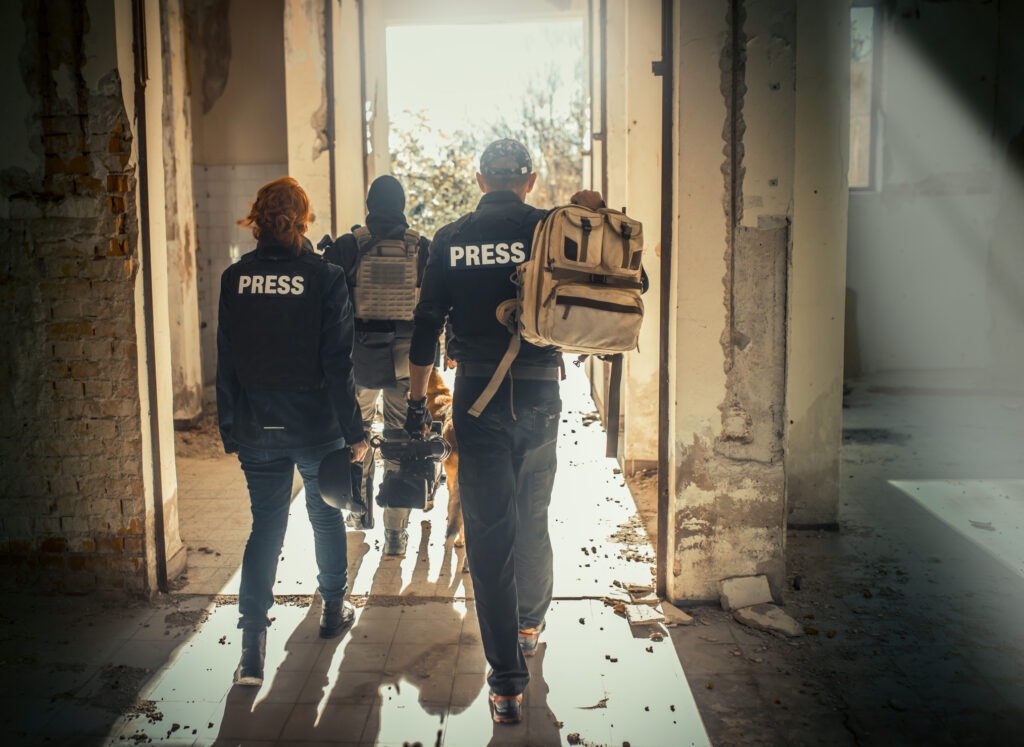
Freedom of the press is not a polite request to those who would silence it. It is a constitutional guarantee, rooted in the First Amendment, and binding on both state power and private mobs. Yet in cities across America, reporters are regularly harassed, detained, and even assaulted by activists intent on controlling the narrative. Police too often stand by as journalists are surrounded, blocked, or beaten. If the state abdicates its duty to protect the press, then journalists must lawfully protect themselves. Non-lethal stun guns, already legal in most states, represent a proportional and constitutional means of defense. The right to report the news cannot be reduced to the right to be a victim.
O-MEGA Super Stunner Stun Gunhttps://t.co/8iQ6DGMBRl
— @amuse (@amuse) September 8, 2025
The Constitution speaks clearly. The First Amendment is not a hollow promise but an enforceable right, and courts have held again and again that neither the government nor private actors can unlawfully interfere with journalists in public spaces. When activists surround a reporter, block their movement, or prevent them from filming, this is not protest. It is false imprisonment, recognized as a crime in nearly every state, and it directly implicates federal civil rights law under 42 U.S.C. §1983. Such conduct strips journalists of freedom of movement, safety, and expression. No theory of free protest includes a right to trap others against their will.
🚨WATCH: Antifa militants harass Post Millennial reporter @KatieDaviscourt outside the Portland ICE facility.
— FRONTLINES (@FrontlinesTPUSA) August 23, 2025
Daviscourt has been covering the far-left mob for over two months despite being harassed, threatened, and assaulted by masked militants.
"Get the f**k out of here.… pic.twitter.com/FBjeus7UEI
Consider the threats reporters face. Groups like Antifa and Black Bloc have perfected the tactic of neutralizing the press. They surround journalists with umbrellas to obscure cameras, they form human walls to prevent movement, they push reporters into enclosed spaces, and they dox them online in order to terrorize them into silence. In some cases, the hostility escalates into violence. Andy Ngo, a journalist covering Antifa in Portland, was hospitalized with a brain injury after repeated beatings. Jonathan Choe has been mobbed and harassed while filming, enduring intimidation designed to drive him out of public spaces. These are not isolated incidents. Across the country, reporters covering protests find themselves cornered, their equipment destroyed, their work interrupted. The pattern is deliberate and the goal is clear: silence the press through fear.
Author Andy Ngo who exposed Antifa says he was beaten by 'masked mob' https://t.co/jULec6eKrD pic.twitter.com/Tm1bHFbdwD
— New York Post (@nypost) June 4, 2021
What of the police? In principle, they are charged with defending order and protecting rights. In practice, they frequently avoid confrontation with activists, especially in cities where local politics demand restraint. In Portland, Seattle, and Minneapolis, law enforcement has too often stood down as mobs took over the task of policing speech. This abdication leaves reporters defenseless. But constitutional rights do not depend on police protection. If the state refuses to protect journalists, that refusal does not strip citizens of the right to defend themselves. It makes the right of self-defense all the more urgent.
Wild Scene today in Seattle at the Woman's March and Guest Speaker Seattle Mayor Candidate Katie Wilson.
— M. Adams (@jerkinyourchain) September 7, 2025
Jonathon Choe can't even ask a question, as Candidate Katie Wilson squirms and attempts to flee.
Politicians love to talk, until you ask them a question they don't like. pic.twitter.com/n3CfeHwexV
Here is where the question of proportionality arises. Journalists need a lawful means of defense that deters aggressors without escalating violence. Firearms are not the answer. They are lethal and their use would only deepen conflict. Stun guns, by contrast, are defensive tools. They are legal for civilians to carry in almost every state, subject to narrow restrictions. They are non-lethal, easy to carry, and often effective without physical contact. The loud electrical crackle of a stun gun is itself a deterrent, scattering would-be aggressors before force is necessary. And when contact is unavoidable, a stun gun disables just long enough for escape. This is not escalation, it is proportionality. It allows journalists to preserve their safety without violating the very principles of non-violence that underlie legitimate protest.
Critics will claim that allowing journalists to carry stun guns risks inflaming already tense situations. But this objection misunderstands the nature of self-defense. A stun gun in the hands of a journalist is not a weapon of suppression but of survival. Its purpose is not to punish, but to provide a means of escape when unlawfully detained. Consider the alternative. A reporter trapped by a hostile crowd has only two options: endure intimidation and possible violence, or attempt to push through and risk further escalation. A stun gun provides a third option, a lawful deterrent that can create space without inflicting lasting harm. It preserves the journalist’s right to cover events while minimizing danger to all parties.
There is a deeper principle at stake. The press is not a spectator to democracy, it is a participant. The First Amendment guarantees not just abstract freedom, but the concrete ability to gather and publish information. To deny journalists the means of defending that ability is to hollow out the right itself. If mobs can encircle and silence reporters with impunity, then the public’s right to know is compromised. The state may tolerate hostile protests, but it cannot tolerate the silencing of the press. And when the state abdicates, it falls to the individual journalist to exercise the same rights of self-defense that every citizen enjoys.
The law already recognizes this principle. Every state permits self-defense against unlawful restraint. Courts have consistently upheld the right to use proportional force to escape false imprisonment. Stun guns fit squarely within that doctrine. They are non-lethal, they are widely recognized as defensive tools, and they are effective at creating the space necessary for escape. In short, they meet every legal and moral test for proportional defense. The only barrier is cultural, a misplaced belief that journalists must remain passive victims, depending entirely on the good will of police or protestors. That belief is both unrealistic and dangerous.
The reality is harsher. In modern America, mobs have learned to manipulate restraint as a weapon. They know that reporters will not push back physically, that police may not intervene, and that violence carries risks of public backlash. So they rely on intimidation, on surrounding and trapping, on non-violent but still unlawful tactics to suppress coverage. Stun guns change that calculus. They signal that unlawful detention will not succeed, that journalists have both the right and the means to resist. This deterrent effect alone may be enough to protect press freedom.
The objection that stun guns create risk of misuse deserves consideration. Could a journalist deploy one too hastily? Perhaps. But the same is true of any tool of self-defense, from pepper spray to a clenched fist. The law does not strip citizens of self-defense because of hypothetical misuse. It requires judgment and proportionality, and it holds misuse accountable. The same standard can and should apply to journalists.
None of this suggests that the burden should fall on reporters alone. Police must do more. Legislators should ensure that laws protecting journalists are enforced, and that those who assault the press face real consequences. But until that happens, journalists must recognize that they are not helpless. They are citizens with rights, including the right to defend themselves against unlawful restraint. Stun guns offer a narrow, effective, and legally justified tool for doing so.
The stakes are high. A free press cannot survive if it can be silenced by mobs. Reporters cannot fulfill their role if they are cornered and harassed out of public spaces. To defend the First Amendment, journalists must be prepared to defend themselves. Stun guns are not escalation, they are preservation. They are not swords, they are shields. And in a time when police protection cannot be relied upon, they may be the only shield left.
Disclaimer: I am not a lawyer, and this is not legal advice. This is a call to action for journalists to consider practical, legally justified means of defending themselves when government institutions fail to uphold their rights. Before carrying a stun gun check the laws in your location and talk to a lawyer.
If you enjoy my work, please consider subscribing: https://x.com/amuse.
Sponsored by the John Milton Freedom Foundation, a nonprofit dedicated to helping independent journalists overcome formidable challenges in today’s media landscape and bring crucial stories to you.
READ NEXT: Major Leadership Shakeup Looming In America’s Top Adversary?













ALL journalists in key reporting positions should carry
Mace
Taser
Pepper spray
When warranted