

The filibuster is often treated as an essential feature of the Senate, a dignified safeguard of deliberation that separates the upper chamber from the House. That picture is attractive but misleading. The Constitution identifies when supermajorities are required, and ordinary legislation is not on that list. The historical record shows that early Senate practice was closer to majority rule than many suppose, and that the filibuster as we know it is a 20th-century development created by accident and then exploited. The philosophical question is simple. Should routine lawmaking in a republic require a supermajority, or should the majority decide, subject to the Constitution’s other checks and balances. I argue for the latter. The current filibuster, in its silent and routine form, is a minority veto that frustrates accountability, undermines energy in the executive and legislative branches, and weakens trust in government.

Start with constitutional structure. The text of the Constitution lists supermajority requirements for particular acts, for example, convicting in impeachment trials, overriding vetoes, ratifying treaties, and proposing constitutional amendments. These exceptions imply a background default. In the absence of explicit supermajority language, the body in question acts by simple majority. That is how the House functions, and, outside the special cases just noted, that is how the Senate was expected to function. The Framers learned from the paralysis of the Articles of Confederation. Alexander Hamilton warned in Federalist 22 that supermajority rules entrench minority control, create tedious delays, and invite factional bargaining that trades the public good for narrow advantage. A republic requires deliberation, but it also requires decision. Majority rule, combined with federalism, bicameralism, presentment, and judicial review, strikes that balance. A free people can accept temporary losses under majority rule because they retain the power to persuade their fellow citizens and reverse course in the next election. They cannot accept indefinite paralysis by a permanent minority veto.
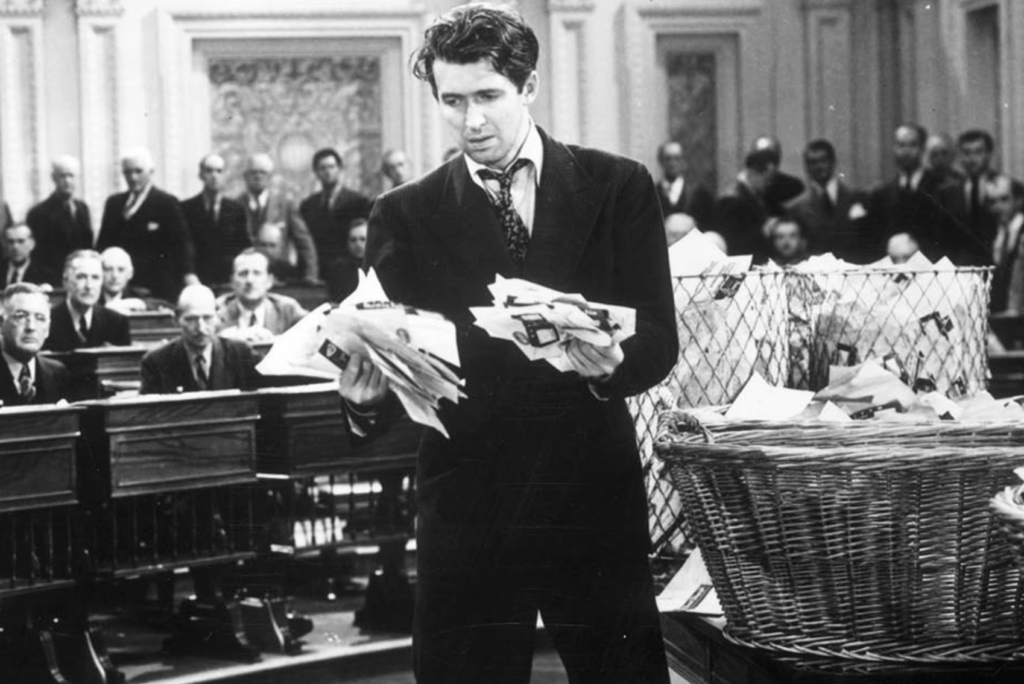
History bears this out. The early Senate had the previous question motion, which allowed the chamber to end debate and proceed to a vote by majority. The motion was dropped in 1806 during a rules cleanup encouraged by Vice President Aaron Burr. The result was unintended. It made rare and extended debate possible, but it took many decades before minorities could regularly exploit the gap. For much of the 19th century, the Senate passed laws by majority vote after debate that, while sometimes long, was finite. Only in the late 19th and 20th centuries did the filibuster evolve into a standing threat. Cloture, adopted in 1917, initially required two thirds of those present and voting, which itself placed a heavy burden on majorities. Later reforms lowered the cloture threshold to three fifths of all senators, but a second change made matters worse for majoritarian decision making. Senators could now filibuster without speaking, which turned a rare and public tactic into a routine, near costless veto point. The modern practice is not the romantic image of senators in an all night debate, it is the quiet imposition of a 60 vote hurdle on almost everything.
The philosophical defense of the filibuster rests on three ideas. First, that minority rights require more than procedural opportunities to debate and amend, that they require veto power. Second, that the Senate should be a cooling saucer that slows down transient passions. Third, that the filibuster encourages bipartisanship by forcing coalitions to expand beyond 50 votes. Each claim has a kernel of truth, yet none justifies a standing supermajority rule for ordinary legislation. Minority rights are protected by elections, by the structure of federalism, by the Bill of Rights, and by judicial review. A procedural right to debate and to offer amendments preserves minority participation without conferring a veto. The cooling saucer metaphor is satisfied by the Senate’s staggered six year terms, equal representation of states, committee process, and norms of extended debate. A minority veto is not a cooling saucer, it is a block of ice. As for bipartisanship, an unconditional 60 vote threshold often produces not genuine consensus but bargaining that dilutes clarity and hides responsibility. Deals struck to obtain 60 votes are often incoherent, designed to placate holdouts rather than to solve problems. The public gets worse policy and less accountability.
To see the normative cost, consider accountability. In a healthy democracy, voters can connect outcomes to officeholders. Majority rule helps establish that connection. If a party promises to secure the border, reform health care, or restrain spending, it should be able to attempt those reforms by passing legislation with a simple majority. If the policy succeeds, voters can reward that party. If it fails, voters can punish it. Under a routine filibuster, responsibility is diffused. Parties blame each other for inaction. The minority celebrates stopping the majority, and the majority celebrates blaming the minority. Voters learn only that Washington cannot decide. Cynicism grows. In a philosophical sense, the filibuster erodes democratic agency, the capacity of a citizenry to act collectively through elected representatives and to learn from the consequences.
A frequent reply is that majority rule allows dangerous swings in policy when control of government changes hands. This is a serious concern, but it proves too much. The Constitution already allows swings in policy through elections. The check against radical change is the difficulty of persuading a national electorate and of sustaining a coalition across time, not a permanently higher vote threshold. Moreover, change under majority rule can be more stable, not less. Policies enacted by a clear majority and defended in subsequent elections acquire democratic legitimacy. Policies enacted by complicated bargains designed to peel off a few additional votes to reach 60 invite constant hostage taking. A reliable rule of decision produces less brinkmanship than an unreliable one.
Critics invoke civil rights history to defend the filibuster, arguing that extraordinary measures were required to block unjust laws at various times. The record cuts the other way. The filibuster was repeatedly used to frustrate civil rights statutes that had majority support. One should be cautious about drawing sweeping moral conclusions from any single episode, but the pattern is clear enough. A rule that systematically empowers a coherent minority to stop majority backed civil rights laws is not a friend of justice. Justice requires argument, persuasion, and votes. It does not require a standing veto.
If the case against the filibuster is strong, a practical question follows. Would abolishing it harm the Senate as an institution. The best answer is no. Abolition would not end debate. It would end indeterminate debate. The Senate could adopt a guaranteed debate window for major bills, measured in days, not in vague threats. Members would retain the right to speak, to offer amendments, and to force recorded votes. The change would be at the back end, not the front end. At some point, debate closes, and a decision is made by majority vote. The House already functions under rules that close debate. Courts decide cases under fixed procedures that end argument. Juries deliberate, then vote. The Senate can preserve its distinctive ethos while acknowledging the necessity of closure.
Another practical worry concerns policy whiplash. If the filibuster falls, will each new majority erase the prior majority’s work. Some back and forth is inevitable in a democracy. Yet experience suggests that a stable majority will not risk frequent reversals on issues where the public has settled preferences. The existence of bicameralism and the presidential veto, both retained, already slows change. In addition, the judiciary remains a check on unconstitutional laws. The point of majority rule is not to enable reckless change. It is to enable the government to function when a clear, elected majority has a plan it wishes to enact. The burdens of persuasion fall where they ought to fall, on those who seek to govern.
There is a final, philosophical point. Lawmaking should reflect the authority of the people expressed through elections. Supermajority rules can be justified for acts that are, by nature, more than ordinary legislation. A constitutional amendment alters the framework of authority itself, so higher thresholds make sense. Ratifying a treaty binds the nation in ways that can be difficult to reverse, so extra caution is reasonable. Ordinary legislation is different. It is meant to be revisable, corrigible, and responsive. Ordinary law serves the daily work of a republic. If that work requires ad hoc supermajorities, it will be difficult to perform at all. The filibuster imposes a structural feature, unanimity minus 10, on tasks the Constitution left to majority rule. The mismatch is not accidental. It is a product of historical drift.
One might ask whether the current partisan environment changes the analysis. The answer is no. The case for majority rule does not depend on who holds power today. It depends on what sort of legislature we should have in a free society. If one believes that long term trust grows when citizens can see that elections have consequences, that responsible parties can enact their plans and stand or fall on the results, then one should favor majority rule. If one believes that accountability is strengthened when deliberation ends in recorded votes, not in indefinite threats, then one should favor majority rule. The identity of the temporary majority or minority does not alter these claims. Norms can be reformed without rancor if both sides accept that the rule should apply neutrally across time.
What, then, should replace the filibuster in concrete terms. The Senate should adopt a rule that guarantees substantial debate for major bills, for example, 30 hours on the floor after a bill is called up, with equal blocks of time reserved to the majority and minority. It should restore a robust amendment process so that members can force votes on serious alternatives. It should set a predictable schedule for final passage. It should make special procedures for omnibus bills that require additional transparency. It should preserve the existing constitutional supermajorities for special acts. Nothing in this package silences the minority. Everything in it preserves deliberation. The only change is that at the end of deliberation the chamber votes by majority and governs.
It is wise to consider transitional risks. Abolishing the filibuster in a tightly divided Senate could tempt one or two members to extract concessions in exchange for their votes on a new rule. That temptation already exists. The present system empowers individual senators to extract concessions at the back end of the process by threatening to withhold cooperation on cloture. Moving the bargaining to the front end, where the rules are set transparently, is healthier. Voters can see the tradeoffs and hold members to account. Over time, the incentives would shift toward making a case in public and away from constructing obscure, last minute deals.
Finally, consider the broader constitutional dynamic. The current filibuster does not simply constrain the Senate. It distorts the separation of powers. Presidents of both parties rely on executive orders and administrative improvisation when Congress cannot legislate. Courts are asked to resolve broad policy conflicts that belong in the political branches. Agencies search for statutory hooks to justify sweeping rules in the absence of clear legislative direction. The result is tension among branches and pervasive uncertainty for states, firms, and citizens. A Senate that can pass laws by majority would pull policy making back to the legislature where it belongs. Clear statutes would reduce litigation, confine agencies to executing law rather than making it, and give the executive a determinate framework within which to act. If we want the administrative state to shrink and the elected branches to govern, we should reduce the veto points that keep Congress frozen.
The conclusion is not dramatic. It is sober. A free republic needs both deliberation and decision. The Constitution gives us both, and it tells us when a supermajority is proper. The filibuster, in its modern, silent, standing form, is not part of that design. It turns the Senate into a veto point rather than a lawmaking body. It makes elections less meaningful, obscures responsibility, and encourages executive unilateralism. Ending it would not end debate. It would end paralysis. The Senate should reform its rules to guarantee open debate, genuine amendment, and final passage by majority vote. That is the constitutional baseline. That is how a legislature in a republic should function.
If you enjoy my work, please subscribe: https://x.com/amuse.
Sponsored by the John Milton Freedom Foundation, a nonprofit dedicated to helping independent journalists overcome formidable challenges in today’s media landscape and bring crucial stories to you.
READ NEXT: Immigration Activists Drag World Series Victory Into Their Political Fight


















Modify Filabuster for use NOT abuse
Goes both ways
IF Dems have we Lose
I suspect, the GOP in the Senate may not have enough Republican votes by themselves to pass anything because some of the Republicans are that in name only. What is impossible with man is possible with God. Luke 18:27
Thank you so much for your very persuasive arguments against the filibuster! I knew that the filibuster is not in the US Constitution, but I was concerned that without it, the appointment of US Supreme Court Justices under a leftist president would occur..
I now understand how the 60 vote threshold rather than a simple majority has paralyzed the legislative process and increased the use of executive decisions, empowered the minority, etc. These outcomes have also increased the divide in our country because even though President Trump was elected by a majority of the popular vote and the electoral votes, he can get very little legislation through the senate. The result is that voters think that President Trump is not “doing what he promised to do”. His opponents really exploit this conundrum!
I can also see that we’re more likely to elect conservatives to Congress & to the presidency if rules are set at the beginning of the process because voters will know where their legislators stand. One caveat is that in order to elect legislators or a president who protects and defends the US Constitution, every American citizen must read that document and truly understand what it means. We also need to remember as John Adams said, “Our Constitution was made only for a moral and religious people. It is wholly inadequate to the government of any other”. Unfortunately, as a whole, we’ve become ignorant of what if means to be a republic, the responsibility we have to maintain it, and the needed faith in God who is the author of liberty to stand up for it.
Thank you!