









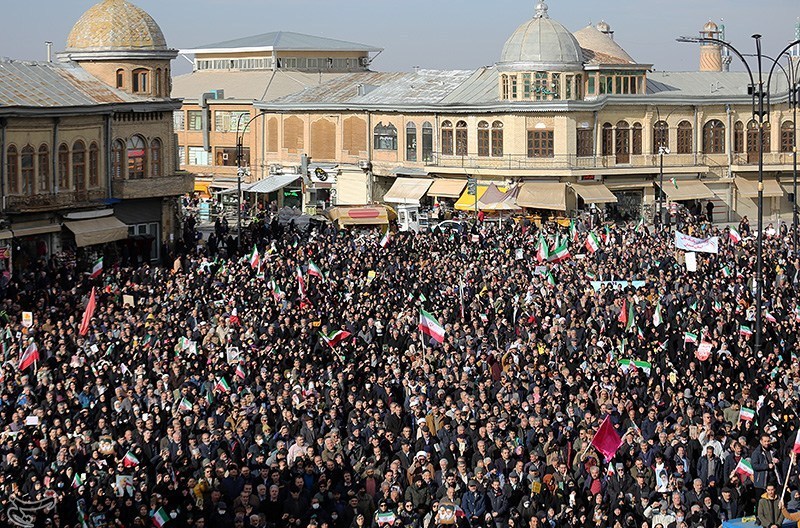
Flipping the national digital “kill switch.” The anti-regime demonstrations in Iran today are the worst the fanatical Mullahs who have run Iran into the ground have experienced since they took over in 1979.
Thousands of protesters are reported to have been killed in street confrontations with security forces and regime-backed Basij militias.
And over 10,000 have reportedly been detained by the regime, with at least 100 police or military forces having been killed as well. This, according to HRNA, the Human Rights Activists News Agency.
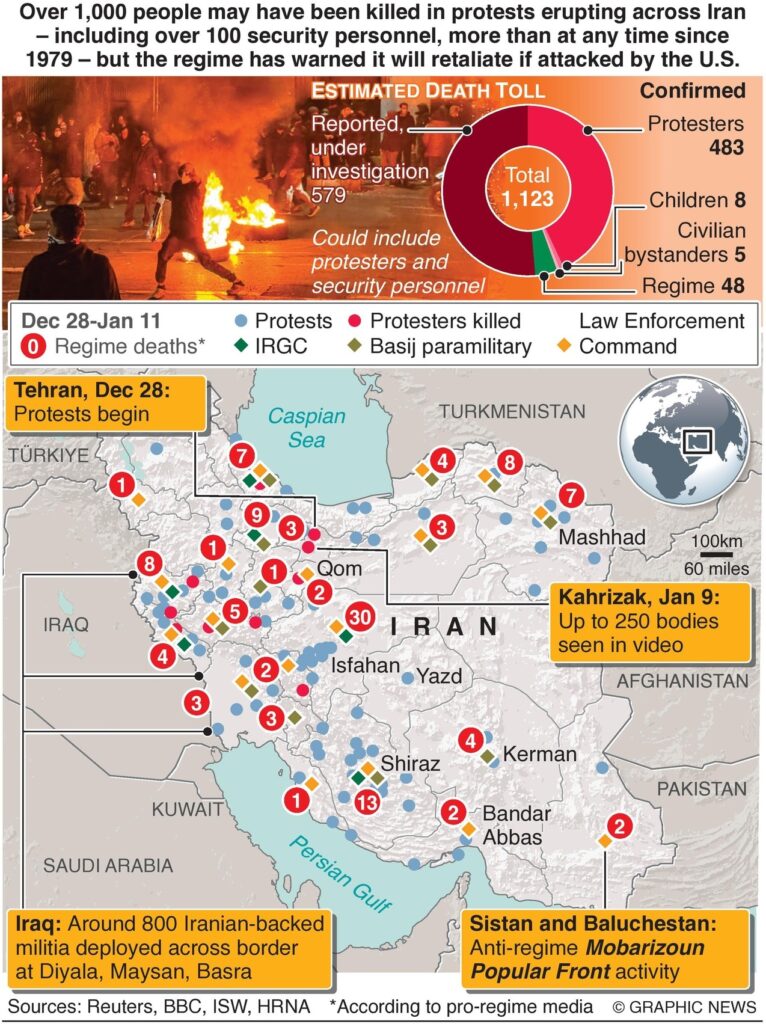
The repressive Islamist clerical establishment is under mounting pressure as economic hardship fuels public discontent. Inflation has surged sharply since a conflict last June, when Israeli and U.S. forces carried out airstrikes, primarily targeting Iran’s nuclear facilities.
As the demonstrations spread, crowds have marched in over 100 cities across the country since late December, and they became more overtly political, with protesters chanting “death to the dictator,” referring to the supreme leader, Ayatollah Ali Khamenei.
Footage from the demonstrations shows burning cars and smashed-up shops.
Things have gotten so bad that the Islamist regime has recently taken the radical action of flipping a national digital “kill switch,” shutting down the internet to hinder protest coordination, stop reporting of the protests, and prevent any evidence of government brutality from being sent abroad.
The blackout, originally intended as a piecemeal approach, slashed internet access to a fraction of normal levels on the 13th day of the protests, Jan. 10. By the 15th day, Jan. 12, the blackout was almost complete, isolating 80 million Iranians from each other and the world.
Cybersecurity firm NetBlocks’s CEO calls the blackout among the most severe ever recorded, affecting banks and essential services, adding “there’s very little communication within the country, so people are unable to reach the outside world, and nobody has the ability to communicate.”
While tens of thousands relied on Starlink satellite dishes to circumvent the blackout, these terminals are illegal and Iran has now taken the extreme step of jamming Starlink too, something not seen before.
Iran is apparently deploying Russian and/or Chinese-made military jammers to shut down access to Starlink. As Forbes notes, “This is a game-changer for Plan-B connectivity for protesters and anti-regime activists when domestic internet plugs are pulled.”
According to Iran Wire, about 30% of Starlink’s uplink and downlink traffic was (initially) disrupted, quickly rising “to more than 80 per cent” within hours.
“Iran’s internet blackout is now past the 60-hour mark as national connectivity levels continue to flatline around 1% of ordinary levels,” NetBlocks reported.
The Miaan Group’s Amir Rashidi told TechRadar “I have been monitoring and researching access to the internet for the past 20 years, and I have never seen such a thing in my life.” This supports reports that satellite connectivity has been heavily affected.
Trump has said he is speaking with Elon Musk about restoring Starlink service in Iran.
This kind of drastic measure by the regime comes at a very high cost, highlighting the regime’s desperation.
Simon Migliano, who has just compiled a comprehensive report on recent internet shutdowns, told me, “Iran’s current nationwide blackout is a blunt instrument intended to crush dissent. This ‘kill switch’ approach comes at a staggering price, draining $1.56 million from Iran’s economy every single hour the internet is down.”
Unfortunately, as bad as the protests are, and despite repeated outbreaks of nationwide protests stretching back decades, Iran’s opposition to Ali Khamenei’s theocracy remains fragmented among rival ethnic groups and ideological factions.

Among the prominent opposition figures is Reza Pahlavi, son of Iran’s last shah, and a former Iranian fighter pilot trainee in the U.S. when his father was overthrown. Based in the U.S. since, Pahlavi advocates regime change through nonviolent civil disobedience, sustained protests, and a referendum on the country’s future system of government.
While he enjoys support among segments of the Iranian diaspora, his backing inside Iran remains uncertain.
Still, one noteworthy aspect of these protests has been references to Pahlavi, with videos showing crowds calling for his return to power. I don’t recall ever seeing or hearing about anything like this ever before.
Another opposition leader touted by some is Maryam Rajavi, exiled head of the far-left People’s Mujahedin of Iran (MEK or Mujahideen-e-Khalq). The MEK initially helped overthrow the shah but later broke with the clerical rulers and sided with Iraq during the Iran-Iraq War in the 1980s.
Today, the group calls for a secular (leftist-socialist) democratic Iran, though analysts say it has minimal popular support within the country despite some backing from Western politicians.
Her siding with Iraq has made her a traitor to most Iranians. As one expert noted, Rajavi and the MEK have more support in Washington, D.C., than in all of Iran.
Ethnic minorities in Iran, particularly Sunni Kurdish and Baluch populations, have also long resisted the Persian-speaking, Shia-led government. Kurdish regions in western Iran have experienced periodic insurgencies, while opposition in eastern Baluchistan ranges from Sunni clerics seeking greater autonomy to armed jihadist groups linked to al-Qaeda.
I previously argued on a divide-and-conquer strategy supporting these secessionist provinces.
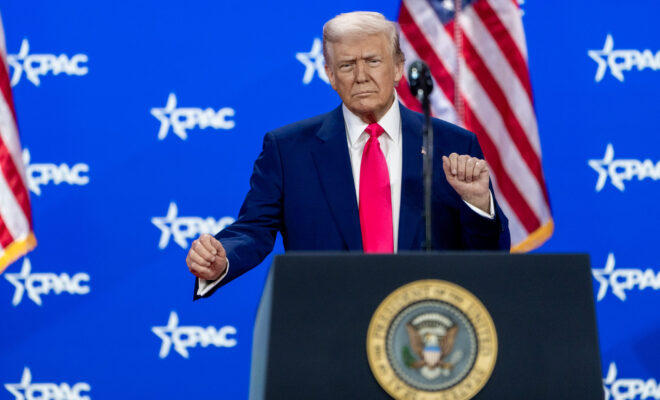
But the biggest factor in how these protests develop and whether they are able to topple the hated regime is what the U.S. does. Unlike the abysmal weakness of both the Obama and Biden administrations, facing similar discontent in Iran, Donald Trump has said he is considering “very strong” military action against the regime.
Our president is reportedly weighing a range of options, including using cyber-weapons and widening sanctions. The regime has threatened to retaliate if the U.S. attacks.
While critics will worry that any U.S. action will “inflame” and escalate the situation, endanger U.S. troops in the region, and a myriad of other fears, I’m more confident.
The Trump team has shown repeatedly, especially in Venezuela, that it knows how to respond in a measured and calibrated manner that brings success at minimal cost.
The opinions expressed in this article are those of the author and do not necessarily reflect the positions of American Liberty News.
READ NEXT: When Authoritarian Speech Laws Follow Americans Overseas



















Are them Iran Protesters paid as well as US protesters?
Democrats, here’s your chance. Another anti Trump cause you can support.