

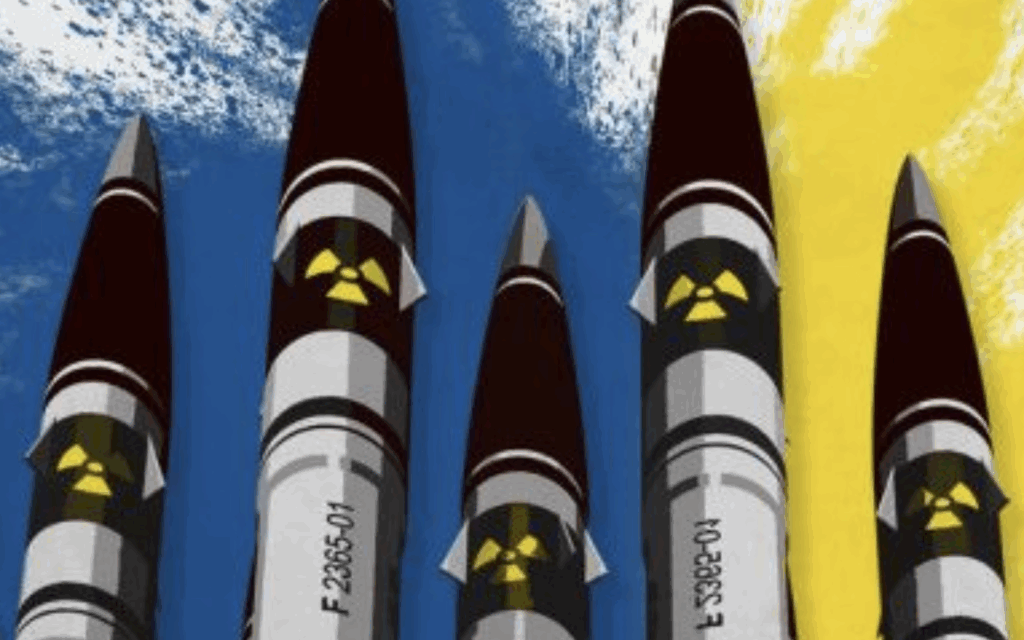
A persistent story has reemerged in Ukrainian academic and policy circles, one that now functions less as history and more as political instruction. According to this narrative, Ukraine once possessed a viable nuclear deterrent and voluntarily surrendered it in exchange for binding security guarantees from the United States. The lesson drawn is clear. Ukraine trusted the West, disarmed, and was betrayed. From this conclusion follows a further claim, that compromise with Russia is folly, because security promises are meaningless and only maximal resistance can preserve the nation.
Thirty-one years ago, the United States persuaded Ukraine to give up its nuclear weapons in exchange for “security guarantees.”
— Roman Sheremeta 🇺🇸🇺🇦 (@rshereme) January 20, 2026
Today, the US is persuading Ukraine to give up territories and prospects of NATO membership in exchange for another “security guarantees."
Somehow,… pic.twitter.com/7Av7ucCePn
This story is compelling. It is also wrong in ways that matter deeply for present decision making. Its power lies not in factual accuracy but in rhetorical utility. By mischaracterizing Ukraine’s nuclear inheritance and the Budapest Memorandum, it transforms a complex episode of post-Soviet disarmament into a morality play about Western perfidy. That transformation now serves a political purpose, discouraging Ukrainians from supporting negotiations or territorial compromise by insisting that any peace short of total victory repeats a past mistake.
The first error in the narrative concerns control. When the Soviet Union dissolved in 1991, Ukraine did indeed find itself hosting a vast nuclear arsenal. Roughly 1,900 strategic nuclear warheads sat atop intercontinental ballistic missiles and heavy bombers on Ukrainian soil, along with thousands of tactical nuclear weapons. On paper, this made Ukraine the world’s third-largest nuclear power. But paper inventories do not launch missiles.
Operational control of those weapons never resided in Kyiv. The Soviet nuclear command-and-control system remained centralized in Moscow. Launch authority, permissive action link codes, targeting protocols, and command infrastructure were all retained by Russian strategic forces. Ukrainian officers guarded missile silos and airbases, but they did not possess the ability to fire the weapons they guarded. Ukrainian officials acknowledged this at the time. Without the codes and without access to the centralized launch system, the warheads were militarily unusable as an independent deterrent.
UKRAINE: Ukrainian academics are pushing a false nuclear narrative to block peace. Ukraine never had operational control of Soviet nukes & the Budapest Memorandum promised no security guarantees.
— @amuse (@amuse) January 20, 2026
A misleading story about Ukraine’s nuclear past is being recycled to derail peace… https://t.co/eAmT9v24KI pic.twitter.com/IYbx7bzfgF
One can imagine a counterfactual in which Ukraine sought to reverse-engineer launch systems, rebuild command authority, and create a sovereign nuclear force. But that counterfactual collapses under scrutiny. Ukraine lacked the technical infrastructure required to maintain or modernize nuclear warheads. Warhead design bureaus, tritium production, fissile material processing, and refurbishment facilities all remained in Russia. Nuclear weapons are not static objects. They degrade. Their components require constant maintenance. Without it, they become unsafe, unreliable, and eventually dangerous.
Ukraine’s own scientific institutions concluded in the early 1990s that building a complete nuclear fuel cycle and warhead maintenance capability would cost billions of dollars and take many years. This was at a time when Ukraine’s economy was contracting by double digits, inflation was rampant, and basic state functions were under strain. Even sympathetic observers acknowledged that the inherited arsenal was more a liability than a shield.
Nor was Ukraine free to pursue nuclear independence in isolation, because it had already committed itself not to do so. Even before formal independence, Ukraine declared its intention to be a non-nuclear state. In July 1990, the Ukrainian parliament adopted a Declaration of State Sovereignty pledging not to accept, produce, or acquire nuclear weapons. After independence in 1991, Ukraine reaffirmed this position in negotiations with the international community, making clear that recognition of its sovereignty and borders was conditioned on accession to the Nuclear Non-Proliferation Treaty as a non-nuclear state.
The international system did not regard the Soviet breakup as an invitation for new nuclear powers. Under the NPT, only Russia inherited the USSR’s status as a recognized nuclear-weapon state. Ukraine, Belarus, and Kazakhstan were expected to accede as non-nuclear states as part of the diplomatic settlement that secured their recognition and integration. Retaining nuclear weapons would therefore have placed Ukraine outside the NPT framework and in violation of its own prior commitments, inviting sanctions, diplomatic isolation, and economic collapse. Ukrainian leaders understood this clearly. The choice was not between nuclear security and disarmament. It was between honoring commitments in exchange for recognition and support, or pursuing nuclear ambition at the cost of legitimacy and isolation.
This brings us to the second error, the nature of the Budapest Memorandum itself. The claim that Ukraine traded nuclear weapons for a US security guarantee is a category mistake. The Budapest Memorandum, signed in December 1994 by Ukraine, Russia, the U.S., and the U.K., offered security assurances, not guarantees. This distinction was not semantic. It was decisive.
A security guarantee entails a binding commitment to use military force in defense of another state. NATO’s Article 5 is the canonical example. The Budapest Memorandum contains no such provision. It says nothing about the U.S. providing military aid, supplying arms, deploying forces, or coming to Ukraine’s defense in the event of invasion. Its language commits the signatories only to respect Ukraine’s sovereignty and borders, to refrain from the threat or use of force, and to consult in the event of disputes. These were political assurances of conduct, not treaty obligations requiring armed intervention.
At the time, this distinction was explicit and understood by all parties. Western governments were unwilling to extend defense guarantees to a non-allied, post-Soviet state. Ukrainian negotiators pressed for stronger language but accepted assurances as the best available option. To retroactively recast these assurances as guarantees is to rewrite the agreement after the fact.
Russia’s subsequent violation of the memorandum is real and consequential. The annexation of Crimea in 2014 and the full-scale invasion in 2022 represent blatant breaches of the commitment to respect Ukraine’s sovereignty. But this does not transform the memorandum into something it was not. The West did not violate a promise to militarily defend Ukraine, because no such promise was ever made.
The nuclear myth persists because it performs a moral inversion. It suggests that Ukraine once held decisive leverage and relinquished it out of naïve trust. In reality, Ukraine never possessed a usable nuclear deterrent, never had legal standing as a nuclear power, and never received binding defense commitments. Disarmament was not an act of idealism. It was a pragmatic response to technical constraints, economic realities, and international pressure.
Ukraine did not give up nothing in return. The disarmament deal included tangible benefits. Russia compensated Ukraine for the fissile material in the warheads by providing nuclear fuel for civilian reactors and forgiving roughly $2.5B in energy debt. The U.S. funded dismantlement through the Nunn-Lugar Cooperative Threat Reduction program, covering the cost of destroying missiles, silos, and bombers. Ukraine gained integration into international institutions and access to diplomatic and economic support that would have been impossible as a nuclear holdout.
By 1996, all nuclear warheads had been removed from Ukrainian territory. The country entered the post-Cold War era as a non-nuclear state with recognized borders, international legitimacy, and two decades of uneasy but real peace with Russia.
Why, then, revive the myth now? The answer lies in its present utility. By framing disarmament as a catastrophic betrayal, the narrative delegitimizes compromise. If Ukraine once surrendered absolute security and was punished for it, then any negotiation today appears as repetition rather than adaptation. Peace becomes synonymous with capitulation. Diplomacy becomes synonymous with surrender.
This framing is particularly effective when advanced by academic authority. When economists or political scientists present the nuclear story as settled history, it acquires an aura of inevitability. Yet its function is not explanatory but prescriptive. It teaches Ukrainians how to interpret current choices by distorting past ones.
A sober reassessment does not counsel appeasement. It does not deny Russian aggression or minimize Ukrainian suffering. It simply insists on intellectual honesty. Ukraine’s nuclear inheritance was never a viable deterrent. The Budapest Memorandum was never a defense pact. And the lesson of the 1990s is not that peace is impossible, but that security arrangements must match reality rather than mythology.
History should inform policy, not imprison it. Myths, however emotionally satisfying, narrow the space of political imagination. When a false story becomes a moral constraint, it can prolong conflict by foreclosing options before they are seriously considered.
Ukraine today faces tragic and difficult choices. Those choices deserve clarity rather than legend. A peace negotiated under duress is not the same as disarmament under illusion. Treating them as identical may feel righteous, but it obscures the real tradeoffs that any sovereign nation must confront.
If you enjoy my work, please subscribe: https://x.com/amuse.
Sponsored by the John Milton Freedom Foundation, a nonprofit dedicated to helping independent journalists overcome formidable challenges in today’s media landscape and bring crucial stories to you.
READ NEXT: Congresswoman Shares Huge Election Update Days Trump After Upending Race















Thank You for that explanation.
So “assurances” are not worth anything either when it comes down to brass take. The maxim is true: diplomacy is the art of saying as little as possible with as many words as possible.
Boy is this a mischaracterization of the truth! Welcome to Russian propaganda.
The US gave money to Ukraine to help increase their own security so saying that selling the missiles was only a financial transaction is not true. I’m sure Ukraine could have made money by keeping those missiles … I mean how much do you think Iran would pay today for those missiles even if they didn’t have ‘central control’. All the hard stuff, the things Iran and Ukraine can’t do today was already in these missiles. The control abilities is something both Iran and Ukraine have today … Do you think Ukraine would have done this deal if they didn’t think they had a security deal given that Russia threatened to atttack them as Russia broke up in the 1990’s, given that Ukraine was reconquered in the Russian Revolution and where conquered by Russia in the 1800’s.
Of Ukraine feels they cannot trust Russia, it’s because they have a good reason. End of story.