




Iran temporarily shut down maritime traffic through the Strait of Hormuz during live-fire military drills this week, a move that underscored the tension hanging over its latest round of nuclear negotiations with the United States.
The announcement marked the first time Tehran has publicly declared the closure of the strategic waterway amid the ongoing 2026 crisis with Washington. Iranian officials said missile launches toward the strait were conducted for “safety and maritime concerns” as part of the exercise.
The strait is no ordinary shipping lane. Roughly 20% of the world’s oil passes through the narrow corridor between Iran and Oman. Even a temporary disruption can rattle global energy markets and draw the attention of every major capital.
The drills unfolded as Iranian and American negotiators met indirectly in Geneva. (RELATED: What Happens If Iran Blocks The Strait Of Hormuz?)
Talks in Geneva
The latest round of negotiations, mediated by Oman, was held at the Omani envoy’s residence in Geneva. The talks focused narrowly on Iran’s nuclear program, not on unrelated matters such as domestic unrest and the reported massacre of tens of thousands of protesters.
Iran has repeatedly defended what it calls its right to peaceful nuclear development. U.S. officials, for their part, are pressing Tehran to limit uranium enrichment and accept stricter oversight.
On Tuesday, Iranian Foreign Minister Abbas Araghchi signaled a potential breakthrough. He said the two sides had agreed on “guiding principles” that could serve as the basis for a future nuclear agreement.
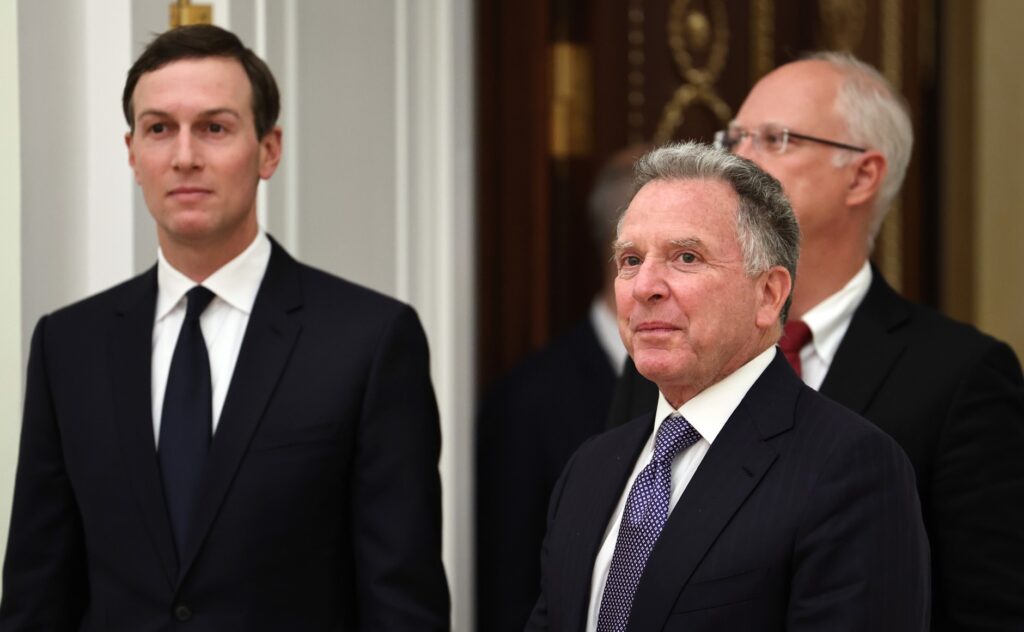
Araghchi described discussions with President Trump’s envoys, Jared Kushner and Steve Witkoff, as “serious, constructive, and positive.” He added that both sides now have a clearer framework than in previous rounds, suggesting that months of back-and-forth may be narrowing into something more concrete.
“Various ideas were presented and seriously discussed,” Araghchi told Iranian state television. “Ultimately, we were able to reach a general understanding on a set of guiding principles, on the basis of which we will move forward from now on and begin working on the text of a potential agreement. This does not mean that we can reach an agreement quickly, but at least the path has begun.”
U.S. officials were more restrained. They characterized the talks as progressing “as expected,” a phrase that suggests cautious optimism but stops short of declaring a breakthrough. (RELATED: Trump’s Grand Strategy: What Is America’s Center Of Gravity?)
Core disputes remain
Despite the improved tone, the hardest issues remain unresolved.
At the center is the scope of Iran’s uranium enrichment program. Washington wants tighter limits and robust verification measures. Tehran is unlikely to agree to terms it sees as infringing on its sovereignty or freezing its technological development.
Verification is another sticking point. Any deal would likely require expanded monitoring by international inspectors. That has long been a politically sensitive issue inside Iran.
Until those details are settled, the “guiding principles” amount to a framework, not a finished product.
Military signals on both sides
The military posturing has not slowed.
Iran’s Supreme Leader, Ayatollah Ali Khamenei, issued warnings during the talks, asserting that U.S. efforts to destroy Iran would fail. His rhetoric included pointed remarks aimed at U.S. naval forces operating in the region.
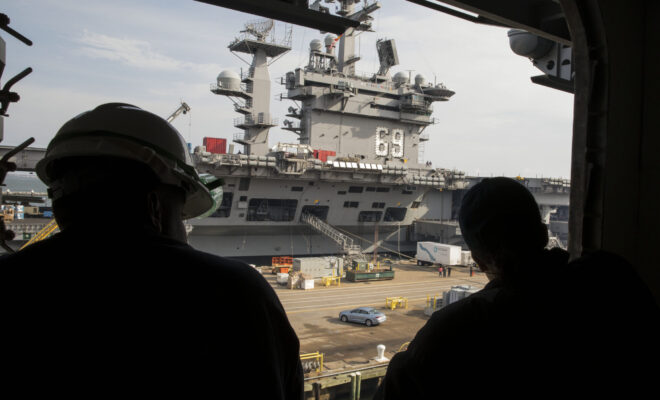
Meanwhile, the United States has increased its military presence in the Middle East, deploying multiple aircraft carriers and additional warships. The message is clear: diplomacy is ongoing, but deterrence remains in place. (RELATED: Is The Pentagon Rethinking Its ‘Gold-Plated’ Weapons Strategy?)
The temporary closure of the Strait of Hormuz fits that pattern. The timing, in the middle of sensitive negotiations, sends an unmistakable signal about Iran’s ability to disrupt a vital artery of global trade if tensions escalate.
The next round of talks will show whether the “guiding principles” can survive the strain of military maneuvers and political red lines.
READ NEXT: Utah GOP Chairman Faces Charges Over Alleged Waterboarding Incident



















Nonsense, Iran 🇮🇷 as continuously lied about their intentions, what makes anyone think the moolah’s all the sudden stopped lying now??