WASHINGTON — President Donald Trump warned that NATO could face a “very bad” future if allied nations fail to support U.S. efforts to secure the Strait of Hormuz during the conflict with Iran, raising the stakes in a growing dispute between Washington and several hesitant allies.
The president’s remarks come as the United States pushes for a multinational naval coalition to escort commercial ships through the strategic waterway, which has become a flashpoint in the widening Middle East conflict.
Trump has argued that countries benefiting from oil shipments passing through the Persian Gulf have a responsibility to help keep the route open.
“If there’s no response or if it’s a negative response, I think it will be very bad for the future of NATO,” Trump said in comments about the alliance’s response to the crisis.
U.S. President Donald J. Trump told the Financial Times today that NATO nations face a “very bad” outlook if they fail to seriously aid in efforts to open the Strait of Hormuz, amidst the ongoing conflict between Iran and the U.S./Israel. Additionally, President Trump also… pic.twitter.com/6ZJwDiKyVv
— OSINTdefender (@sentdefender) March 16, 2026
The warning underscores growing tension between the United States and several allies that have expressed caution about deploying military forces into a volatile maritime environment.
A Critical Global Chokepoint
The Strait of Hormuz, a narrow passage between Iran and Oman, is widely considered the most important energy chokepoint in the world.
Roughly one-fifth of the world’s oil supply typically moves through the strait, making it essential to global energy markets and international shipping.
Recent hostilities between Iran and U.S. forces have led to attacks on vessels and heightened fears that Tehran could disrupt traffic through the Strait of Hormuz for an extended period.
Shipping companies have already begun rerouting vessels or delaying trips through the region as the conflict intensifies, adding pressure to global oil markets.
Energy analysts warn that prolonged disruption could ripple through global supply chains and lead to higher fuel prices worldwide.
U.S. Pushes for Naval Coalition
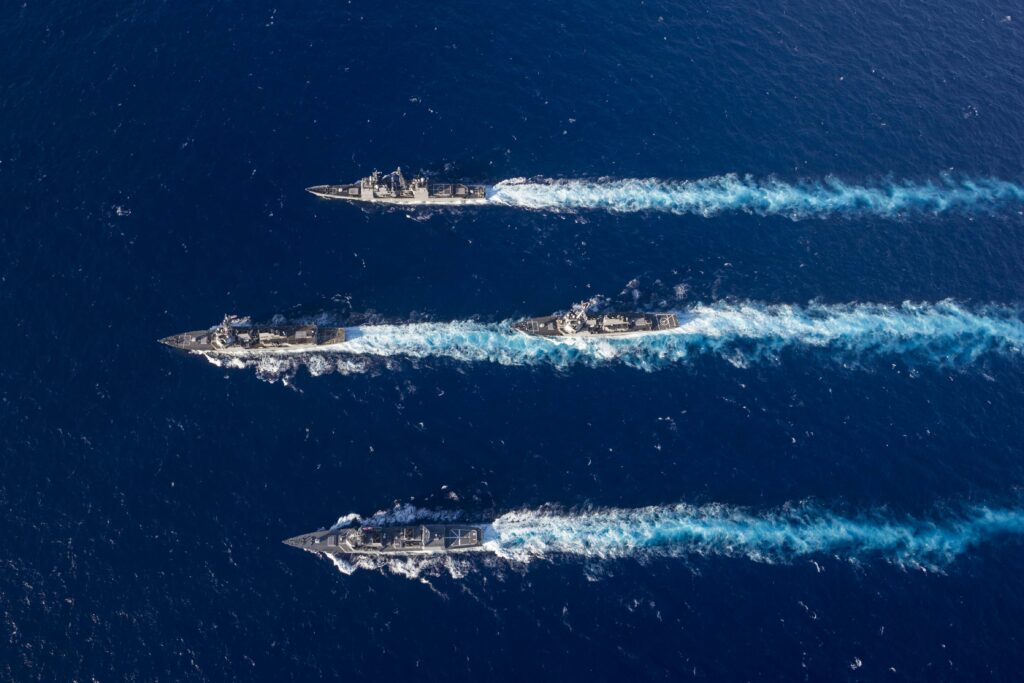
In response to the threat, Washington has been urging allied nations to contribute naval ships to help escort tankers and other commercial vessels through the strait.
The proposed effort would involve multiple countries coordinating patrols and escorts for merchant ships traveling through the waterway.
Officials say the goal is to deter potential attacks and reassure shipping companies that it is safe to operate in the region.
Countries reportedly approached by the United States include:
- The United Kingdom
- France
- Japan
- South Korea
- Other partners that rely heavily on Persian Gulf energy exports
Trump has argued that these nations benefit directly from the free flow of oil through the strait and therefore should share responsibility for protecting it.
“The countries that use the oil should be helping protect the oil,” Trump has said in discussing the proposal.
Allies Seek Clarity
Despite the pressure from Washington, several allied governments have so far stopped short of committing ships to the mission.
European officials have said they want more clarity about the United States’ broader strategy in the region before agreeing to military participation.
Some governments have also raised concerns about the legal framework surrounding the operation and the risk of becoming directly involved in a larger conflict with Iran.
Diplomats say some countries are considering alternatives to direct escort missions, such as:
- Providing surveillance support
- Contributing mine-clearing vessels
- Sharing intelligence on maritime threats
Those options could allow allies to assist the mission while avoiding direct confrontation with Iranian forces.
Still, the hesitation has frustrated some officials in Washington, who believe the crisis requires a more unified response.
Rising Tensions With Iran
The dispute over Hormuz security comes amid a broader regional confrontation involving the United States, Israel and Iran.
Military operations in recent weeks have targeted Iranian infrastructure and military assets, while Tehran has responded with drone and missile attacks against regional targets.
Fighting across the Gulf has raised fears that the conflict could widen and draw multiple countries across the Middle East into the war.
The Strait of Hormuz has increasingly become the focal point of that confrontation.
Iran has previously threatened to close the strait in response to Western military pressure or sanctions.
While fully shutting down the passage would likely provoke a massive international response, analysts say Iran could disrupt shipping through smaller-scale attacks, mines or harassment of vessels.
NATO Unity at Stake
Trump’s warning about NATO’s future reflects a broader debate within the alliance about burden-sharing and collective security responsibilities.
Since returning to the presidency, Trump has repeatedly pressed NATO members to increase defense spending and take a larger role in global security operations.
The Hormuz dispute now represents another test of that principle.
Trump’s argument is that if NATO allies rely on the United States for protection but decline to assist when global trade routes are threatened, the alliance could face a credibility crisis.
Some analysts say the dispute highlights a deeper divide within NATO over how aggressively the alliance should confront Iran.
Several European governments remain wary of escalating tensions with Tehran and have favored diplomatic solutions where possible.
The United States, meanwhile, has taken a more confrontational posture in response to Iranian actions.
Global Economic Stakes
Beyond military and diplomatic considerations, the Hormuz crisis carries significant economic implications.
Because such a large share of the world’s oil exports passes through the strait, any disruption can quickly affect global energy prices.
Oil markets have already reacted to the latest tensions, with prices climbing as traders assess the risk of supply interruptions.
Higher oil prices can ripple through the global economy by increasing costs for transportation, manufacturing, and consumer goods.
For that reason, many governments see securing the strait as essential not only for regional stability but also for protecting the global economy.
What Comes Next
Diplomatic discussions between the United States and its allies are continuing as Washington seeks to assemble a coalition capable of maintaining safe passage through the strait.
Defense officials say planning for maritime security operations is already underway, though the final structure of the coalition remains uncertain.
Some allies may ultimately decide to participate if tensions continue to escalate and the threat to shipping increases.
Others could remain cautious, focusing instead on diplomatic efforts to reduce the risk of a wider conflict.
For now, the situation in the Persian Gulf remains volatile.
And Trump’s warning suggests the dispute over how to respond could have lasting implications not only for the Middle East crisis — but also for the future of the NATO alliance itself.
READ NEXT: Longtime Border Patrol Leader Announces Retirement