






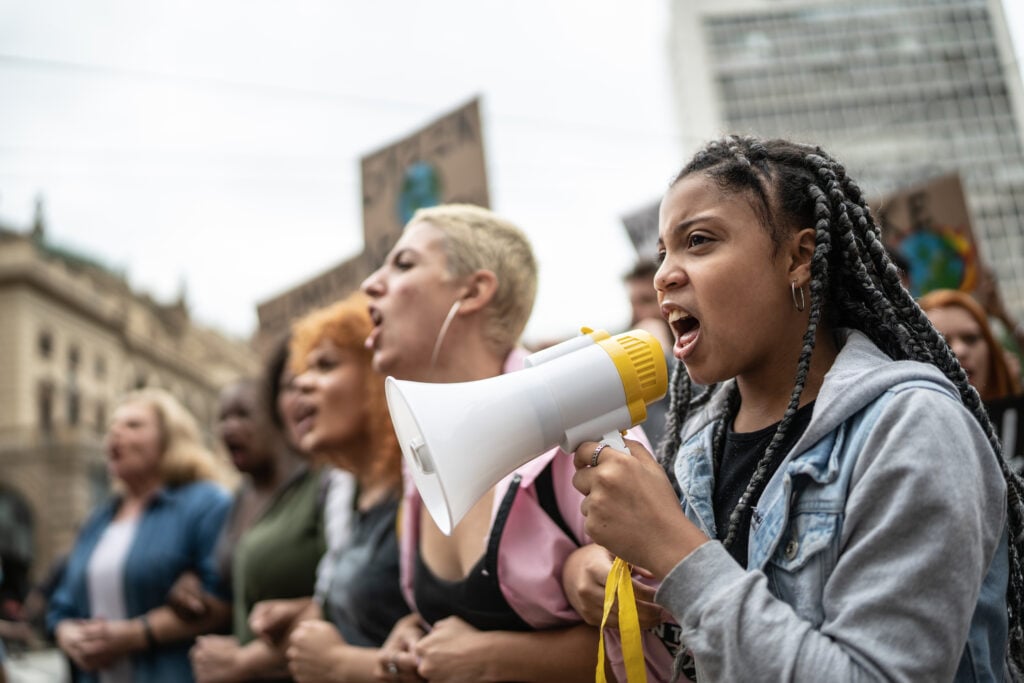
Chicago Public Schools will keep classrooms open on May 1 while allowing students and staff to take part in “civic activities,” following weeks of debate set off by a proposal from the Chicago Teachers Union.
The date, widely recognized as International Workers’ Day, has become the focal point of a broader discussion about the role of civic engagement in public education. Union leaders pushed to designate May 1 as a day dedicated to “Civic Action and Defense of Public Education,” encouraging participation in demonstrations and “community events.”
Schools Remain Open, Participation Optional
In a statement released Friday, Chicago Public Schools said that May 1 will remain a full instructional day with attendance is still expected for both students and staff while at the same time saying schools may allow optional participation in civic engagement activities during the school day. Principals will have discretion to approve such activities under existing field trip and student travel policies.
Students in grades six through 12 are permitted one excused absence per year for civic engagement, provided they have parental consent and the event is organized by a nonprofit or government entity.
CPS CEO Macquline King said the approach is intended to balance academic priorities with opportunities for civic involvement. She emphasized that the agreement preserves classroom instruction while recognizing Chicago’s long tradition of public activism.
Academic Performance Concerns
The discussion is unfolding against a backdrop of ongoing concerns about academic outcomes within Chicago Public Schools. Standardized testing data in recent years has shown that a majority of students are not meeting proficiency benchmarks in core subjects such as reading, writing, and mathematics. These performance challenges have prompted debate among policymakers and families about how the district should prioritize instructional time and resources. Some critics argue that officials should prioritize efforts to improve foundational academic skills rather than civic engagement.
Union Push for Broader Recognition
The debate began after the CTU advanced a resolution last month calling for May 1 to be treated as a day off to celebrate and engage in civic action. Union leadership framed the proposal as part of a broader effort to defend public education and labor rights.
CTU Vice President Jackson Potter argued at the time that civic participation is essential to maintaining democratic institutions and protecting workers’ rights.
The proposal drew mixed reactions, with some critics questioning whether encouraging student participation in protests during school hours could blur the line between education and political advocacy.
City Leadership Voices Support
Brandon Johnson expressed support for the district’s decision, describing it as a way to honor the historical significance of May Day while maintaining educational continuity.
Johnson pointed to Chicago’s role in the labor movement, particularly the Haymarket Affair, which helped establish May 1 as a global symbol of workers’ rights. He insisted the city would coordinate with agencies to ensure that any demonstrations or events are conducted safely.
Looking Ahead
CPS indicated that future May 1 observances could evolve. Beginning in 2028, the district may consider designating May Day as a professional development day for staff.
The decision leaves implementation largely in the hands of individual schools, meaning how May 1 unfolds across Chicago could vary widely depending on local leadership and community interest.
READ NEXT: Chicago Mayor Doubles Down On Immigration Stance After Campus Killing
























Just let them have the rest of the year off. The way things are going up there, it won’t make a difference in test scores. Also, not in school, don’t pay the teachers. It would save the taxpayers some money as well. That way you kill two birds with one stone, don’t you?
If the proper courses in American history ( not lib rewriting history courses ) were taught, there would be no need for this.
Keep the kids in class so that they will learn what they have to learn to be good and productive citizens!
Rewriting history to try to make it fit into a biased and untrue form does no good to anyone who, when older, becomes a voter.