
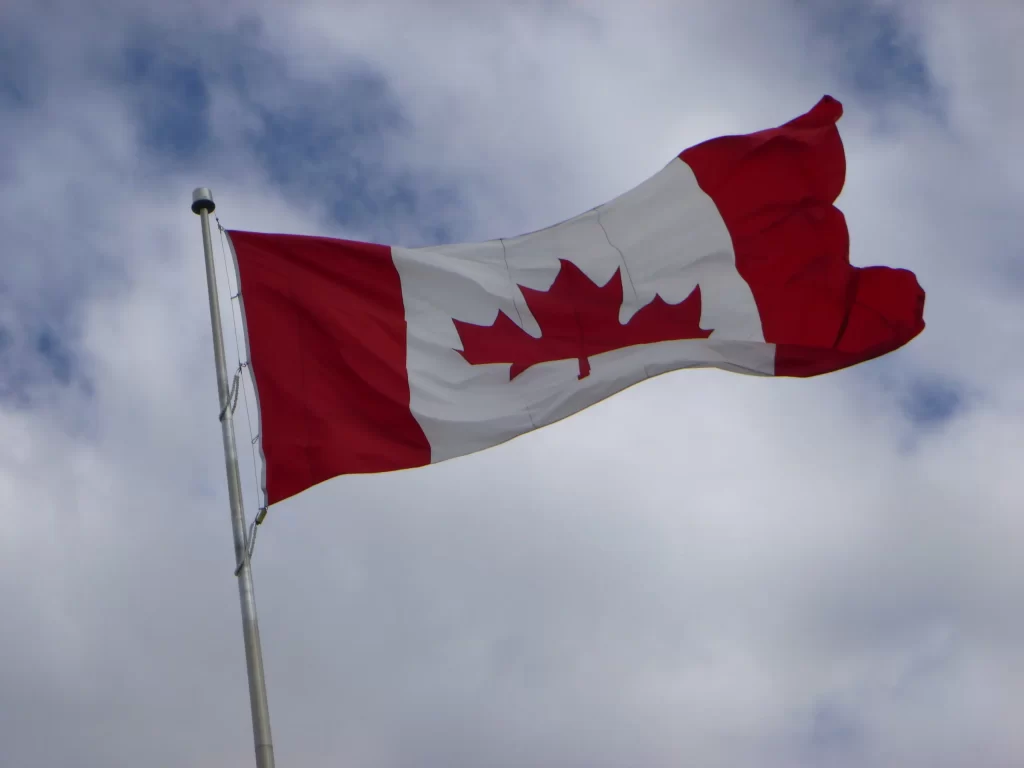
A leaked internal report on Canada’s military training programs is raising new questions about recruitment policies, integration challenges, and the evolving composition of the country’s armed forces.
According to details first reported by Canadian media outlets under headlines like “Success rate for basic training in Canadian military drops,” officials have observed rising tensions among some recruits during basic training—particularly within units that include a high number of permanent residents, or immigrants who are eligible to serve in the Canadian Armed Forces despite not yet holding citizenship.
Training Challenges and Cultural Friction
The report, attributed in part to Lt.-Col. Marc Kieley, describes instances of interpersonal conflict among recruits from different cultural backgrounds. In one cited case, tensions reportedly emerged between trainees from Cameroon and Côte d’Ivoire, alongside broader allegations of infighting and discrimination within the same unit.
Military leaders also flagged adjustment challenges for some recruits unfamiliar with the expectations of service life. These included misunderstandings about deployment requirements and the structure of military commitments, with some trainees reportedly believing they could return home after completing basic training.
The report further noted that, for some individuals, military service represented their first experience working in mixed-gender environments with equal roles and authority structures—an adjustment that created friction during training.
Recruitment Policy Shifts
The findings come as Canada has expanded its recruitment pool in recent years. The armed forces began allowing permanent residents to enlist more broadly to address personnel shortages.
That shift has had a measurable impact. After recruiting only a handful of permanent residents in the early stages of the policy, the military saw that number rise significantly in subsequent years. Officials say permanent residents now account for a notable share of new applicants.
Defense leaders have framed the change as part of a broader modernization effort, emphasizing inclusivity and a need to reflect Canada’s evolving population.
Performance and Attrition Concerns
The leaked document also highlights uneven outcomes in training performance. In at least one platoon referenced in the report—where a large majority of recruits were immigrants—fewer than half completed the program successfully.
Officials pointed to a range of contributing factors, including communication barriers, differing expectations, and the challenges of integrating recruits from different backgrounds into a standardized training environment.
To address these issues, military planners have reportedly considered adjusting the composition of training units, including setting informal targets to balance the proportion of immigrant recruits with more experienced or locally familiar candidates.
Broader Debate Over Diversity and Readiness
The revelations have sparked debate over how best to balance recruitment needs with operational readiness.
Supporters of the current approach argue that expanding eligibility strengthens the military by drawing from a wider talent pool and better reflecting Canada’s diversity. They insist that demographic trends make such outreach increasingly necessary.
Critics, however, question whether rapid changes to recruitment policy have outpaced the military’s ability to integrate new personnel effectively, particularly in high-pressure training environments.
The discussion also touches on broader questions about how institutions adapt to demographic change while maintaining cohesion and performance standards.
Canada’s defense leadership has not publicly detailed specific policy changes in response to the report, but the issues it raises are likely to factor into ongoing reviews of recruitment and training practices.
READ NEXT: Canada’s Big Ugly Gun Grab: An Update










And what do they expect. Illegal immigrants generally have no connection to their “new” land. That’s why we have Rep. Omar (D-Somalia). A large number of warm bodies does not constitute an effective army, compared to a smaller force of committed patriots. That was proven in Vietnam and Korea, fought by hundreds of thousands of draftees.
Issues with Canada’s military are nothing new: When we asked for a Canadian military commitment in Vietnam, their navy, air force and ground troops consisted of two canoes, a flying squirrel and a Mountie.
I’ve got to wonder what these immigrants have in mind to do with their ‘training’.
Are they there to help the country of Canada?
Or are they learning military ‘training’ to use either in their home country, or to use AGAINST Canada ( or against some other country such as the U.S. )!
They seem to think that they can get their military ‘boot-camp training’ and then just leave for whatever purpose that they want!
Something doesn’t seem to be correct here!
Why should any country ‘train’ people who well may use that very ‘training’ against the country that ‘trained’ them?
If you, the reader, have any brain-power, you KNOW where this train of thought goes from here!
I’ve got to add; these people ( illegals and such ) ought to remember that the U.S., and many other countries, are full of people who, themselves, have had intensive military ‘training’ ( I’m a former Marine )!
It would NOT be a good idea to try to start an insurgency against us!
It’s also a good idea to remember that a very great many Americans have legal weapons of their own … good quality weapons! We have plenty of ammunition too!
And we are very able to shoot back. WE KNOW HOW!
We are not the type of people to start a problem, but we are VERY capable of ending it!