






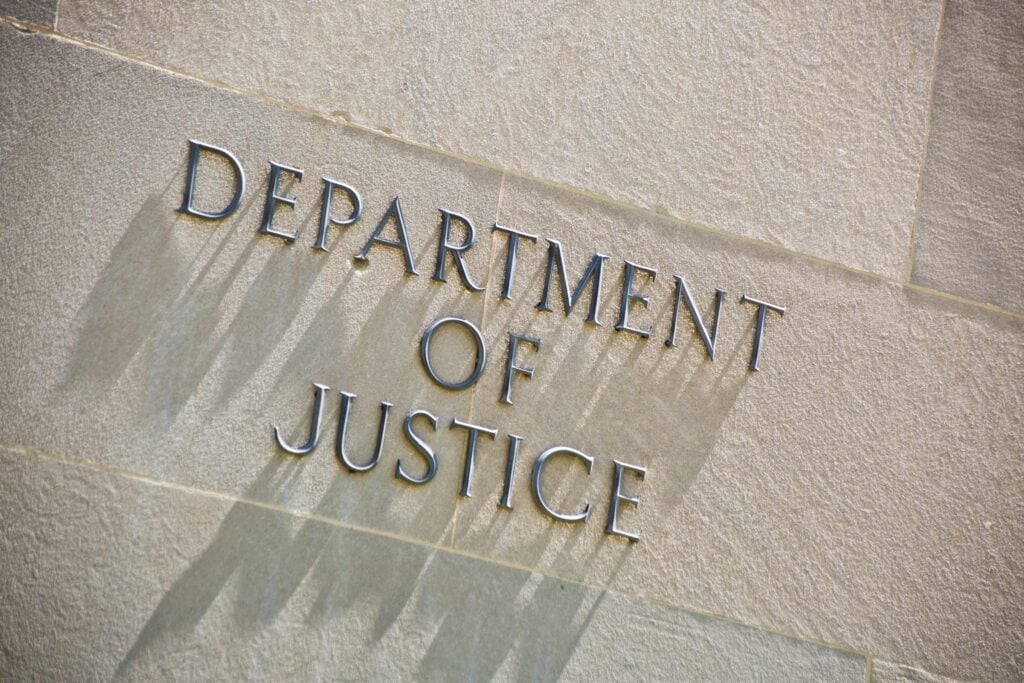
Justice Department signals broad application of SCOTUS decision…
The Justice Department said it will enforce the Supreme Court’s recent ruling on racial gerrymandering in every state, warning that congressional maps relying heavily on race could face federal scrutiny.
The announcement follows the Court’s 6-3 decision in Louisiana v. Callais, declaring the state’s second majority-Black district an unconstitutional racial gerrymander. The conservative majority found that race was the primary factor in drawing the district, weakening the Voting Rights Act’s Section 2.
Supreme Court Ruling Reshapes Legal Landscape
In its opinion, the Court held that Louisiana’s map violated the Constitution because race was used as the predominant factor in drawing district lines.
Justice Samuel Alito, writing for the majority, said that even efforts to comply with the Voting Rights Act cannot justify race-based redistricting that conflicts with constitutional protections.
The decision leaves in place a lower court ruling blocking the map and is expected to influence redistricting disputes across the country.
DOJ: Ruling Not Limited to Louisiana
Justice Department officials indicated the Court’s reasoning applies well beyond a single state, signaling that federal authorities will review maps nationwide for similar issues.
The department has already taken steps in other cases, arguing that race-based districting violates constitutional equal protection guarantees, and has moved to challenge maps it views as unlawful.
States Face Potential Legal Challenges
The DOJ’s stance opens the door to a new wave of litigation, particularly in states that:
- Created majority-minority districts using explicit racial targets
- Drew irregular or non-compact districts tied to race
- Attempted to comply with prior court rulings by emphasizing race in map design
Legal experts say the decision could trigger map redraws ahead of future elections, especially in the South and other battleground regions.
Tension With Voting Rights Requirements
The announcement underscores a long-standing legal tension:
- The Voting Rights Act has been used to expand minority representation
- But the Constitution limits how far states can go in sorting voters by race
The Supreme Court’s ruling reinforces that race cannot be the dominant factor, even when states claim they are complying with federal law.
Political Stakes Ahead of 2026 Elections
With control of Congress at stake, any changes to district maps could have significant political consequences, potentially reshaping competitive districts nationwide.
The ruling — and DOJ enforcement — comes amid a broader wave of mid-decade redistricting battles across multiple states.
Bottom Line
The Justice Department’s announcement signals that the Supreme Court’s ruling on Louisiana is not a one-off decision — but the beginning of a nationwide enforcement effort targeting race-based redistricting.
READ NEXT: Satellite Photos Reveal Damage At Crucial US Military Installation

























Gerrymandering has been out of hand for so long, it’s amazing that the Supreme Court has finally tackled it. The Democrat Party has always looked for shortcuts to keep in power, at least since Boss Tweed ran New York City. It’s pathetic that a party that only really exists in urban areas where leftists have a firm grasp on everything, including the souls of minorities, has finagled to draw lines to control the country. When you draw lines to make sure that 51% vote for you, which leaves the other 49% hanging, knowing that most of the majority is actually a minority group, but solidly in your pocket, and you make doubly sure by hijacking the election process in ways that only criminals could think of, that is the key to control and can be done with a decided fraction of the minority. The problem with the vast majority is that they play by the rules, but the Left knows no such bounds.
I voted for this!