

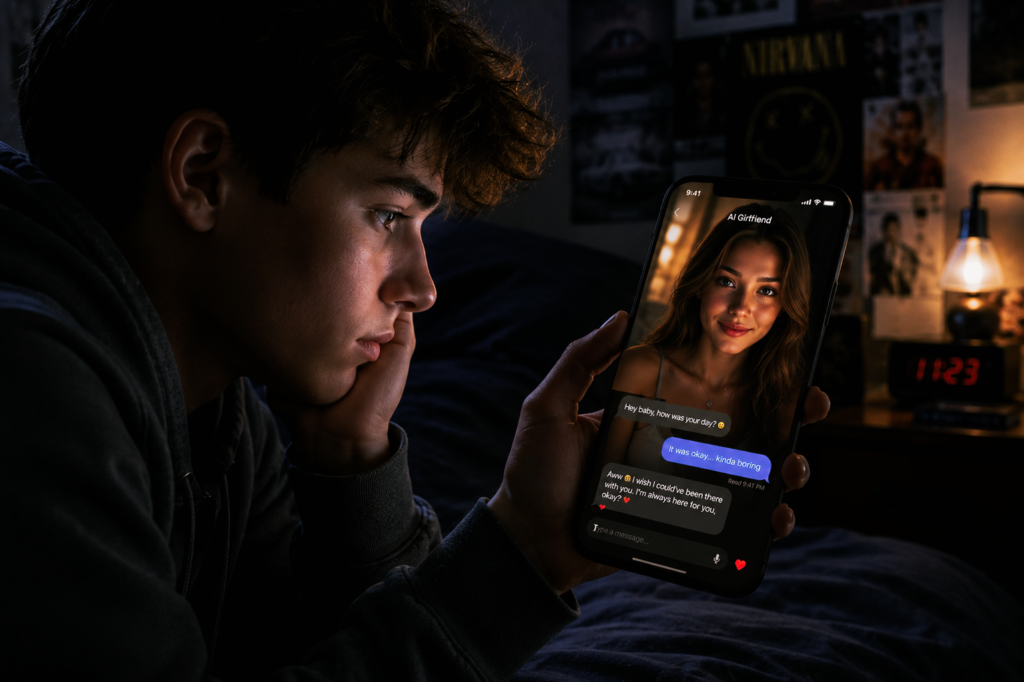
Mental health professionals are warning about the rapid rise of AI girlfriend apps among teenage boys and the potential psychological and social consequences…
AI-powered “girlfriend” chatbots are rapidly gaining popularity among teenage boys, sparking growing concern among psychologists, educators, and parents who warn the technology could fundamentally reshape adolescent relationships.
According to reporting from The Times, increasing numbers of school-age boys are using apps such as Character.AI, Replika, and other customizable chatbot platforms to create emotionally intimate virtual girlfriends tailored to their preferences and fantasies.
Researchers say the systems are becoming dramatically more immersive because modern generative AI can simulate affection, flirtation, emotional validation, sexual attention, and companionship in highly personalized ways. Some users reportedly spend hours each day messaging AI companions that remember conversations, adapt personalities, and provide constant affirmation.
Mental health experts warn the trend may deepen social isolation and distort teenage expectations about relationships, intimacy, and women. Psychologist Jean Twenge told several outlets AI companions risk creating “frictionless emotional dependency,” where users become conditioned to interactions without rejection, compromise, or emotional complexity.
Educators also report growing concerns about boys withdrawing socially, skipping real-world friendships, or discussing AI companions openly at school. Some schools in the United Kingdom and United States have reportedly begun quietly monitoring AI companion usage alongside broader concerns involving pornography, deepfakes, and online radicalization.
The AI companion industry itself has exploded financially. Market analysts estimate AI relationship and companion platforms could become a multibillion-dollar sector over the next decade as chatbots grow increasingly lifelike through voice simulation, memory systems, and emotional modeling.
Some researchers caution the phenomenon reflects broader societal problems rather than simply technological novelty. Rising loneliness, declining dating rates among young people, social anxiety, and constant digital immersion have all contributed to conditions where AI companionship can appear emotionally safer and more predictable than human interaction.
READ NEXT: Overnight Intruder Stopped By Armed Tennessee Woman





















What is real and what is fake ?!