
Vice President JD Vance said Wednesday that he is “legitimately worried” that sensitive conversations held inside the White House Situation Room may have been recorded and leaked to journalists at The New York Times.
Speaking on SiriusXM’s “The Megyn Kelly Show,” Vance reacted to detailed excerpts from “Regime Change: Inside the Imperial Presidency of Donald Trump,” an upcoming book by New York Times reporters Maggie Haberman and Jonathan Swan that offers a behind-the-scenes account of President Trump’s second term.
“There’s always an element of truth. There’s always an element of non-truth,” Vance said. “But there were certain things in there that legitimately made me worried that people were like taping … which by the way is like a felony.”
The comments come as the Trump administration faces growing scrutiny over how journalists obtained detailed accounts of internal White House deliberations, including discussions about the Jeffrey Epstein files and U.S. strategy during the conflict with Iran.
According to excerpts published by The New York Times, Vance played a leading role in administration discussions about the political fallout surrounding the Epstein files. The book reports that Vance urged officials to release all materials connected to Epstein, including allegations involving President Trump, in an effort to address concerns from the administration’s supporters.
The reporting includes direct quotations attributed to Vance, acting Attorney General Todd Blanche, White House Chief of Staff Susie Wiles, White House Communications Director Steven Cheung, and other senior officials as they debated how to respond to the controversy.
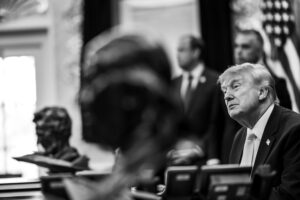
One excerpt describes a July 2025 Situation Room meeting in which Vance reportedly warned colleagues that the Epstein issue represented “a huge problem” for the administration. Haberman and Swan also detail discussions involving potential document releases, public messaging strategies, and the handling of convicted Epstein associate Ghislaine Maxwell.
Administration officials have not publicly disputed the specific quotations contained in the book. Instead, attention has shifted toward concerns about how reporters obtained such detailed accounts of highly sensitive meetings.
Axios reported that some White House officials fear recordings from Situation Room discussions may have been leaked to the authors. “We’re afraid some of our most sensitive conversations were being recorded,” one administration official told the outlet. “And we have no idea which ones.”
The Situation Room is among the most secure facilities in the federal government, and independent recording devices are generally prohibited inside the complex. If conversations were secretly recorded and leaked, it could represent a significant security breach.
However, there is no public evidence that recordings exist. Haberman and Swan note that their reporting is based on more than 1,000 interviews conducted over two years. In an author’s note accompanying one excerpt, they wrote that direct quotations came from participants, witnesses, contemporaneous notes, recordings or transcripts.
Some observers have pointed out that detailed dialogue in political books is often reconstructed through interviews rather than obtained from audio recordings. Veteran journalist Bob Woodward has long relied on that method in his reporting on multiple presidential administrations.
READ NEXT: Supreme Court Narrows Federal Gun Ban For Drug Users In Unanimous Second Amendment Ruling