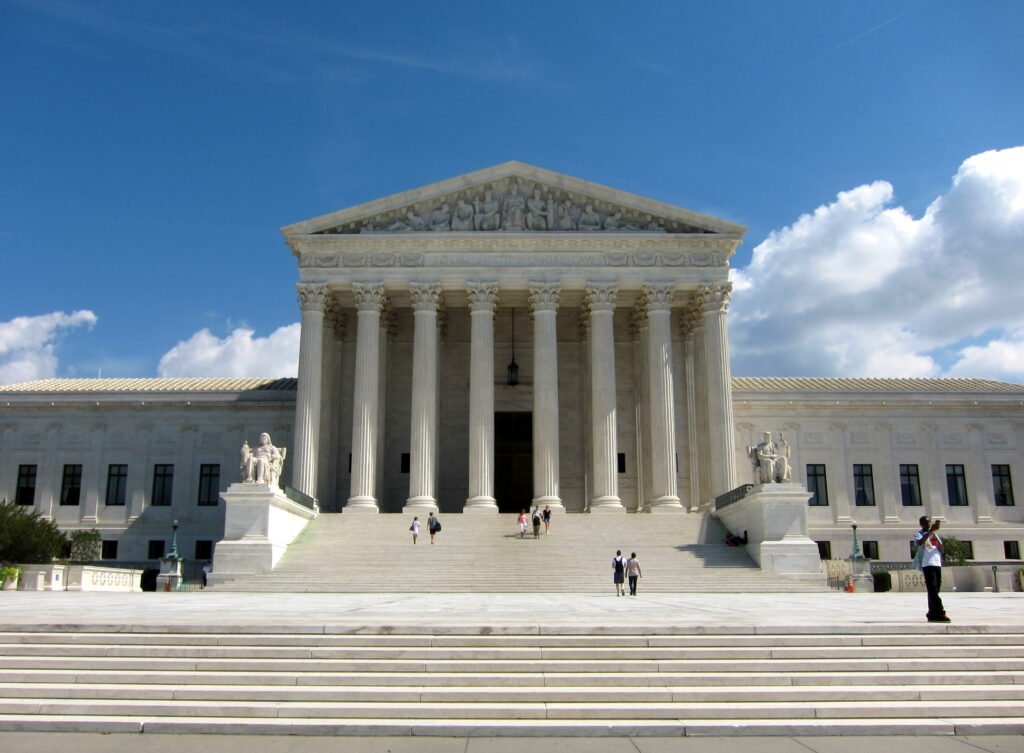
The U.S. Supreme Court on Thursday ruled 6-3 that the federal government may legally turn away asylum-seekers attempting to reach U.S. ports of entry before they physically step onto American soil, handing the Trump administration a significant immigration victory and potentially clearing the way for the return of a controversial border policy known as “metering.”
The decision overturns a lower court ruling that found the practice unlawful and gives the administration authority to revive the policy if it chooses. Although metering is not currently in effect, administration officials have argued it remains an important tool for managing surges at the southern border.
Writing for the court’s conservative majority, Justice Samuel Alito said federal immigration law does not consider migrants to have “arrived in” the United States until they physically cross the border.
“In ordinary speech, no one would say that a person ‘arrives in’ a place—for example, a house, a city, or a country—before the person enters that place,” Alito wrote. “An alien who is standing in Mexico does not ‘arriv[e] in the United States’ by attempting, and failing, to set foot in this country.”
The ruling resolves a years-long legal dispute over the government’s interpretation of the Immigration and Nationality Act, which allows any noncitizen who “arrives in” the United States to apply for asylum.
What is metering?
Metering began during the Obama administration as a way to limit the number of asylum applicants processed each day at ports of entry. The policy was significantly expanded during President Donald Trump’s first term.
The Biden administration formally ended the practice in 2021, but the Trump administration has argued it should retain the authority to reinstate it during periods of heavy migration.
Supporters say the policy helps border officials manage capacity during periods of exceptionally high migration. Immigration advocates contend it effectively denies asylum protections guaranteed under federal law by preventing migrants from ever reaching the point where they can legally present their claims.
Liberal justices issue sharp dissent
The court’s three liberal justices dissented.
Justice Sonia Sotomayor argued that Congress intended immigration officials to process anyone who reaches a port of entry seeking admission.
“Since 1917, Congress has required immigration officers to inspect noncitizens who arrive at ports of entry to determine whether they may enter the United States,” Sotomayor wrote.
She accused the majority of allowing the government to bypass those legal requirements simply by preventing migrants from stepping onto U.S. soil.
Sotomayor also warned that the ruling could produce humanitarian consequences similar to those created under the original metering policy, citing reports that thousands of asylum-seekers were forced to remain in dangerous border encampments while waiting for processing. She referenced the 1939 voyage of the MS St. Louis, whose Jewish refugees were denied entry while fleeing Nazi persecution, arguing the majority’s interpretation of the law could permit similar outcomes.
Justice Ketanji Brown Jackson filed a separate dissent, arguing the Supreme Court should not have heard the case because metering is no longer in effect and the administration had not presented concrete plans to reinstate it.
Broader immigration implications
Thursday’s ruling marks another significant immigration victory for the Trump administration and continues the Supreme Court’s willingness to uphold broad executive authority over border enforcement. The decision comes as the administration pursues several other immigration initiatives that remain the subject of ongoing litigation, including efforts involving Temporary Protected Status and birthright citizenship.
READ NEXT: Denmark Moves To Ban Public Islamic Call To Prayer Nationwide