

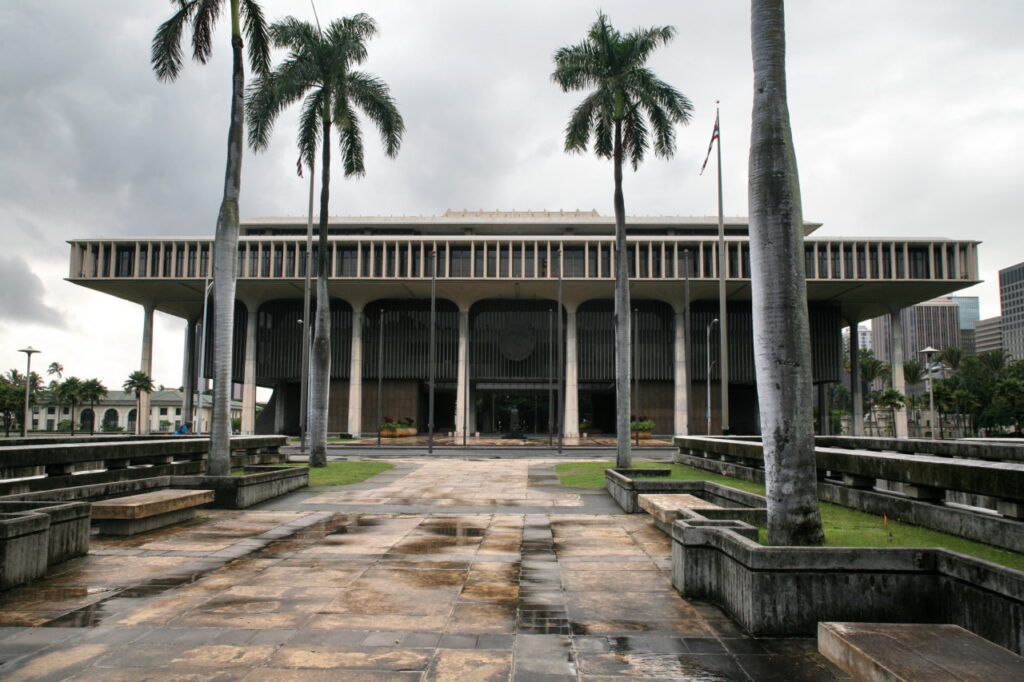
A Bloomberg opinion columnist is drawing criticism from Second Amendment advocates after arguing that a recent Supreme Court case involving Hawaii’s concealed carry law was largely about the inconvenience of complying with permitting rules rather than the scope of constitutional rights.
The criticism centers on the Supreme Court’s June decision in Wolford v. Lopez, which struck down Hawaii’s law barring concealed carry permit holders from bringing firearms onto most private property open to the public without the owner’s express permission. The justices ruled 6-3 that the restriction violated the Second Amendment.
Column Sparks Pushback
In the Bloomberg Opinion piece, the columnist argued that the case was less about whether Americans have a constitutional right to carry firearms than about the practical burdens imposed by Hawaii’s regulations.
Bearing Arms editor Cam Edwards took issue with that characterization, arguing it minimizes the central constitutional question before the court. He contended the dispute was not simply about administrative inconvenience but about whether states can impose restrictions that substantially burden the exercise of a fundamental constitutional right.
Edwards argued that reducing the case to questions of convenience overlooks the Supreme Court’s repeated emphasis that Second Amendment rights are entitled to the same constitutional protections as other enumerated rights.
Supreme Court Rejected Hawaii’s Law
The dispute arose after Hawaii enacted a law making it a crime for concealed-carry permit holders to enter private property open to the public — such as restaurants, gas stations, and retail stores — unless the property owner had affirmatively granted permission.
Writing for the majority in Wolford, the Supreme Court concluded that Hawaii’s approach conflicted with the nation’s historical tradition of firearm regulation and impermissibly burdened the right to bear arms. The ruling placed similar laws in several other states under increased legal scrutiny.
Broader Second Amendment Debate Continues
Gun rights advocates say the decision reinforces the principle established in the Court’s 2022 Bruen ruling that governments must justify firearm regulations by pointing to historical analogues rather than modern policy preferences.
Supporters of stricter gun regulations argue states retain broad authority to regulate where firearms may be carried to protect public safety and private property rights, even after Bruen and Wolford.
The disagreement over the Bloomberg column reflects the broader national debate over how courts should interpret the Second Amendment. While critics view the Hawaii case as a landmark constitutional ruling, others continue to frame it primarily as a dispute over the practical limits states may place on public carry.
READ NEXT: Johnson Reveals His Next Move On The SAVE America Act

















They will never give up that Communist crap easy.