











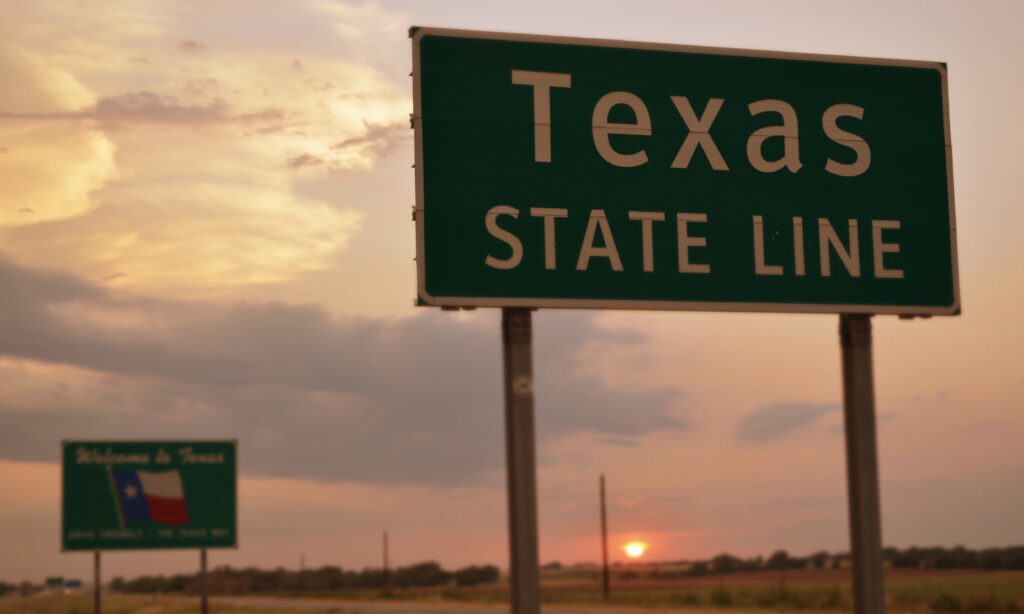
In a major political win for Republicans, Texas Gov. Greg Abbott (R) on Friday signed into law a new congressional map that is expected to net the GOP up to five additional U.S. House seats ahead of the 2026 midterm elections.
The redrawn map, passed by the Texas Legislature during a contentious special session, marks a rare instance of mid-decade redistricting — heavily lobbied for by national Republican leaders seeking to capitalize on favorable political conditions across red states.
“This is Gov. Greg Abbott. I’m about to sign the law that creates the one big, beautiful map that ensures fairer representation in the United States Congress for Texas,” Abbott said in a video posted to social media. “Texas is now more red in the United States Congress.”
A Shift in the Congressional Landscape
With the new map, Republicans stand to expand their congressional delegation from 25 to potentially 30 seats, cementing Texas as a cornerstone of GOP control in the House. The decision is seen as part of a broader strategy to lock in Republican dominance and reduce the risk of a split government during Trump’s second term.
Democrats fiercely opposed the measure, with Texas state Sen. Carol Alvarado (D) attempting a filibuster during the Senate’s overnight session last weekend. However, the effort was quickly halted by the Republican majority, clearing the path for the bill’s passage.
Legal Challenges and Political Fallout
The map is already facing multiple legal challenges from “voting rights” organizations and civil liberties groups who argue it violates the Constitution and the Voting Rights Act by “diminishing the political power of minority communities.”
“This isn’t over — we’ll see these clowns in court,” said Texas Democratic Party Chair Kendall Scudder, who accused state Republicans of engaging in racially discriminatory gerrymandering. “We fully expect the letter of the law to prevail over these sycophantic Republican politicians who think the rules don’t apply to them.”
A federal court has scheduled preliminary injunction hearings from Oct. 1 to Oct. 10 in one of the lawsuits, setting up a legal showdown that could have implications for redistricting efforts nationwide.
While Democrats hope for a judicial intervention, some legal analysts point out that the current conservative majority on the U.S. Supreme Court may be reluctant to interfere — though the court previously struck down Alabama’s congressional map in a landmark Voting Rights Act case.
Critics of race-based districting argue that using race as a primary factor in redistricting is unconstitutional. They contend that voters should not be treated differently based solely on race, and creating majority-minority districts can reinforce racial divisions rather than promote equality. Many insist that colorblind representation — drawing districts based on geography rather than racial composition — is more in line with the spirit of the Constitution’s Equal Protection Clause.
This view was notably expressed in several Supreme Court rulings, including Shaw v. Reno (1993) and Miller v. Johnson (1995), where the Court held that racial gerrymandering — even when done with “good intentions” — can violate the Equal Protection Clause if race is the predominant factor in drawing lines without compelling justification.
A National Redistricting Arms Race
The Texas map is only the latest move in a broader redistricting arms race. According to GOP and White House insiders, Trump’s team has actively encouraged red states like Indiana, Missouri, and Florida to pursue similar mid-decade redraws to bolster the party’s position in Congress.
In response, blue states like California, Illinois, and New York are also redrawing maps, with California’s new House map expected to be on the ballot in November 2025. Other Democratic governors are reportedly exploring similar countermeasures.
During the first special session earlier this year, Texas Democrats fled the state in an attempt to deny the legislature a quorum — traveling to deep-blue states to rally support against what they called a GOP power grab. But they eventually returned, and Republicans moved swiftly to pass the map during a second special session, taking full advantage of their legislative majority and the governor’s support.
The Stakes for 2026
The 2026 midterms could prove pivotal for both parties. Democrats see the House of Representatives as their best shot at flipping a chamber, while Republicans are determined to maintain unified control of the federal government as Trump approaches the remaining two years of his second term.
Meanwhile, Texas voters will begin seeing the political implications of the new lines as early as the March 2026 primaries, though the pending litigation could still alter or delay implementation.
What’s Next
- Federal court hearings on the Texas map begin October 1
- California voters weigh in on their new House map in November
- Other red and blue states may follow with their own redistricting pushes
As both parties gear up for a midterm cycle that is shaping up to be one of the most consequential in decades, the political map of the country — both literally and figuratively — is rapidly being redrawn.
READ NEXT: Governor Signals Plan To Redistrict Lone GOP Rep. Out Of His Seat To Make State ‘More Fair’
























The whining about this correction to districts that were gerrymandered by dems for years (decades?) is ample proof that they know they cannot compete on a level playing field. Their whimpering about ‘racism’ might have some merit IF they would field quality candidates instead of ones that are blatantly racist themselves.
IF they would field quality candidates it would not matter what party they are from. Prove me wrong.
Victory TX