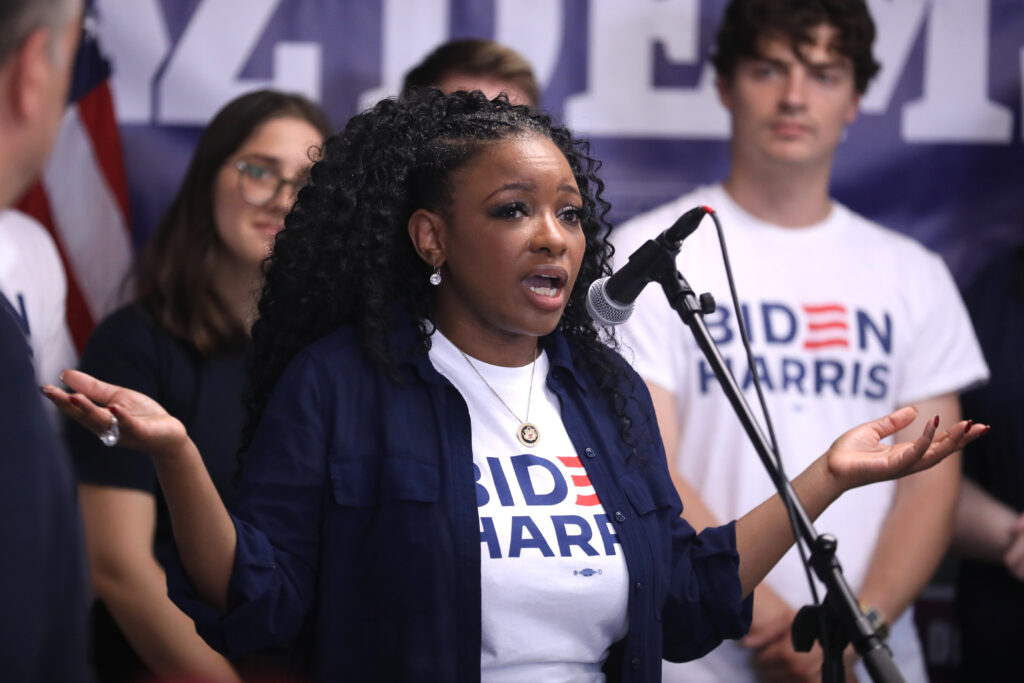
Rep. Jasmine Crockett (D-TX), a member of the progressive “Squad,” came under fire after mistakenly accusing Environmental Protection Agency Administrator Lee Zeldin of taking campaign donations from Jeffrey Epstein — but citing the wrong man entirely.
During debate on a resolution to censure U.S. Virgin Islands Delegate Stacey Plaskett (D) for her past interactions with the disgraced financier, Crockett attempted to turn the tables on Republicans by claiming Zeldin had also received money from “Jeffrey Epstein.”
Federal Elections Commission filings did show a donor named Jeffrey Epstein had contributed to Zeldin in the past — but the donor was a New York physician, not the convicted sex offender who died in jail.
Zeldin responded on X, confirming that the contribution came from Dr. Jeffrey Epstein, whom he described as a completely unrelated individual. He emphasized the distinction while denouncing Crockett’s accusation, and screenshots of FEC filings circulated widely to corroborate his explanation.
Censure Push Against Plaskett Fuels Partisan Clash
The exchange took place as the House debated whether to censure Plaskett following the release of thousands of pages of emails, texts, and documents from Jeffrey Epstein’s estate. The material, released last week by the House Oversight Committee, showed Epstein sending messages to Plaskett during her questioning of former Trump attorney Michael Cohen.
The texts included compliments and real-time commentary on Cohen’s testimony, and Plaskett’s replies suggested a cordial relationship despite Epstein’s status as a convicted sex offender.
The House Freedom Caucus spearheaded the censure resolution, which sought not only to formally reprimand Plaskett but also to remove her from the House Democratic Caucus and from the House Permanent Select Committee on Intelligence. That committee receives sensitive national-security briefings and oversees the FBI and CIA.
The resolution failed 209–214. All Democrats voted against it. Three Republicans voted no, and three others voted present.
Supporters of the Censure Point to Epstein Coordination
Backers of the censure argued the newly released documents were alarming and raised serious institutional concerns, as the materials showed Plaskett coordinating questioning during an official hearing with a convicted sex offender whose crimes were known nationwide.
They framed the episode as a breach of trust and a threat to the integrity of congressional oversight.
Democrats Argue the Move Was Political Retaliation
Democrats, on the other hand, dismissed their concerns. They contended that Plaskett’s communication, while questionable, did not violate House ethics rules or any law.
They argued that the censure effort was designed to distract from other matters involving President Donald Trump and asserted that Epstein had been, for official purposes, a constituent of Plaskett due to his residence in the Virgin Islands.
They also noted that the resolution was brought directly to the floor rather than through the House Ethics Committee.
A Misfire Overshadows the Debate
Crockett’s mistaken accusation against Zeldin quickly became one of the most widely discussed moments of the hearing. Critics said the blunder undercut Democrats’ argument against the censure resolution, while supporters of Zeldin highlighted the error as an example of reckless partisanship.
The dispute added yet another layer of controversy to an already charged debate.
READ NEXT: The Democrats’ New Epstein Dump Backfires, Proving Trump Was The Epstein Whistleblower