
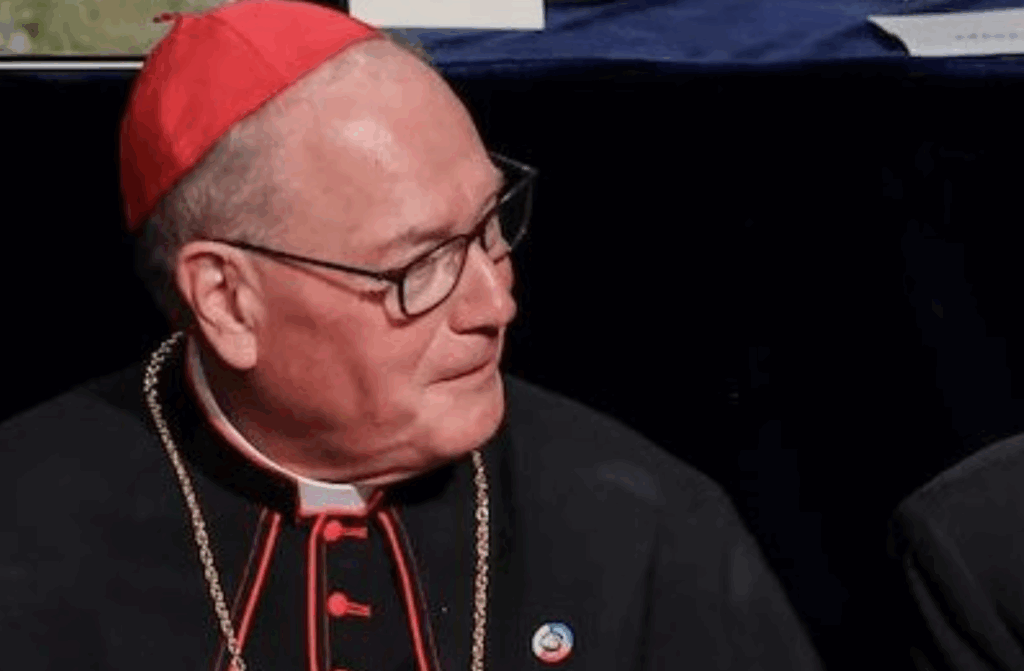
The Vatican is not bankrupt. But it is closer than most believe. That is the quiet consensus in Rome, where Pope Leo XIV now presides over a Holy See beset by years of structural deficits, donor fatigue, and a pension liability that has metastasized into a billion-euro tumor. For the first US-born pope, the gravity of the Vatican’s fiscal position is not an abstraction. It is arithmetic. Receipts are insufficient, liabilities mounting, and the financial credibility of the Curia has been badly tarnished by scandal and sclerosis. In such a moment, the appointment of a strong, visible, competent leader to the helm of the Secretariat for the Economy is not a luxury. It is a necessity. There is no better candidate than Cardinal Timothy Dolan of New York.
The problem is neither novel nor surprising. The Vatican’s annual budget has been in the red for years. Revenues, anchored largely in museum tickets, real estate leases, and donations, have failed to keep pace with spiraling operational costs and retiree obligations. The 2023 operating deficit was over 80 million euros. Compounding this is the pension shortfall, officially placed at 631 million euros in 2022 but privately admitted to have breached the billion-euro mark. The Vatican Bank (IOR), though stable, is not a commercial bank and cannot paper over these deficits. It is built to safeguard Church funds, not to underwrite ongoing institutional mismanagement. Unless corrective action is taken soon, the Vatican’s reserves may deplete within the next five years.
What, then, is to be done? Pope Leo, to his credit, is not blind to the challenge. A mathematician by training, he understands compound decay. He has maintained Maximino Caballero, a competent lay technocrat, as interim Prefect of the Economy Secretariat. But competent is not enough. What the Vatican needs now is catalytic leadership. A man who can raise money, build confidence, and face a cynical press corps with charisma and clarity. Dolan fits this profile better than anyone in the College of Cardinals.
As Archbishop of New York, Dolan has managed one of the most financially complex and culturally fractious dioceses in the Catholic world. He has balanced budgets, led capital campaigns, and kept parishes afloat amid dwindling attendance and rising costs. He raised over $200 million through the “Renew and Rebuild” campaign alone, deftly navigating both Wall Street donors and parish-level contributors. He understands how to speak to both.
Critics might say Dolan is a pastor, not a technocrat. But this objection misses the mark. The crisis the Vatican faces is not merely technical. It is existential. It is about trust. Donors, once enthusiastic, now hesitate. The Peter’s Pence collection has declined dramatically since revelations that donations were diverted into speculative real estate ventures. The Becciu trial, and the broader financial scandal surrounding the London property fiasco, damaged the moral authority of the Vatican’s financial arm. It is not enough to balance spreadsheets. Someone must reestablish moral confidence. That is a pastoral task.
Here, Dolan’s gregarious persona and reputation for integrity are an asset. He commands respect not only among the faithful but also among skeptical media. His Anglophone pedigree is a diplomatic bridge to American Catholic donors who, under a US-born pope, might be newly inclined to support the Curia’s mission, provided they trust where the money is going. Dolan, who has regularly appeared on national media and engaged critics of the Church directly, brings the kind of public gravitas this moment demands.
Moreover, Dolan is no stranger to Rome. A former rector of the Pontifical North American College, he understands Vatican politics. He can navigate the internal currents of the Curia without being consumed by them. He has long supported financial transparency, speaking candidly about the need for the Church to be seen as not only spiritually but administratively accountable. His tenure in New York proved he can implement cost-saving reforms without alienating staff or clergy.
In the secular world, corporate boards bring in turnaround CEOs when organizations are on the brink. The Vatican, though not a corporation, faces a similar inflection point. The Secretariat for the Economy must now do more than supervise budgets. It must rebuild the foundation of financial trust. This means overhauling the pension system, auditing every dicastery’s finances, monetizing underused assets, and professionalizing property management. But none of this will succeed if donors do not believe the Vatican is serious.
To that end, optics matter. Appointing a high-profile, proven fundraiser to lead the financial revival would signal seriousness. It would also reassure lay Catholics, especially in the United States, who have grown skeptical of Rome’s bureaucratic culture. Dolan represents a break from that culture. His record in New York is not one of cautious drift, but of action.
There are practical objections. Dolan is over seventy. He is comfortable in his post. Why disrupt what works? But this is not the time for comfort. This is a moment that calls for sacrifice. Dolan, by all accounts, is still vigorous, intellectually and physically. His age is no more a disqualifier than was that of Pope Leo himself, elected at sixty-nine. If anything, his seniority and stature give him the freedom to make hard choices unencumbered by political calculation.
Of course, any new prefect will need a team. Dolan would be wise to retain Caballero in a chief operating role. The Church needs both charisma and competence, both a visionary and a spreadsheet mind. With Dolan as Prefect and Caballero as Secretary General, the Secretariat for the Economy could finally possess the credibility and skill set needed to tackle the deficit and restore fiscal health.
The stakes are not only material. As Cardinal Ambongo rightly noted, financial credibility is inseparable from the Church’s moral witness. How can the Church preach justice while mismanaging its own affairs? How can it call on governments to serve the poor if it cannot fund its own pensions? If it hopes to engage the modern world, the Church must first put its house in order.
To do so, Pope Leo must make bold appointments. Cardinal Dolan’s name should not merely be floated, it should be confirmed. He has the stature, experience, and resolve to guide the Vatican through this crucible. There may be others who are competent. But there are few who can lead.
If you enjoy my work, please consider subscribing: https://x.com/amuse.
READ NEXT: Greenland Rejects Trump, Gives Lucrative Deal To Somebody Else

















I could not agree more! Rob and Tim need to get their head together on this issue.
I don’t think there is a large human organization on Earth that hasn’t run into this problem. Hoping to raise more money probably isn’t the solution. Certainly, selling “indulgences” wasn’t. Most organizations need to downsize to cut expenses, although that is always unpopular.