


The Baltic Sea: A Stage for Geopolitical Chess
The international system, for all its complexities, remains a stage dominated by one relentless force: security competition. Nations act in pursuit of their interests, seeking to bolster their security often at the expense of others. Nowhere is this clearer than in the Baltic Sea, where NATO’s enhanced presence challenges Russia’s historical access and influence. To dismiss Russia’s inevitable response to such maneuvers as unprovoked aggression is to misinterpret the rules of this dangerous game. Worse yet, suppressing discussions about Russian security concerns—branding them as treasonous—renders our policies not only myopic but perilously self-destructive.
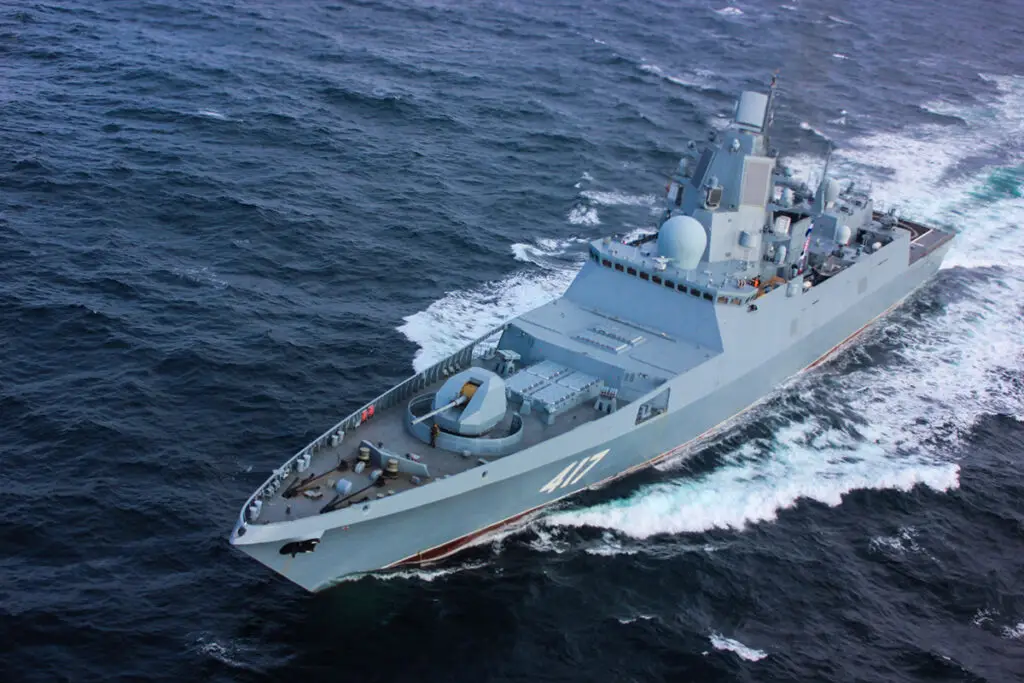
The thrust of NATO’s strategy in the Baltic is simple: to project strength and deter any Russian adventurism in the region. Yet, the very actions taken to secure the alliance’s borders risk provoking the opposite outcome. By threatening Russia’s access to critical waterways and placing pressure on its western flank, NATO incentivizes a reactionary response. The Kremlin, perceiving an existential threat, will act—not because it desires conflict, but because survival compels it.
Historical Parallels: The Perils of Ignored Security Concerns
History offers a cautionary tale of what happens when security concerns are ignored or outright dismissed. Consider the Treaty of Versailles in 1919. The punitive terms imposed on Germany following World War I created a fertile ground for resentment and instability. Stripped of its military capacity and forced to shoulder the blame for the war, Germany’s perception of injustice sowed the seeds for the rise of Adolf Hitler and a far more devastating conflict two decades later.
Similarly, the Cuban Missile Crisis of 1962 demonstrated the dangers of unilateral security enhancement. The Soviet Union’s deployment of nuclear missiles to Cuba was a direct response to U.S. missiles stationed in Turkey. Each side sought security but instead stumbled dangerously close to global annihilation. Only through direct dialogue and mutual recognition of security concerns did the crisis subside.
NATO’s current strategy risks repeating such missteps. Russia’s actions, from its annexation of Crimea to its military build-up in Kaliningrad, can be interpreted as reactions to NATO’s eastward expansion. To dismiss these actions as unprovoked ignores the strategic calculus driving Moscow’s decisions.
Suppressing Common Sense: The Censorship of Pragmatic Policy
A greater tragedy lies in our unwillingness to openly debate the wisdom of our policies. In today’s hyperpolarized climate, merely acknowledging Russian security concerns is treated as tantamount to treason. This intellectual suppression undermines the very principles of liberty and free speech that we claim to defend.
Critics who argue for dialogue with Russia—or caution against NATO’s overreach—are met with a chorus of ad hominem attacks. Such stifling of debate erodes the marketplace of ideas that has historically been America’s strength. Thomas Jefferson’s assertion that “error of opinion may be tolerated where reason is left free to combat it” has been abandoned in favor of censorious conformity.
This refusal to entertain dissenting views leads to policies devoid of nuance and strategy. It blinds policymakers to the unintended consequences of their actions, ensuring that errors remain uncorrected until they result in catastrophe. By labeling those who advocate for pragmatic engagement as appeasers, we doom ourselves to repeat the very cycles of escalation that diplomacy seeks to avoid.
The Security Dilemma: A Dangerous Feedback Loop
The concept of the security dilemma lies at the heart of this crisis. When one state enhances its security, it inadvertently threatens the security of another. This sets off a cycle of countermeasures that escalate tensions and diminish security for all. NATO’s actions in the Baltic, from deploying troops to conducting military exercises, are seen by Moscow not as defensive but as offensive.
Russia’s likely response will follow predictable lines. Increased military posturing in Kaliningrad, hybrid warfare tactics such as cyberattacks and a greater reliance on its strategic partnership with China are all plausible outcomes. These measures, in turn, will justify further NATO actions, locking both sides in a perilous feedback loop.
As the 19th-century British historian Lord Acton observed, “Power tends to corrupt, and absolute power corrupts absolutely.” The same can be said of unchecked security competition. Each side, convinced of its own righteousness, risks becoming the very aggressor it claims to oppose.
The Path Forward: Realism Over Ideology
If history teaches us anything, it is that durable peace requires an acknowledgment of mutual security concerns. George Kennan, the architect of America’s Cold War strategy of containment, understood this well. He warned against treating the Soviet Union as a monolithic evil, arguing instead for a nuanced approach that balanced firmness with engagement.
Today, we must adopt a similar realism. This does not mean condoning Russia’s actions in Ukraine or elsewhere, but it does require understanding the motivations behind them. By addressing Russia’s legitimate security concerns—such as its fear of encirclement—we can craft policies that enhance NATO’s security without provoking needless escalation.
The suppression of dialogue and dissent must end. Common sense—and common decency—demand that we recognize the humanity of those on the other side of the geopolitical divide. By doing so, we may yet avoid the tragedies that have so often followed the hubris of great powers.
Conclusion: The Cost of Hubris
The current standoff in the Baltic Sea is more than a regional dispute; it is a test of whether the international system can escape the gravitational pull of security competition. NATO and Russia are playing a dangerous game, one where miscalculation could have catastrophic consequences.
To succeed, we must reject the simplistic narratives that dominate our discourse. Instead, we should embrace the wisdom of figures like Jefferson and Kennan, who understood that the pursuit of security is not a zero-sum game. Only by recognizing the legitimacy of Russian security concerns—and addressing them through dialogue—can we hope to achieve a lasting peace. Anything less would be an abdication of both reason and responsibility.
Sponsored by the John Milton Freedom Foundation, a nonprofit dedicated to helping independent journalists overcome formidable challenges in today’s media landscape and bring crucial stories to you.
READ NEXT: Trump Wins Key Victory As Judge Intervenes

















It is obvious that you do not understand V. V. Putin very well at all. He has violated nearly every international treaty Russia was ever a party to, he has seized two provinces of Georgia, at least four provinces of Ukraine, part of Moldova, has claimed that Finland, Estonia, Latvia, and Lithuania belong to Russia, has managed the murder or disappearance of more than 100 journalists and every political opponent he didn’t like, he controls the churches and religious organizations to the extent that they all either openly support him or at least suppress anyone who doesn’t support him – in other words he is continuing the legacy of his hero, Joseph Stalin. In the three decades I lived in Russia I saw an increase in stickers posted on cars with the saying, “On to Berlin.” Russia has a vested interest in destroying NATO and controlling every nation in Eastern Europe, and, with Putin’s expertise gained as the KGB leader he has succeeded in planting political allies in all of those nations. He is convinced that NATO cannot stop him, and he may be right.
So we should let Russia expand its empire through conquest of free nations?
Really enjoy your column.
Revisit the ” Bedford Incident ” to find out how the Baltic will turn out.
Fred
Well said. I’m a retired Navy officer with direct NATO involvement prior to 1991, I was also a participant in the Cuban Blockaid and even the Bay of Pigs. I’ve prepared a document which I am circulating to Congressional representatives from Georgia which makes the same points with regard to the Ukraine. I wan’t aware of the Baltic issues you are reporting, but I’m not surprised. Bat police from a common source in Washington.
Earl Ferguson
404-667-1065