

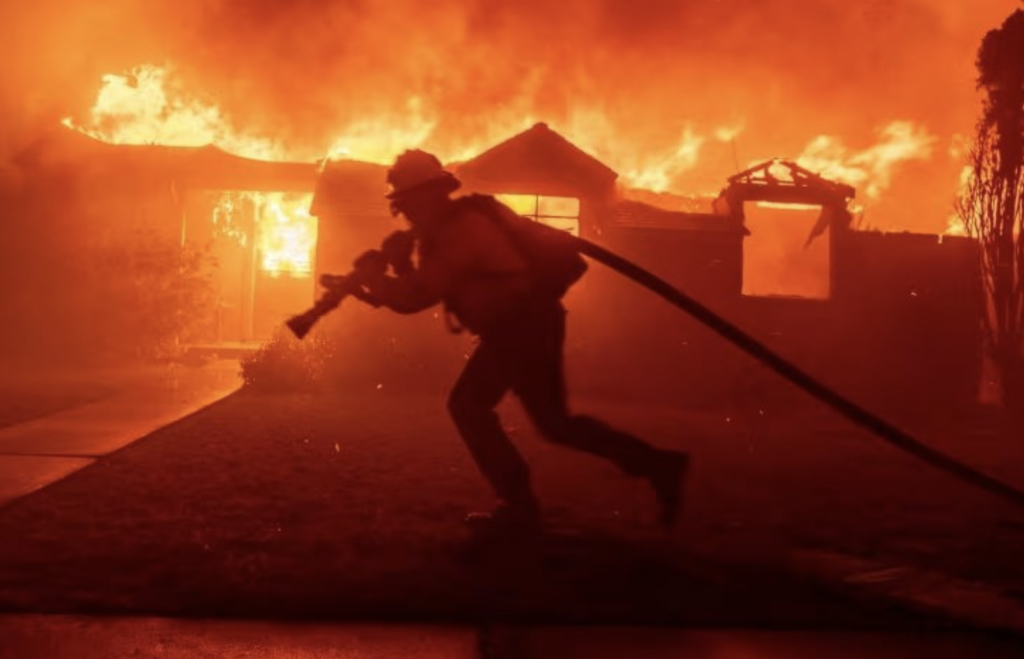
The recent devastating wildfires in Los Angeles have raised concerns about fire insurance coverage for homeowners in California. Throughout 2024, several insurance companies canceled numerous homeowner insurance policies, citing rising costs and increased wildfire risk. This has led to speculation about whether those affected by the recent fires had adequate insurance protection. This essay examines insurance cancellations, the state’s regulatory measures and the potential impact on homeowners affected by the L.A. fires.
Insurance Cancellations in 2024
In 2024, California experienced a wave of homeowner insurance policy cancellations by several insurance companies. State Farm, the largest insurer in the state, canceled 72,000 policies, including 30,000 home policies and 42,000 commercial apartment policies. This decision was attributed to factors such as increased costs, growing wildfire risk and the need to ensure the company’s financial stability. This has created a conflict between insurance companies’ need to manage risk and homeowners’ need for affordable coverage. Other insurers also announced non-renewals of thousands of policies, including Tokio Marine America Insurance Co. and Trans Pacific Insurance Co. (subsidiaries of Tokio Marine Holding) and Nationwide. These cancellations sparked concerns among homeowners, particularly those residing in high-risk areas prone to wildfires. The situation was further complicated by the fact that some ZIP codes experienced a disproportionately high number of cancellations. For instance, over 65% of State Farm policies in ZIP code 95033 in the Santa Cruz mountains were canceled.
Moratorium on Cancellations
In response to rising concerns over insurance cancellations, California’s Insurance Commissioner, Ricardo Lara, took decisive action. Under a law (SB 824) authored by Lara himself in 2018, a mandatory one-year moratorium was imposed on insurance companies, preventing them from canceling or non-renewing residential insurance policies in areas affected by wildfires. This moratorium, a critical consumer protection law, provides temporary relief from insurance non-renewals and cancellations to residents living within or adjacent to a governor-declared wildfire disaster. Since 2019, Commissioner Lara’s actions have protected nearly four million homeowners. This moratorium was triggered by Governor Newsom’s declaration of a state of emergency following the recent fires in Los Angeles. The moratorium provides crucial protection for homeowners in designated areas, ensuring they retain coverage for at least one year from the date of the emergency declaration, regardless of whether they suffered a loss in the fire. This measure aims to provide temporary relief and stability to residents as they recover and rebuild. In 2024 alone, nearly one million policies were protected under this moratorium. The current moratorium for the L.A. fires will be in effect until July 26, 2025.
Regulations and Coverage Extensions
Mandatory One-Year Moratorium
California has specific regulations in place to address fire insurance cancellations and ensure coverage for homeowners in high-risk areas. One such regulation is the mandatory one-year moratorium mentioned earlier. This moratorium, enacted through Senate Bill 824, requires insurance companies to maintain coverage for residential policies in areas affected by wildfires for one year following a state of emergency declaration. This law gives millions of Californians breathing room and hits the pause button on insurance non-renewals while people recover.
California FAIR Plan
Another important aspect of California’s insurance regulations is the California Fair Access to Insurance Requirements Plan (FAIR Plan). This plan provides basic fire insurance coverage to homeowners in high-risk areas who are unable to obtain coverage from traditional insurers. The FAIR Plan serves as a safety net, ensuring that homeowners in wildfire-prone regions have access to essential fire insurance protection. Most standard homeowner insurance policies cover fire damages, including those caused by wildfires. In the case of wildfires, dwelling coverage will cover the cost of rebuilding the physical structure of the home and replacing any damaged parts. However, wildfire damage may not be included for residents who live in high-risk areas. California’s FAIR Plan offers the Golden State’s property owners in high-risk zones an option for coverage—though it is often more expensive than the traditional market because it covers high-risk properties.
The “85% Rule”
In December 2024, the state passed a new regulation requiring insurance companies to offer coverage to residents in at-risk areas. Insurers will be required to write policies in areas “equivalent to no less than 85 percent of their statewide market share.” This rule aims to improve insurance availability in wildfire-prone regions.
Impact of the LA Fires on Insurance Coverage
The recent fires in Los Angeles have significantly impacted insurance coverage in the affected areas. The fires, fueled by Hurricane-force Santa Ana winds and dry conditions, have caused widespread destruction, with thousands of homes and structures damaged or destroyed. The scale of the damage has raised concerns about the financial stability of insurance companies and their ability to cover the losses. However, experts believe that insurance carriers have planned for such contingencies and are unlikely to be bankrupt by these fires.
The fires have also highlighted the challenges faced by homeowners in obtaining and maintaining fire insurance coverage in high-risk areas. With insurers increasingly reluctant to underwrite policies in these regions, many homeowners have been forced to rely on the FAIR Plan, which can be more expensive than traditional insurance because it covers high-risk properties. The number of residential FAIR policies in the Pacific Palisades ZIP code grew by over 80% between 2023 and 2024 and has quadrupled since 2020. The total financial exposure for residential insurance in Pacific Palisades doubled in the past year, growing to almost $3 billion. In one ZIP code affected by the fire in Altadena, residential FAIR plan policies grew by over 40% since 2020, with around $950 million of total exposure.
The estimated insured losses from these fires range from $6 billion to $13 billion. Analysts estimate that the Palisades fire could result in as much as an $8 billion insurance industry loss, the Eaton, Hurst and Woodley fires combined up to $2.5 billion, and additional commercial risk exposure could add around $2.5 billion more.
In addition to the Palisades fire, several other fires have caused significant damage. The Eaton Fire, in the hills above Altadena in northern Los Angeles County, has burned more than 16 square miles and destroyed almost 1,000 structures. The Hurst Fire has burned 855 acres. The Woodley Fire has burned 30 acres.
The fires have prompted a massive response effort, with more than 7,500 firefighting and emergency personnel deployed to protect California communities. Governor Newsom has also issued an executive order to support communities affected by the ongoing fires.
The fires and subsequent insurance claims could lead to increased insurance premiums for homeowners in California in the long term. This could further exacerbate the challenges faced by homeowners in affording insurance coverage, particularly in high-risk areas.
Continued Coverage
One of the key questions raised by the recent fires is whether homeowners who had their fire insurance canceled in 2024 still have coverage. In almost all cases those affected by the fires still have coverage due to the moratorium on insurance cancellations imposed by the state insurance regulator. This moratorium provides a one-year extension of coverage, ensuring those affected by the fires have the necessary protection during this challenging time. However, it’s important to note that the moratorium applies only to those areas specifically designated by the California Department of Insurance. While some sources suggest that many homeowners who had their fire insurance canceled in 2024 are likely not covered for the recent fires the moratorium provides a strong indication that coverage is likely still in place.
Conclusion
The recent wildfires in Los Angeles have brought the issue of fire insurance coverage in California to the forefront. While insurance companies have canceled policies due to various factors, the state’s regulatory measures, particularly the moratorium on cancellations enacted through SB 824, provide a safety net for homeowners in high-risk areas. This moratorium ensures that homeowners who had their fire insurance canceled in 2024 still have coverage for the recent fires. This is crucial for helping those affected by the fires to recover and rebuild. However, it’s essential for homeowners to verify their coverage status with their insurance company and seek assistance from the Department of Insurance if needed.
The fires have also exposed the challenges faced by homeowners in obtaining and maintaining fire insurance coverage in high-risk areas. The increasing reliance on the FAIR Plan, which can be more expensive than traditional insurance, highlights the need for long-term solutions to ensure affordable and accessible coverage for all Californians. The potential for increased insurance premiums due to the fires could further exacerbate these challenges.
The L.A. fires serve as a stark reminder of the growing risk of wildfires in California and the need for comprehensive strategies to mitigate these risks and protect communities. This includes not only strengthening firefighting resources and emergency response efforts but also addressing the underlying factors that contribute to wildfire risk, such as climate change and land management practices.
Sponsored by the John Milton Freedom Foundation, a nonprofit dedicated to helping independent journalists overcome formidable challenges in today’s media landscape and bring crucial stories to you.
READ NEXT: Pentagon Eyes Greenland As Trump’s Bold Predictions Prove True
















YES.
Remember the fire tax that Brown imposed on rural Californian homeowners? We here in Northern California were paying for high-risk areas in Southern California. So typical of Democrat controlled states. Protect the voters who vote for them and let the opposition suffer.