

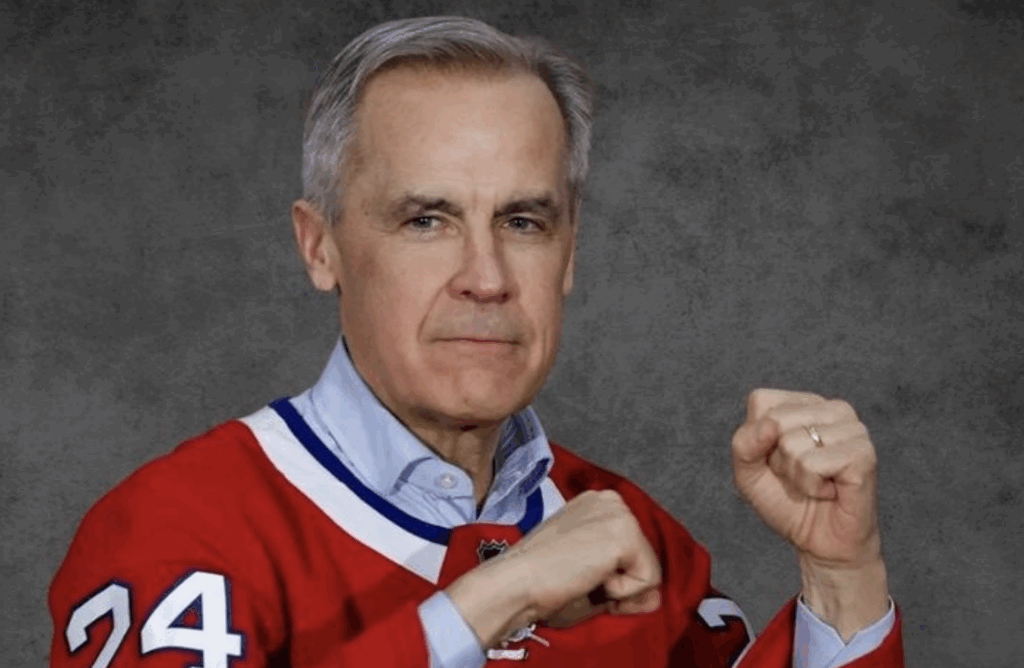
Mark Carney entered office promising Canadians that he would stand tough against President Trump in trade disputes. He even borrowed from hockey lore, coining his rallying cry “Elbows Up.” In theory, this was meant to evoke grit and resilience. In practice, it was an embrace of a tactic known in hockey as both dirty and dangerous. The results have been predictably disastrous: Canada’s economy is shrinking by nearly 2% this year, tens of thousands of jobs have been lost, youth unemployment is at a 14-year high, and dozens of Canadian firms are relocating to the US. Instead of choosing cooperation, Carney chose confrontation. He forgot that in hockey, elbows up is penalized precisely because it endangers the game.
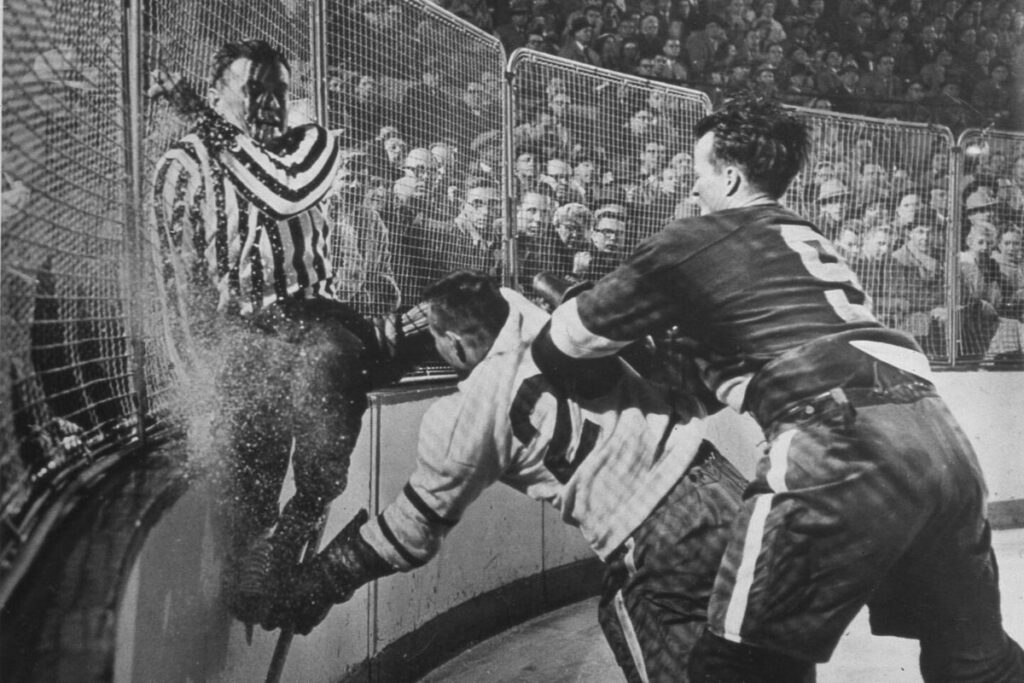
To understand the full irony of Carney’s choice of metaphor, consider the history of “elbows up” in Canadian hockey. Gordie Howe, one of the sport’s all-time greats, was notorious for raising his elbows to protect himself and intimidate rivals. He earned the nickname “Mr. Elbows” long before “Mr. Hockey.” Howe himself admitted, “If a guy slashed me, I’d grab his stick, pull him up alongside me and elbow him in the head.” In the rugged Original Six era, this tactic may have passed as hard-nosed self-defense. Yet even then, it carried the whiff of dirtiness. Opponents feared Howe’s elbows not because they were fair play but because they skirted the edge of illegality.
Modern hockey no longer shrugs off such behavior. The NHL Rulebook explicitly defines elbowing as “the use of an extended elbow as the point of contact with an opponent while delivering a check.” It is outlawed. A player guilty of elbowing can be assessed a minor penalty, a major penalty, a game misconduct, or even face suspension. Why such severity? Because elbowing is one of the quickest ways to cause concussions or severe injuries. In the last 20 years, as awareness of brain trauma has grown, hockey authorities have cracked down. Hits that once earned grudging respect are now condemned as dirty play. Elbows up has become synonymous with illegality and recklessness.
That is what makes Carney’s adoption of “elbows up” so telling. He was not signaling disciplined toughness but rather reckless posturing. His approach to Trump was the diplomatic equivalent of throwing an elbow to the head. It may have looked defiant in the short term, but in the long run it has left Canada bleeding economically. Trump held the stronger hand. The US market dwarfs Canada’s. Canadian exports rely disproportionately on access south of the border, not the other way around. By escalating instead of negotiating, Carney endangered Canadian prosperity.
Carney’s defenders say the phrase was just a metaphor, meant to convey resolve rather than literal dirtiness. But metaphors matter. To choose “elbows up” is to valorize a move that hockey itself has tried to eliminate. That symbolism has proven accurate, not in the way Carney intended, but in the way his opponents warned. He struck with his elbows, and Canadians are the ones suffering concussions.
Consider the economic scoreboard. Canada’s GDP is on track to shrink almost 2% this year, an alarming reversal in a global economy otherwise in modest growth. Tens of thousands of jobs have been lost across manufacturing, forestry, and energy. Youth unemployment is at its highest level in 14 years, a crisis for a generation that already faces unaffordable housing and heavy debt burdens. Worse still, dozens of Canadian firms have announced relocations to the US, seeking relief from tariffs, regulatory costs, and the uncertainty fostered by Carney’s confrontational stance. Meanwhile, Canada’s trade surplus with the US, which stood at nearly $70 billion, risks collapsing under retaliatory measures. Carney turned a strong position into a losing one.
The hockey metaphor continues to haunt him. When Howe raised his elbows, he often got away with it because referees were reluctant to penalize a star. But Carney is no Howe, and Trump is no rookie defenseman. Trump has shown throughout his career that he relishes confrontation, especially when he holds leverage. In trade, America holds the leverage. Carney’s gambit was like throwing an elbow at a larger opponent and expecting him not to retaliate. Predictably, Trump did retaliate, and Canada is paying the price.
Critics within Canada have been quick to point this out. Conservative leader Pierre Poilievre mocked Carney’s promise of “dollar-for-dollar retaliation” when tariffs were announced. In reality, Canada’s tariffs were quietly withdrawn once negotiations progressed, a climbdown dressed as pragmatism. Bloc Québécois leader Yves-François Blanchet accused Carney of deceiving Canadians by talking tough only to back down. Even former Liberal officials such as Lloyd Axworthy have questioned whether the elbows-up posture was ever more than political theater. In the end, Carney’s metaphorical elbows were less a sign of toughness than of desperation.
The broader lesson is clear. Hockey has moved past elbows up because the sport recognized that dirty hits harm the integrity of the game and the safety of its players. Likewise, nations that prize prosperity should avoid reckless tactics in trade. Toughness does not require illegality or bravado. True toughness is knowing when to negotiate, when to compromise, and when to build coalitions. Carney mistook chest-thumping for strategy, and Canadians are poorer for it.
The irony is that Canada entered these disputes from a position of strength. A $70 billion trade surplus with the US should have been leveraged through constructive dialogue. Instead, Carney squandered it with elbows-up theatrics. Trump, recognizing his advantage, pressed harder. Canada blinked. And now Canadian workers, families, and businesses bear the costs.
History offers countless examples of smaller economies misplaying their hands against larger ones. Rarely do such confrontations end well for the weaker party. By choosing elbows up, Carney aligned Canada with a hockey tactic known for causing concussions, penalties, and suspensions. It was a poor choice on the ice, and it is a poor choice in diplomacy. Canada needed strategy, not swagger.
If you enjoy my work, please consider subscribing: https://x.com/amuse.
READ NEXT: Red State Governor Scores Major Podcast Deal

















He should have taken the 0% for 0% offer. All the US is looking for is a fair trade agreement. 298% by Canada on US cheese and other dairy products is NOT and there are a LOT of other things as aggregious.