

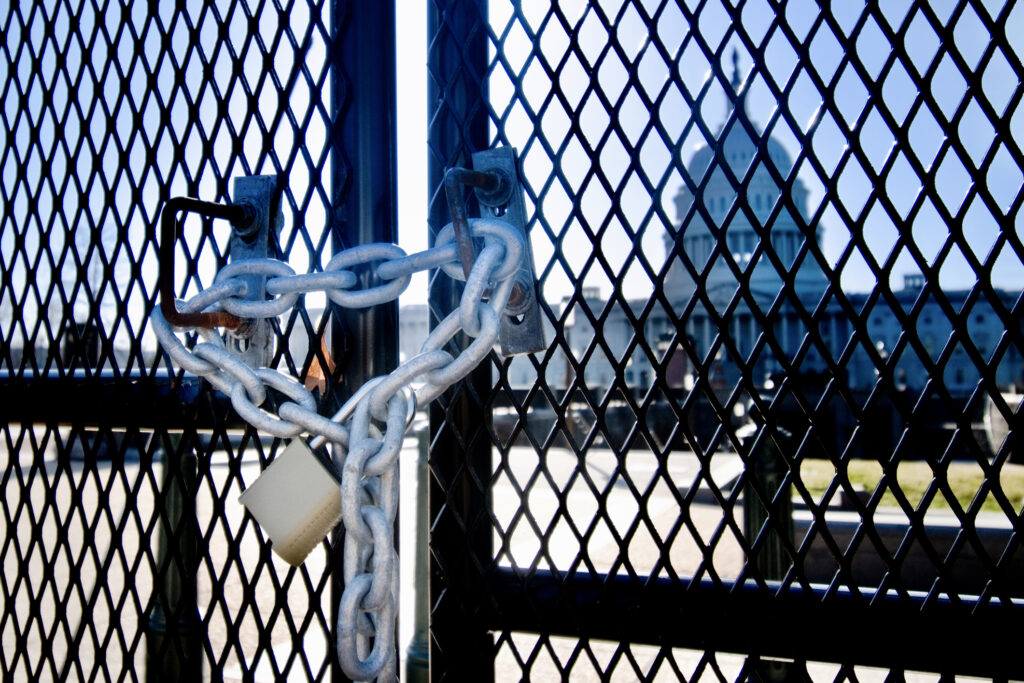
In a ruling that could have far-reaching consequences for hundreds of other Jan. 6 defendants, a federal appeals court on Tuesday upheld a misdemeanor trespassing conviction. The case centers around Couy Griffin, a founder of “Cowboys for Trump” and a former New Mexico county commissioner. Griffin had been convicted in 2022 for entering and remaining in a restricted building during the events at the Capitol on Jan. 6, 2021. But beneath the surface of this seemingly straightforward case, there are serious questions about prosecutorial overreach and the fairness of the judicial process.
The crux of Griffin’s appeal lies in the interpretation of a law that bars “knowingly” entering a restricted zone. That term—”knowingly”—is critical, and its interpretation could determine the fate of hundreds of other defendants. The law itself describes restricted areas as those “posted, cordoned off, or otherwise restricted,” especially when a Secret Service protectee is present. But Griffin contends that he couldn’t have “knowingly” trespassed because he didn’t understand that the reason for the restriction was to safeguard then-Vice President Mike Pence.
The Questionable Use of the Law
This case raises troubling questions about how the law has been applied in these prosecutions. Many argue that Jan. 6 was a protest that spiraled out of control—not a calculated attempt to overthrow the government. Shouldn’t we be asking why individuals are being treated like insurrectionists when their actions resemble those of countless other demonstrators who have entered government buildings without facing such severe consequences?
From this perspective, charging people with trespassing in a building that is typically open to the public, like the Capitol, feels unnecessarily harsh, especially when no violence or property damage was involved. The prosecutors’ choice to pursue these charges seems less about enforcing the law and more about making an example out of these individuals—a tactic that doesn’t sit well with those who value fair justice.
A Controversial Ruling
Despite Griffin’s arguments, the District of Columbia Circuit Court of Appeals panel upheld his conviction by a 2-1 vote, ruling that simply breaching a restricted area suffices to violate the law, regardless of the defendant’s understanding of why the area was restricted. Judge Cornelia Pillard, writing for the majority, argued that “a contrary interpretation would impair the Secret Service’s ability to protect its charges.” But what about the need for citizens to know the reasons for restrictions placed on public grounds?
The majority opinion sidesteps the principle that for a person to “knowingly” break the law, they should understand what they are violating. It’s as if the court has decided that the convenience of the Secret Service trumps a basic tenet of justice: that you cannot convict someone for a crime they didn’t know they were committing.
Dissenting Voices: A Judge Challenges the Majority
Judge Gregory Katsas, who dissented, hit the nail on the head. He emphasized that both elements of the law—knowledge that an area is restricted and the reason behind it—should be satisfied to convict someone for trespassing. As Katsas pointed out, “My colleagues try to split the difference,” interpreting the law in a way that conveniently bypasses the need for the defendant’s knowledge of the restriction’s purpose. But in doing so, they compromise the integrity of the legal process.
What’s at Stake? The Ripple Effects of the Decision
Had Griffin won his appeal, the implications would have been massive. It could have paved the way for hundreds of other Jan. 6 defendants to challenge their charges, particularly those who were swept up in the chaos and never received clear warnings about restricted areas. The stakes were high: more than 1,400 people have faced this same misdemeanor charge.
Instead, this ruling reinforces a prosecutorial narrative that treats the Capitol breach as uniquely heinous, alongside the attack on Pearl Harbor and 9/11. Critics say it sends a clear signal to other Jan. 6 defendants: the courts are not on your side, and the bar for a fair trial has been set intentionally low.
The Bigger Picture: A Warning About Judicial Fairness
This case isn’t just about a single conviction. It’s a snapshot of how the legal system can be twisted to serve political ends—where laws are interpreted based on convenience rather than fairness. Should we be comfortable with this? Or should we be alarmed that principles of justice are being sacrificed on the altar of political narratives?
One thing is certain: this decision leaves a lot of unanswered questions about the fairness of these prosecutions. And if those questions remain unaddressed, it’s hard to see this as anything but a troubling precedent for how political dissent is treated in America. (And isn’t that something worth being concerned about?)
The opinions expressed in this article are those of the author and do not necessarily reflect the positions of American Liberty News.
READ NEXT: [WATCH] Hero Bartender Destroys 3 Carjackers In Collapsing Lib Stronghold


















Patrick Houck makes a very logical, accurate viewpoint. His comments should be listened to and heeded. When politics are injected into trials, the verdict becomes suspect. A higher appeals court should overturn the decision.
Finally. Some possibility of sense in this deal.
To me there is a much bigger issue at stake here. As a taxpaying citizen I have ownership in the building. The same as all other taxpayers. The issue of breaching a restricted area has a bad odor to it when you think about it from that stand point we all have a vested interest in the building. Not to mention because we are the taxpayer we own the building and the Government is nothing more than a tenant. Somehow they think they own the building and that is just not the case. The may pay taxes also but the just work there until we fire them. Then they still have a stake in the building but they will never own the building that is where the real problem lies. It is up to us as taxpayer to have a say if that is the way we want it to be. They need to remember that ownership is 9/10 of the law. A very real case could be made that we have the right to enter the building at anytime we please. That is not to say a riot is ok but a MURDER is also not ok in the buildings that is owned by the taxpayer. Anyway you add it up an unarmed women shoot to death by a POLICE OFFICER is murder and the tapes prove out what I just said.
This is not right. They need to release all of the Jan 6 persons that has been arrested. They need to get Pelosi and arrest her. She is the one that caused Jan 6 to happen. She wanted to make it look like Trump had it all planned, but it upset her when she found out he wasn’t going to the Congress. She even said it was her fault, her plans fell apart, and now it falls on her.
We the people need an insane DOJ not filled by hatred