

A new Cuban Missile Crisis? When I recently described President Trump’s plan to overthrow the illegitimate semi-communist dictator of Venezuela, I emphasized that the U.S. show of force in the Caribbean was partly designed to tell China, Russia, and Iran to stay out.
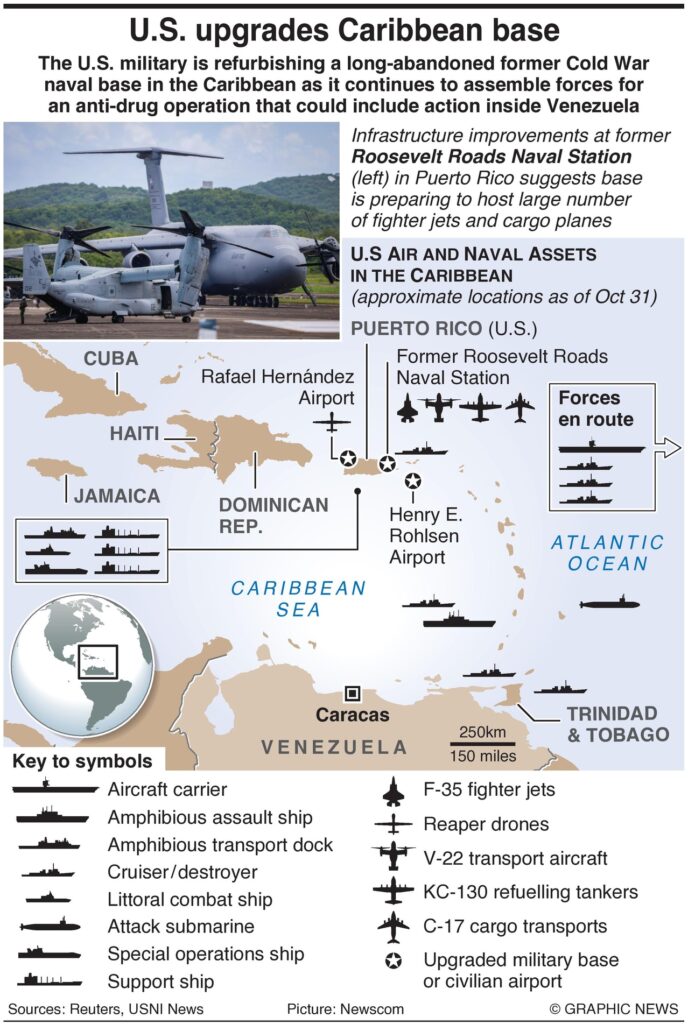
All three have close relations with Caracas under Maduro, and he has been asking these allies for fighter aircraft, drones, missiles, and upgraded radars to use against U.S. forces that may strike Venezuelan land targets.
Russia, in particular, has supplied Venezuela with billions of dollars in advanced arms, including Sukhoi Su-30MK2 fighters and short- and long-range surface-to-air missiles, and has sent military planes carrying troops and equipment to Venezuela multiple times. (RELATED: Russia ‘Closely Monitoring’ Venezuela Crisis As US Builds Up 16,000 Troops Off Coast)
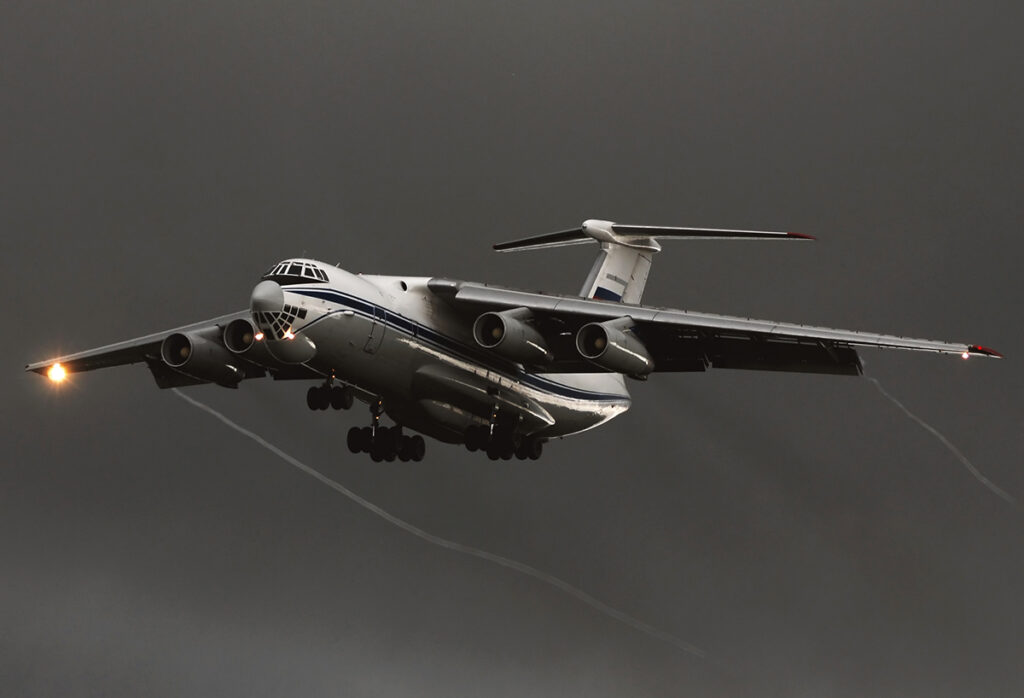
In my earlier piece, I also noted that perhaps Moscow hadn’t gotten the message from Trump’s buildup and posturing since a private Russian Ilyushin Il-76 military-style transport plane belonging to the former Wagner paramilitary group had recently landed in Caracas.
The company operating the plane, the government-affiliated cargo charter airline Aviacon Zitotrans, says it specializes in “government and military airlifts.” Could it have coordinated drops of military equipment and weapons? If so, what?
Little is publicly known about that plane or its cargo, other than it was sanctioned by the U.S. in 2023 for transporting arms and mercenaries. However, according to Zitotrans’ website its Ilyushin Il-76 can carry 46 tons of cargo, including two massive Mi-8 or Mi-17 helicopters, three 20-foot containers, five Toyota Land Cruisers or nine 463-liter pallets at a time.
In a recent request to Iran, an Iranian official was told that Venezuela needed “passive detection equipment,” “GPS scramblers,” and “almost certainly drones with 1,000 km [600 mile] range.”
We have no open-source intelligence on whether anything like that was on this Russian plane, but one Russian official said an Il-76 transport plane recently delivered Pantsir-S1 and Buk-M2E mobile surface-to-air missile systems to Caracas.
Now we are now learning that the plane took a very strange route to get to and from Caracas. The flight data shows that the Ilyushin Il-76 flew to Cuba two days after its stop in Caracas on Oct. 26.
The plane then jumped to Nicaragua’s capital, Managua, the next day, before again returning to Caracas.
On Oct. 30, the Russian transport left Venezuela on its way back to Russia, stopping at Nouakchott, Mauritania, and Algiers, Algeria, before arriving in Sochi and from there to Moscow.
As the other Defense News reported:
It is unclear from publicly available records what the purpose was of this mission to Latin America. Some Western governments have explicitly sanctioned Aviacon Zitotrans and several of its aircraft for their involvement in moving Russian military assets around the globe.
Aviacon aircraft and similar cargo planes by other private but government-affiliated Russian freight airlines play a crucial role in circumventing the strict sanctions Russia has been placed under since the launch of its full-scale invasion of Ukraine in February 2022. The fleet of civilian aircraft also serves to supply Russia’s military expeditions in the global South, especially Africa, which were previously part of the Kremlin-affiliated Wagner Group militia before its dismantling in 2023.
As Defense News explained:
The same Ilyushin previously visited the region in mid-August, arriving from Conakry, Guinea, in Brazil’s capital, Brasilia, on Aug. 10. Over the course of the next week, it stopped in Santa Cruz, Bolivia; Bogota, Colombia; Caracas; Toluca, Mexico; and Havana, before heading back to Caracas and crossing the Atlantic to Nouakchott in western Africa.
In both instances, the aircraft took circuitous routes to get to Latin America, stopping in the Caucasus and several times in Africa along the way. Frequent stops can be indicative of heavy loads, requiring more frequent refueling, but may also be an evasion technique to obfuscate the origin of the aircraft and its cargo to observers. Russian aircraft are barred from Western airspace, which additionally forces them on cumbersome routes.
While the official messaging from Moscow on Trump’s actions against Venezuela has been relatively restrained, the Kremlin just stated that it may provide its most advanced hypersonic missiles to Venezuela. Is this the Cuban Missile Crisis redux? (RELATED: North Korea’s Sinister New Mobile Hypersonic Weapon)
Alexei Zhuravlyov, the deputy chairman of Russia’s parliamentary defense committee, warned that “the Americans may be in for some surprises” as he hinted at more weapons transfers to Venezuela.
“I see no obstacles to supplying a friendly country with new developments such as the Oreshnik or, let’s say, the well-proven Kalibr [multi-role attack cruise] missiles,” The Telegraph reported.
According to Moscow, the intermediate-range ballistic missile Oreshnik is capable of striking any target across the European continent in under an hour if launched from Russia or Belarus. The Kremlin claims it is impossible to intercept and can carry conventional and nuclear warheads.
Vladimir Putin has even insisted that using several of them in a strike with conventional warheads would be just as catastrophic as a nuclear attack.
Only time will tell if Venezuela has gotten them or will get them soon. But U.S. officials must be ready.
The opinions expressed in this article are those of the author and do not necessarily reflect the positions of American Liberty News.
READ NEXT: Conservative Justices Respond Negatively To Trump Hearing





















That should be “game on” in our hemisphere! Missles and launchers have been a no go since the Monroe Doctrine!