

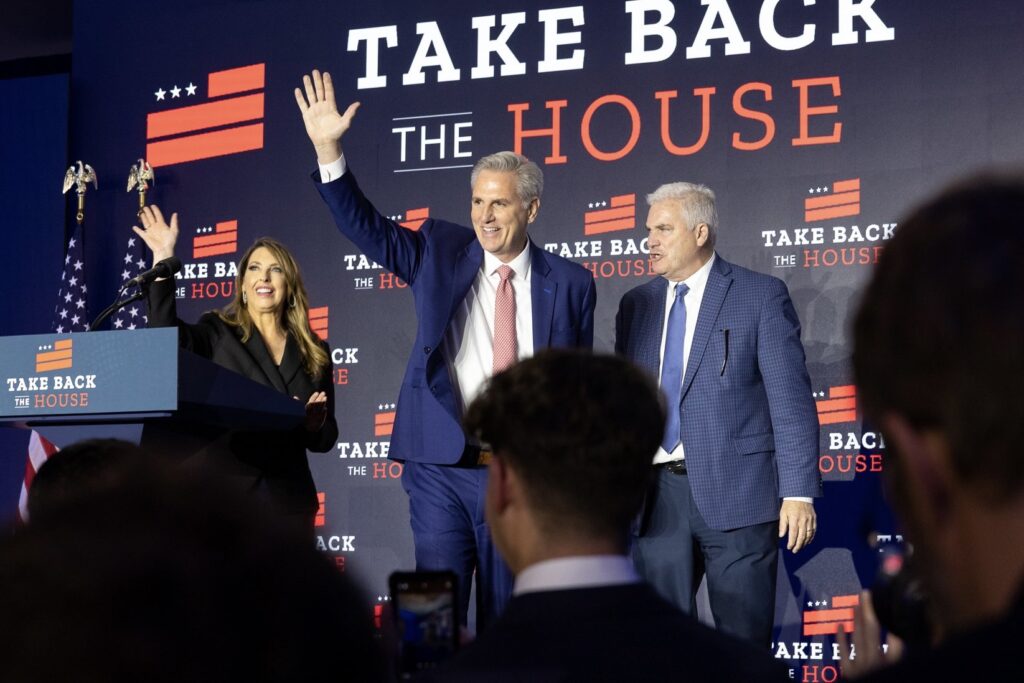
On Capitol Hill, the political fallout from the recent debt ceiling deal continues, as the House of Representatives ground to a halt in the face of GOP Freedom Caucus members refusing to agree to rules of debate for assorted Republican bills. Rather than continue to argue, the House adjourned (none dare call it a “time out”) until next week.
While that tantrum runs its course, it’s worth recalling exactly what the disagreements really should be all about: the nation’s future fiscal health.
In testimony before the House Subcommittee on Financial Institutions and Monetary Policy, the Government Accountability Office’s Jeff Arkin said the GAO has run the numbers on taxes and spending…and the outlook is bleak. More specifically, Arkin reiterated what far too many members of Congress – and their constituents – don’t want to hear:
Federal program spending (including Social Security and federal health care programs; such as Medicare) increases more than revenue, resulting in the primary deficit—the gap between program spending and revenue; and
• net interest spending, which primarily represents the federal government’s cost to service its debt, steadily increases over the next 30 years, further widening the total budget deficits.
The bottom line, then, is the same as it always was: entitlement spending, coupled with increasing debt service payments, are the big drivers of government debt. Ignoring those line items – as Congress and the White House did in the debt ceiling deal, and as far too many in and out of government are only too happy to do – will have enormous consequences.
How much? Arkin said:
To change the long-term fiscal path, policymakers will need to consider policy changes to the entire range of federal activities—both revenue and spending. When decisions about revenue and spending must be made, policymakers should have information about the various policy tools— mandatory spending, discretionary spending, and tax expenditures, such as deductions and tax credits—in any given area and the ability to compare them.
Decisions on these policy changes will be difficult. For example, if at the end of 30 years (2022 to 2051) Congress wanted to achieve a debt-to-GDP ratio of 100 percent—about the ratio over the past 3 years—it would need to implement revenue increases or program spending reductions— or a combination of both—of $34.7 trillion, in present value terms. Those changes equate to increasing projected annual revenues by 23.2 percent or decreasing projected annual program spending by 18.6 percent.
In simple terms: Taxes must go up, or spending must go down – much more than the current crop of pols, and many of their constituents, are willing to admit or accept…never mind enact.
Which means that for all the jawboning and arm twisting to get a debt deal – and the temper tantrums that now follow in its wake, the hardest work on federal spending has yet to be done.
The longer it’s delayed, the more difficult, and the more painful, it will be.
The opinions expressed in this article are those of the author and do not necessarily reflect the positions of American Liberty News.
READ NEXT: Life In California: Judge Robbed In Broad Daylight Across The Street From Oakland Courthouse





















When will they & Unity on debt issue from OUR side
I do not trust the GAO. In addition, they use static models, when financial systems are highly dynamic.
The self-checkouts in all retail establishments is killing Social Security, Medicare and Local Taxes. These machines have for the most part put many people out of work, those jobs used to pay into these programs. Perhaps these companies that put in self checkouts should pay a daily fee for each machine, to make up what is lost in revenue.
We the consumer are doing the work of a cashier and the companies are reaping the profits!
Local governments will not be able to fund their programs and budget cuts will be necessary.
Republicans are no match for the ‘together’ Democrats: while Democrats will unify ad nauseam behind some issue, getting Republicans unified is like herding cats.