





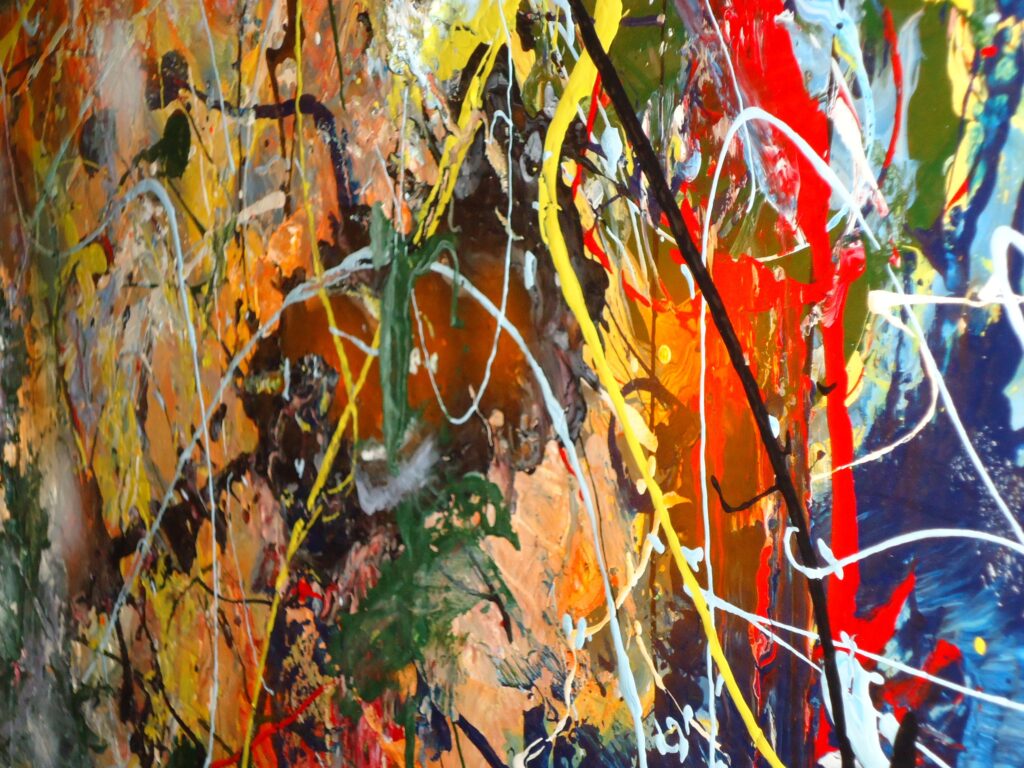
In the mid-20th century, while the United States and the Soviet Union squared off in an ideological showdown, the battlefields extended beyond nuclear arsenals and geopolitical maneuvers to the realms of culture and art. Abstract expressionism, epitomized by the chaotic brilliance of Jackson Pollock, became an unlikely but powerful weapon in America’s arsenal. Through covert funding and strategic promotion, the CIA transformed Pollock’s revolutionary art into a symbol of freedom and democracy—a counterweight to the regimented propaganda of Soviet socialist realism. This essay explores how the CIA’s cultural initiatives singlehandedly elevated Pollock’s work, why they did it and how the ripple effects of these efforts continue to be felt in the art market today.
Abstract Expressionism: Freedom on Canvas
At its core, abstract expressionism represents a break from tradition—an explosion of color, movement and individuality. For the CIA, this avant-garde movement served as a metaphorical declaration of America’s ideological superiority. Soviet art, defined by its rigid glorification of the proletariat, reflected the constraints of an authoritarian regime. In contrast, Pollock’s unrestrained drip paintings symbolized the chaos and creativity of a free society. It was art as an act of rebellion, innovation and expression—qualities that the United States sought to highlight as the defining traits of Western democracy.
The CIA’s Covert Canvas
The CIA, under the guise of organizations like the Congress for Cultural Freedom (CCF), funneled significant resources into promoting abstract expressionism abroad. The rationale was clear: to win hearts and minds in Europe and beyond by showcasing the intellectual and cultural freedom that thrived under capitalism.
Mechanisms of Influence
- Financial Backing: The CIA’s indirect funding ensured that artists like Pollock were prominently featured in exhibitions across Europe. Wealthy patrons, including the Rockefeller family, collaborated with the agency, acting as intermediaries to mask the government’s involvement.
- Exhibitions as Propaganda: Iconic exhibitions, such as The New American Painting organized by the Museum of Modern Art (MoMA), were covertly supported by the CIA. These traveling exhibitions introduced European audiences to the bold and unrestrained ethos of American art.
- Critical Endorsement: Influential art critics, some knowingly complicit, framed abstract expressionism as the apotheosis of artistic freedom. They argued that Pollock’s works were the purest manifestation of democracy’s creative spirit.
Pollock’s Inadvertent Role
It is worth noting that Pollock himself—a tormented genius battling personal demons—had no direct connection to the CIA. His work was co-opted posthumously into a narrative that he neither approved of nor likely understood. Pollock’s anti-establishment ethos and his struggles with alcoholism rendered him an ironic figurehead for a government-backed cultural campaign. Yet, his art’s visceral intensity and groundbreaking techniques made him the perfect symbol of unbridled freedom.
Success or Smoke and Mirrors?
To what extent did the CIA’s efforts succeed? While quantifying the cultural impact of abstract expressionism is inherently challenging, the agency deemed the initiative a triumph. European intellectuals, skeptical of America’s cultural bona fides, were captivated by the audacity and originality of artists like Pollock. By presenting a stark contrast to Soviet rigidity, the United States reshaped perceptions of its cultural landscape.
Legacy and Market Impact
The legacy of the CIA’s promotion of abstract expressionism extends far beyond the Cold War. Today, Pollock’s works command astronomical sums, a testament to his enduring influence. Consider the following sales:
- Number 17A (1948): Sold for $200 million in 2015, among the highest prices ever paid for a painting.
- Number 5, 1948: Achieved $140 million in 2006.
- Number 17, 1951: Sold for $61.1 million at Sotheby’s in 2021.
The staggering valuations of Pollock’s art underscore the long-term success of the CIA’s cultural gambit. While the agency’s involvement was hidden, its impact is woven into the fabric of modern art history. Pollock, once an obscure and misunderstood artist, became a household name, his drip paintings synonymous with innovation and freedom.
Conclusion
The CIA’s covert championing of abstract expressionism is a story of irony, ingenuity and unintended consequences. By elevating Jackson Pollock and his contemporaries as symbols of freedom, the agency not only secured a cultural advantage during the Cold War but also inadvertently created a multi-million-dollar art market. Pollock’s work, celebrated as the pinnacle of individual expression, now stands as a testament to the power of soft power and the enduring interplay between politics and culture. In their bid to outshine Soviet propaganda, the CIA painted an enduring legacy—one drip at a time.
Sponsored by the John Milton Freedom Foundation, a nonprofit dedicated to helping independent journalists overcome formidable challenges in today’s media landscape and bring crucial stories to you.
READ NEXT: Trump’s Defense Chief Nominee Dishes Out Fiery Reply To Dem Haters!























This article is stretched tighter than a painting canvas.