
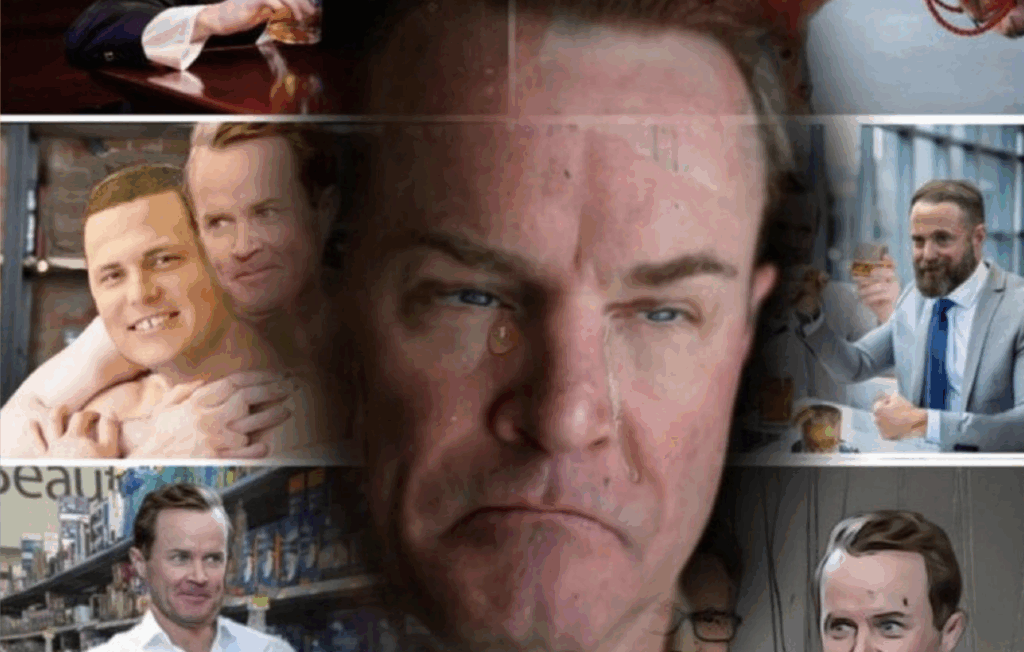
Texas House Bill 366, introduced in the 89th Legislature by Rep. Dade Phelan, poses as a surgical strike against political deception. In truth, it swings an ax at the roots of constitutionally protected speech, imperiling the average Texan who dares to mock or criticize their elected officials online. The irony is sharp: Phelan, as Speaker in the prior session, rose to power by cutting deals with Democrats, alienating much of his own Republican base. He quickly became a punching bag for conservative on X, who subjected him to a relentless barrage of memes mocking his his leadership, his incompetence, and his betrayal. HB 366 reads less like a neutral law and more like a vendetta. Though cloaked in the language of electoral integrity, the bill, as drafted, criminalizes everyday political expression. It is neither narrowly tailored nor reasonably applied. Its effect, and perhaps its design, is to chill dissent, especially the kind that haunted Phelan last session.
To understand the stakes, consider this scenario. An 18-year-old in Austin shares a meme on X depicting a Texas politician awkwardly dancing at a campaign rally, when in fact, the original footage showed him standing still. The meme includes the politician’s name and is clearly a humorous exaggeration, intended to satirize rather than deceive. Under HB 366, this teenager could be charged with a Class A misdemeanor, fined $4,000, and jailed for up to a year if the meme lacks the precise disclaimer required by the law. The disclosure must appear in a specific format, font, size, and color. Failing to meet these bureaucratic formalities could convert an otherwise benign act of expression into a criminal offense.
This is not a theoretical slippery slope. The statute targets anyone who spends more than $100 on political advertising, a category so broad it ensnares informal meme-makers who boost posts, purchase software, or use AI tools to create visual content. Intent to influence an election is the linchpin of liability, a criterion that encompasses virtually all political speech. Even satire aims to persuade. If a meme contributes to public opinion about a candidate, it is by definition intended to influence. Thus, HB 366 criminalizes the very essence of democratic discourse.
The defenders of HB 366 argue that the law is necessary to combat “deepfake” technology and voter deception. But the bill does not limit itself to falsehoods that would confuse a reasonable voter. Instead, it defines “altered media” as any content depicting an event that “did not occur in reality.” This definition is breathtakingly broad. It captures not only deliberate forgeries but also jokes, parodies, exaggerations, and symbolic imagery. A meme showing a politician Photoshopped onto a sinking ship, symbolizing a failed policy, would qualify as “altered media.” The law treats this expressive act the same as a fake video of the politician announcing a fabricated policy.
There is a long tradition in American law of safeguarding political expression, even when that expression is crude, satirical, or anonymous. In McIntyre v. Ohio Elections Commission (1995), the Supreme Court invalidated a statute requiring authors of political literature to disclose their identity, holding that anonymity in political discourse is protected by the First Amendment. In Doe v. State (2003), a Texas court struck down a campaign finance disclosure law for being overbroad and vague. These precedents confirm what ought to be obvious: the government cannot criminalize political speech merely because it is anonymous, humorous, or critical.
The problem with HB 366 is not just its content, but its structure. It is overbroad. It captures too much speech, failing the narrow-tailoring requirement of strict scrutiny. It is vague. What counts as an “event that did not occur in reality”? Does exaggeration count? What about composite images? If a video speeds up or slows down footage, is that an alteration? These ambiguities violate the due process rights of citizens who must guess at the boundaries of legality. And it chills speech. The threat of prosecution, even if remote, deters ordinary people from engaging in political expression. Fear of jail is a powerful muzzle.
Supporters may argue that ignorance of the law is no excuse. But this principle has limits, particularly when the law itself is complex and counterintuitive. Most citizens do not employ legal counsel before posting on X. They should not have to. Nor should a teenager require a compliance department to share a meme about a gubernatorial candidate. The cost of expression under HB 366 is legal peril. That is a cost no free society should impose.
Moreover, Texas has no history of jailing individuals for minor disclosure violations in political advertising. Why start now? If the concern is transparency, civil penalties and corrective disclaimers suffice. Criminal penalties for informal expression are a drastic escalation. They betray a punitive impulse that is inconsistent with Texas’s reputation for rugged individualism and skepticism toward government overreach. The spirit of Texas, if it means anything, includes the right to criticize one’s leaders in plain language and plain imagery, without a fear of incarceration.
And what of satire? What of humor? What of irony, that uniquely American weapon against pomposity and power? HB 366 endangers all three. Its structure assumes that any depiction not grounded in literal reality is potentially criminal. But satire lives in the space between fact and fiction. It uses distortion to reveal truth. It paints in broad strokes to expose the absurdity of politics. It mocks, exaggerates, and parodies—and in doing so, it informs. From Twain to Mencken to the Babylon Bee, our national discourse is richer for it.
That HB 366 was introduced by an elected official is not surprising. Politicians rarely relish ridicule. But the proper response to satire is rebuttal, not repression. The proper cure for falsehood is truth, not prison. The Constitution does not permit the state to silence criticism, however tasteless or tactless, under the pretense of electoral hygiene.
Indeed, any serious attempt to enforce HB 366 will invite legal challenge. As written, it cannot survive strict scrutiny. Preventing voter deception is a compelling interest, but the law must be narrowly tailored to that interest. HB 366 is not. It sweeps in too much speech, fails to define its key terms clearly, and imposes disproportionately severe penalties. Worse, it targets the kind of expression that lies at the heart of the First Amendment: political advocacy by private citizens.
Even if enforcement is rare, the mere presence of such a statute has a chilling effect. Memes, jokes, AI-generated parodies, and satirical videos will disappear from the public square. Not because they are false or malicious, but because they are risky. This is not democracy. This is coercion by uncertainty.
In the end, HB 366 is less about preventing deception and more about controlling narrative. It grants the state a cudgel with which to bludgeon dissenters. It empowers the political class to police its own image, punishing not only lies but laughter. And it does so in a manner so sweeping and so vague that no citizen can safely speak without fear of prosecution.
Texas ought to know better. A state that prides itself on liberty should not become the first to criminalize the political meme. If our leaders are worried about mockery, they should reconsider their conduct, not criminalize the punchline. If Dade Phelan does not like being ridiculed, he should not seek higher office. Public life in a free republic comes with scrutiny, satire, and yes, memes. A man too thin-skinned to tolerate jokes about himself is unfit to wield the authority of law, especially when he seeks to jail his fellow Texans for the crime of sharing mockery at his expense.
Sponsored by the John Milton Freedom Foundation, a nonprofit dedicated to helping independent journalists overcome formidable challenges in today’s media landscape and bring crucial stories to you.
READ NEXT: David Hogg Speaks Out On Biden White House — And It Was Caught On Video













Step #1 toward Canada, England, and the UK, where free speech is DEAD.
Texas has thin skin.
The constitution has no exceptions or exemptions for free speech.