

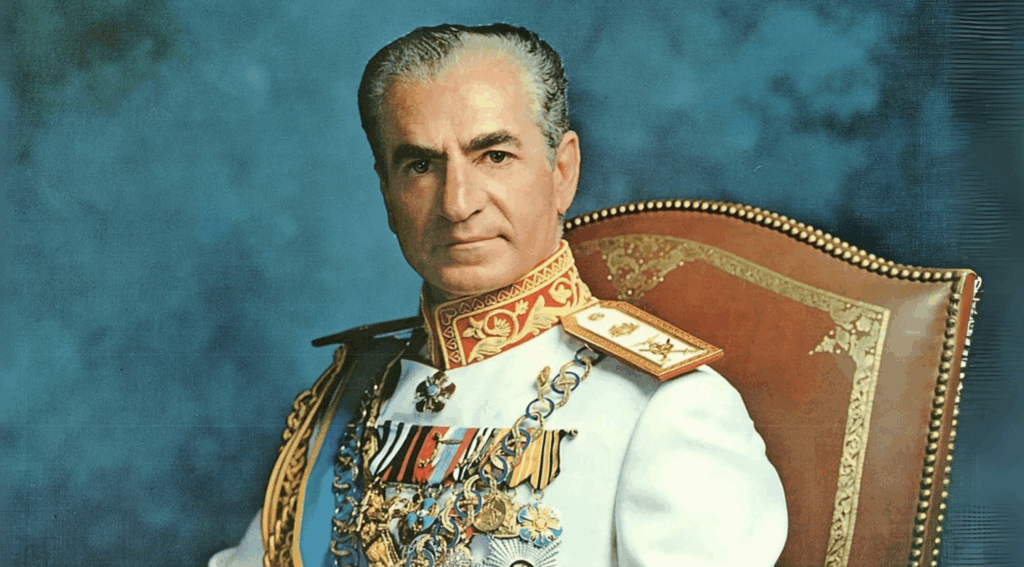
The story of Iran is a story of civilizational brilliance undone. Persia, the land of Cyrus and Darius, stood for centuries as one of the great pillars of human advancement. Its engineers carved rivers through deserts. Its kings issued the first known declaration of human rights. Its physicians established the world’s first university hospital. And its philosophers gathered knowledge from Greece, India, and Babylon into an intellectual engine of progress. By the sixth century, Persia was not only a rival to Rome, it was in many respects its superior. Then came the year 651. Arab armies swept in. Islam took root. And the gears of this astonishing civilization began to grind to a halt.
Now, let us be clear. The Islamic conquest did not immediately obliterate Persia’s brilliance. For a few generations, Persian scholars thrived within the new Islamic order. But the transformation of Iran from a Zoroastrian, pluralistic, and innovative society into a rigidly Islamic theocracy laid the groundwork for long-term stagnation. Today, nearly 1,400 years later, that stagnation is measurable in everything from economic output to scientific discovery.
Begin with the economic case. In 1977, on the eve of the Islamic Revolution, Iran’s per capita GDP stood at $10,980 (in 2025-adjusted dollars). It was a modernizing economy. The Shah’s Iran, for all its flaws, was investing heavily in infrastructure, science, and education. Then, in 1979, came the Ayatollahs. The theocrats promised a return to purity, justice, and dignity. What followed was none of these. By 1990, per capita GDP had collapsed to $6,175. A decade later, it dropped further to $3,196. In 2020, despite occasional rebounds, it hovered around $3,432. By 2025, it had clawed its way only to $5,000. In plain terms, the Iranian economy has been cut in half since the mullahs took power.
But the problem is not merely economic. It is civilizational. Ancient Persia gave the world qanats, yakhchals, algebraic precursors, windmills, and postal systems. It was a society that respected knowledge and rewarded inquiry. Under the Achaemenids, engineers invented subterranean aqueducts that could irrigate the desert. Under the Sasanians, physicians trained in Gundeshapur, the first known teaching hospital. Kings like Khosrow I welcomed Greek and Indian scholars fleeing persecution, building an empire that fused cultures rather than purged them.
After the Islamic conquest, that pluralism ended. Fire temples were smashed or converted. Libraries were burned. The Zoroastrian priesthood, once the custodians of Persian learning, was either exiled, killed, or silenced. Much of the Avesta, the sacred Zoroastrian text, was lost. Of course, Persian scholars continued to contribute to Islamic civilization in its early centuries. But the center of gravity had shifted. The language of learning became Arabic. The theology of Islam discouraged free inquiry, favoring revelation over reason. And over time, this aversion to critical thought hardened into dogma.
In the 11th century, the scholar al-Ghazali declared war on reason itself. His influential work, The Incoherence of the Philosophers, argued that cause and effect did not exist independently of God’s will. That a stone falls not because of gravity but because God commands it to fall each time. Such ideas, adopted by Sunni orthodoxy, crippled the development of science. Philosophy was recast as heresy. Ijtihad, independent legal reasoning, was declared closed. The Islamic world, once inheritor of ancient knowledge, began to suppress it.
Iran followed this arc. After the Abbasid golden age, the Persian world retreated into mysticism and clericalism. Poets flourished, yes. But science withered. The Gundeshapur of old, once the Harvard of late antiquity, was no more. In its place rose seminaries where the Quran eclipsed chemistry. Women, who had once held property and sometimes governorships in pre-Islamic Iran, were now cloistered. Innovation gave way to imitation. Even today, Iran’s contribution to global science is marginal. It produces few patents, few papers, and fewer breakthroughs. Compare this to Israel, a state with one-tenth its population and dozens of Nobel laureates.
None of this is to claim that Persians lack the intellect to innovate. On the contrary, Iranian immigrants in the West thrive in engineering, medicine, and entrepreneurship. The issue is not the people. It is the system. A theocracy that criminalizes dissent, throttles the press, and regulates thought cannot foster genius. It can barely sustain competence. This is why the economy remains mired in inflation and sanctions. Why brain drain continues. And why even basic governance fails.
Some defenders of Islam will argue that the religion gave Persia its poets, its art, its mysticism. There is some truth here. Rumi and Hafez are world treasures. But one must ask: at what cost? Had Persia remained free from conquest, might it have produced not only mystics but modernity? Might it have led the world in science rather than poetry? The question is not whether Islam added something. It is what it subtracted. And the subtraction was vast.
Before Islam, Persia was a light unto nations. Its kings did not merely conquer, they built. Cyrus freed the Jews. Darius codified fair taxation and built canals linking the Nile to the Red Sea. These were rulers who saw themselves as stewards, not just sovereigns. Contrast this with the mullahs of today, who jail journalists, stone women, and crush protests with impunity. The descent is not merely temporal. It is moral.
Iran’s tragedy is thus twofold. First, it suffered the long slow erosion of civilization under centuries of Islamic orthodoxy. Second, it endured the sudden implosion of 1979, when an oil-rich, promising nation regressed into clerical tyranny. In both cases, Islam was not merely incidental. It was instrumental. Not all faiths produce the same fruits. Zoroastrian Persia gave us the paradise garden. Islamic Iran gave us the morality police.
So, what is to be done? One must begin by naming the problem. The problem is not sanctions, nor the West, nor colonialism. The problem is rule by clerics who believe that revelation trumps reason, that dissent is sin, and that paradise is to be imposed, not earned. Until this changes, Iran will remain a civilization in chains. Its past will outshine its present. And its future will remain hostage to a creed that once conquered it and now confines it.
If you enjoy my work, please consider subscribing: https://x.com/amuse.
Sponsored by the John Milton Freedom Foundation, a nonprofit dedicated to helping independent journalists overcome formidable challenges in today’s media landscape and bring crucial stories to you.
READ NEXT: [WATCH] Explosion Rocks Entrance To US Enemy’s Notorious Prison





















Sounds a lot like Biden, Fauci and cohorts.
Coming the Gog Magog War??