

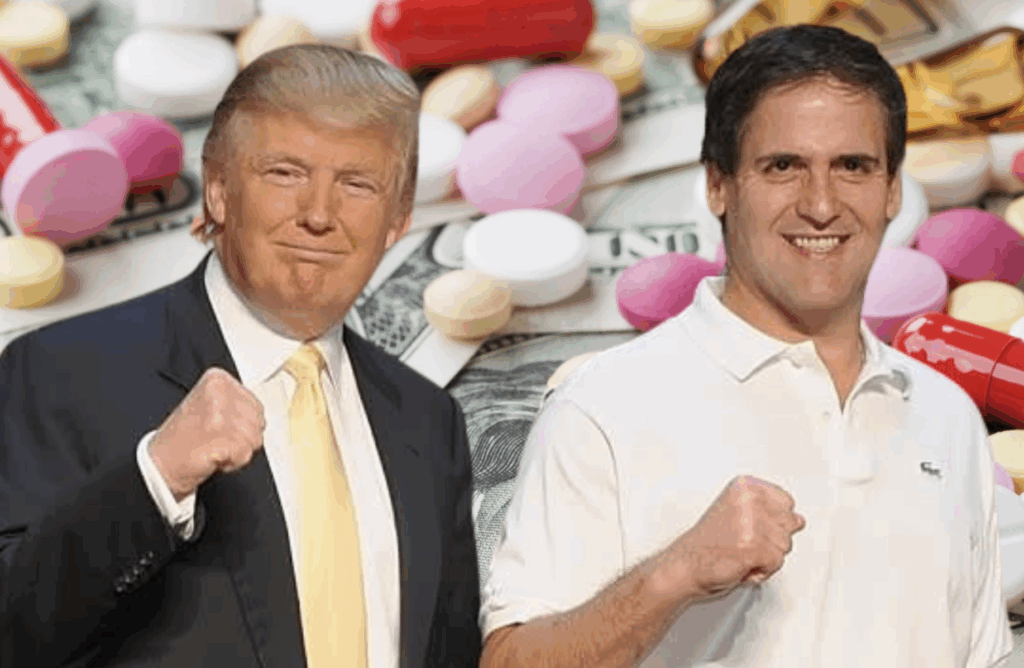
Americans have been getting ripped off. That is not hyperbole, nor a populist refrain, but a blunt statement of economic reality. The average American pays more for prescription drugs than any other patient in the developed world. This is not a function of greater access, higher quality, or more innovation. It is a product of a system that has, for decades, allowed foreign governments to underpay for medicine while forcing Americans to pick up the tab.
How did we arrive here? The answer is simple, if depressing: the United States accounts for less than five percent of the global population, yet pharmaceutical companies derive nearly three-quarters of their global profits from the American market. Foreign nations, through centralized health systems and price controls, bargain down the price of medicines. Drug manufacturers accept those lower prices because they know they can make up the shortfall in the United States. That is, in effect, a transfer of wealth from the American sick to the foreign healthy.
President Trump has had enough. On May 12, 2025, he signed an Executive Order resurrecting and expanding upon a policy initiative from his first term: the Most-Favored-Nation (MFN) pricing model. In his first term, the MFN model focused on Medicare Part B drugs, those administered in clinical settings, and proposed that the US would pay no more than the lowest price paid by a comparable country. That version was blocked by the courts in 2021 due to procedural issues and was quickly abandoned by the Biden administration. The 2025 version not only revives the core concept but also broadens its scope significantly. It retains the pricing benchmark based on peer nations while adding a novel direct-to-consumer purchasing mechanism. This allows patients to bypass pharmacy benefit managers entirely and buy drugs directly from manufacturers at MFN prices. The new policy thus marries institutional price reform with individual consumer empowerment, expanding the ambition and reach of Trump’s original plan.
Critics, as always, are quick to object. They warn that drug manufacturers will simply stop selling in the US or that research and development will dry up. Some even suggest that international reference pricing is a form of price-fixing by another name. These concerns deserve serious consideration. But they do not outweigh the manifest injustice of the status quo, nor do they erase the practical and moral urgency of reform.
First, consider the structure of the order itself. The MFN model applies immediately to Medicare Part B drugs, those administered in doctors’ offices, often the most expensive and specialized. Trump has instructed the Secretary of Health and Human Services to set price targets within 30 days and deliver measurable results within six months. If pharmaceutical companies fail to comply, the administration will take further action: drug importation from allied nations, penalties on noncompliant firms, and antitrust enforcement through the FTC targeting anti-competitive practices like patent abuse.
Second, the Executive Order proposes a direct-to-consumer mechanism, allowing American patients to buy drugs from manufacturers at international prices, bypassing the profit-hungry middlemen known as pharmacy benefit managers (PBMs). This proposal reflects an economic reality too long ignored: the price of a drug is not set by market forces but by negotiated distortions, rebates, and arbitrage. By cutting out the layers of rent-seeking intermediaries, the Trump administration aims to restore both transparency and affordability.
On this point, perhaps the most surprising endorsement came from Mark Cuban who actively campaigned against the president supporting Kamala Harris’s failed White House bid. Cuban has emerged in recent years as one of the fiercest critics of PBMs in the pharmaceutical supply chain. Through his Cost Plus Drug Company, Cuban has championed a model that eliminates PBMs entirely, selling generic drugs directly to consumers at a fixed markup. He sees PBMs not as neutral facilitators, but as parasites, entities that profit not from creating value, but from distorting it.
In an X post on April 16, 2025, Cuban praised Trump’s Executive Order on healthcare and in particular, drug pricing by explaining how it could save hundreds of billions of dollars. His enthusiasm was not just theoretical. He outlined six specific reforms targeting PBM practices and emphasized that the EO’s direct-to-consumer mechanism aligns with the very business model he has built. For Cuban, this is not about politics, but principle. If Americans can bypass PBMs and purchase drugs at MFN prices, the savings could be transformative.
Cuban has long called for transparency in PBM contracts, elimination of specialty tiers, and reform of rebate structures that inflate drug prices. These are the same structural defects the EO seeks to address. The alignment between Trump’s policy and Cuban’s advocacy is more than accidental. It reflects a growing consensus that PBMs have become a market failure in themselves, distorting prices and blocking access in pursuit of opaque profits.
That Trump and Cuban, two men with vastly different public personas, can agree on this solution is a testament to its power. The issue of drug pricing, once mired in partisan clichés, is now the battleground for real reform. Cuban’s support underscores the seriousness of the EO. It is not simply a gesture, but a genuine effort to untangle the knotted system that has left so many Americans paying so much, for so little.
Opponents cite legal precedent. Indeed, a similar MFN policy was blocked by federal courts in 2021. The Biden administration quickly shelved the idea, preferring not to test its legal authority. But legal difficulty is not legal impossibility. Trump’s new Executive Order is crafted more carefully, with an expanded evidentiary record and administrative justification. Implementation will no doubt be litigated, but the constitutional structure gives the executive branch discretion over how Medicare reimburses for services. Provided the process adheres to administrative law, the courts may well uphold it.
Let us confront the core objection head-on: that price controls reduce innovation. This concern is not frivolous. America leads the world in pharmaceutical innovation precisely because it has, historically, paid the price. The profits derived from the US market fund research labs from Basel to Boston. But this global good comes at a local cost, one that is becoming unbearable.
What Trump offers is not an end to pharmaceutical profitability, but an insistence on proportionality. If research and development are a global public good, then the funding of that good should not be extracted primarily from one nation. Let the Germans and the French and the Canadians contribute more. Let them pay their share. And let the American patient, who already shoulders more than enough, get some relief.
Consider the counterfactual: suppose the MFN policy were in place ten years ago. American taxpayers might have saved hundreds of billions of dollars. Lower out-of-pocket costs would have meant better medication adherence, fewer medical complications, and a healthier, more productive citizenry. That is not a theoretical hope but an economic projection rooted in well-documented health economics. The US spends more per capita on health care than any other country, and drug prices are a major contributor. The MFN model begins to correct that imbalance.
To be sure, implementation challenges remain. Drugmakers may respond by raising prices in foreign countries, undermining the benchmark. The direct purchasing mechanism may be slow to launch, hampered by logistics, safety protocols, or bureaucratic inertia. But these are not arguments against reform, only reminders that reform must be executed with competence.
Trump’s order also calls out foreign governments for their own price manipulation. The US Trade Representative is directed to push back against discriminatory pricing policies abroad. In effect, the administration is making clear: if you want access to the American market, you must stop freeloading off the American consumer. This is economic diplomacy at its most justified.
The pharmaceutical lobby will fight this tooth and nail. Already, industry stocks surged after the EO’s announcement, a signal that insiders believe implementation may be delayed or diluted. But if the Trump administration can muster the will to enforce the order, the effects will be historic. It would mark the first time in decades that the US government sided squarely with the American patient over the multinational drug cartel.
No other president has dared confront this imbalance so directly. Democrats have talked about drug pricing reform for years, yet under Biden, the MFN rule was rescinded without a whimper. Trump, in contrast, resurrected it and expanded its scope. In so doing, he returned to the populist conservative ethos that put him in the White House: government exists to serve its citizens, not to enrich corporate middlemen or subsidize foreign welfare states.
The critics will continue to cry foul. But as prices fall and access improves, their objections will ring hollow. The moral arc of drug pricing reform is long, but with this Executive Order, it bends toward justice. Americans deserve to pay no more than their peers abroad. At last, there is a president willing to say so, and more importantly, to act on it.

Sponsored by the John Milton Freedom Foundation, a nonprofit dedicated to helping independent journalists overcome formidable challenges in today’s media landscape and bring crucial stories to you.
READ NEXT: Trump’s Controversial Strategy Just Got First Judge’s Approval

















Gee Cuban what took so long??
I have a friend who takes many drugs because he has a variation of Lukemia. ONE PRESCRIPTION costs $10,000 a MONTH. Luckily his medicare covers it. It it didn’t, he’d be dead
I have another friend who is an elderly lady. Due to the costs in the USA, her meds would cost over $5,000 a month for ONE drug. She buys them out of CANADA.
BIG PHARMA has controlled the USA for way too long.
Knock on wood, the only thing I have ever taken is pure Asprin, and rarely. I buy mine at the Dollar Tree store for $1.25. I am one of the lucky few at 68 years old
Hoping Trump is smart enough to not let this backstabber who was vehemently against Trumps candidacy any where near him.