

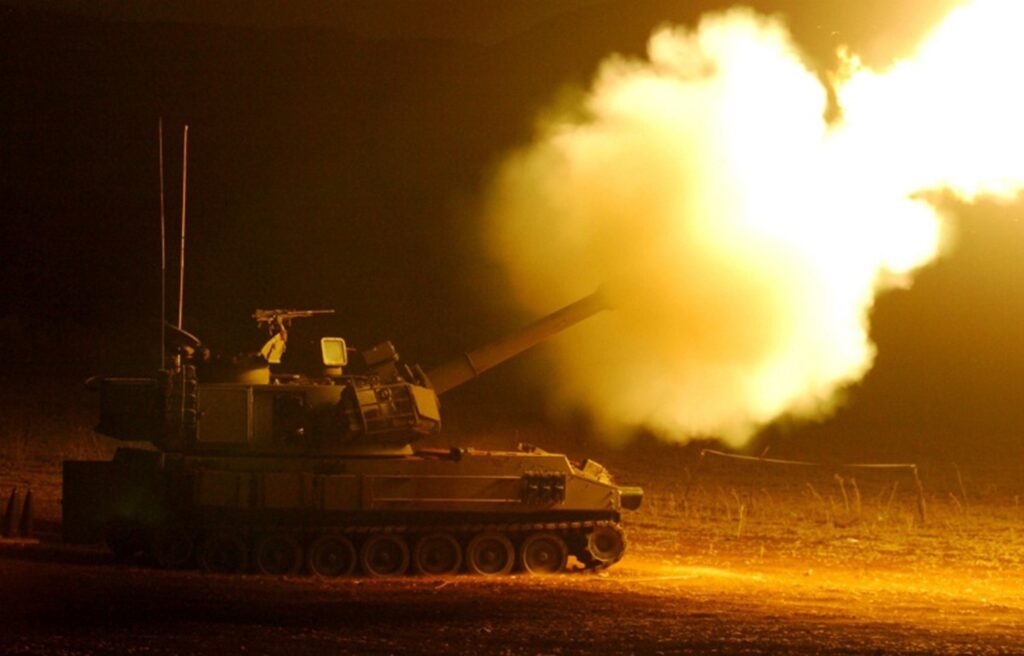
When will Palestinian terrorists learn? Defeat after attacking Israel is costly. Israeli Prime Minister Benjamin Netanyahu’s recent announcement to pursue a “full conquest” of the Gaza Strip to end the war should remind everyone that failed attacks on Israel have only made it stronger and bigger, effectively tripling its size.
Since its founding, Israel, while long dreaming of a “Greater Israel,” has generally only expanded in response to being attacked. Israel’s enemies, Hamas being the most recent, appear incapable of learning that lesson.
This reminds me of an event I participated in Ramallah, about 20 years ago. At the time, this was the headquarters of the Palestinian Liberation Organization (PLO) and I was there as part of a group of journalists a year after Yasser Arafat’s death.
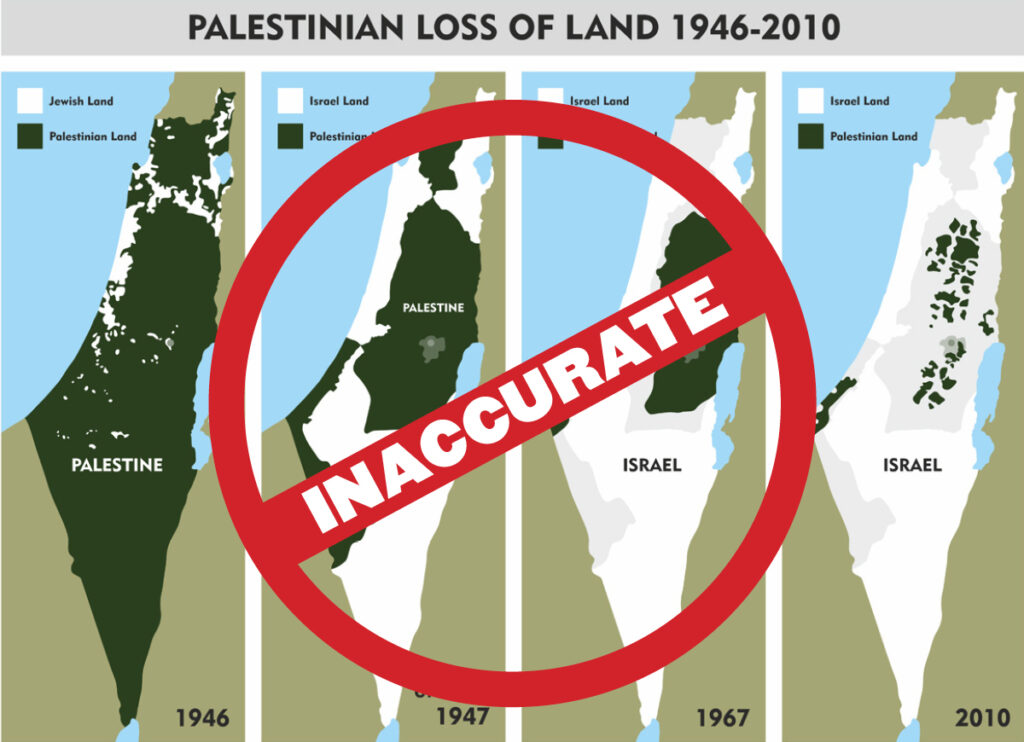
During one presentation, to persuade us that Israel was an evil expansionist state, the PLO representative showed us slides of numerous maps demonstrating how Israel had expanded over the decades since its founding and how much the Palestinian territories had shrunk.
Maps showed Israel expanded in 1948, 1956, 1967, and beyond.
Some of the less informed or biased participants nodded in agreement.
I did not, because I noted that every map the PLO presented that showed Israeli expansion was tied to Israel’s enemies preparing to attack, or attacking Israel and losing, which of course the Palestinians made no mention of.
In their warped version of a presentation, Israel aggressively expanded on its own without any outside factors. A false narrative that continues till today.
One Palestinian group still attempts this visual sleight of hand here, again omitting the context of Israeli territorial gains.
However, this was far from accurate. Israel has expanded because it repeatedly defeated its enemies after being attacked.
Israel’s expansion began the day Israel declared itself a state in 1948 following the end of the British mandate for Palestine. And it occurred after several large Arab national armies including Egypt, Syria, Iraq, Transjordan, and Lebanon, invaded the tiny and vulnerable fledgling state hoping to destroy it; but were quickly defeated.
Due to its military success, Israel gained significant territory beyond the 1947 U.N. Partition Plan boundaries that had set aside land for both sides. This began a sad history of Arabs and Palestinians losing land to Israel after repeatedly attacking the tiny Jewish state.
In 1956, as part of the Suez Crisis, Israel launched a pre-emptive strike against Egypt on October 29, 1956, in conjunction with France and Great Britain.
While the Europeans had their own motivations, Israeli attacked as retaliation for Palestinian fedayeen terror attacks (militant cross-border incursions from Egypt), and to force Egypt to lift its blockade of the Straits of Tiran which hurt Israel.
Israel swiftly captured the Gaza Strip and most of the Sinai Peninsula, advancing close to the Suez Canal.
Israel’s victory also succeeded in getting Egypt to lift its blockade.
However, due to international pressure, Israel ultimately withdrew from the occupied Egyptian territory in March 1957, limiting any real expansion. The 1956 Suez Crisis resulted in a temporary occupation rather than permanent annexation. No land was acquired.
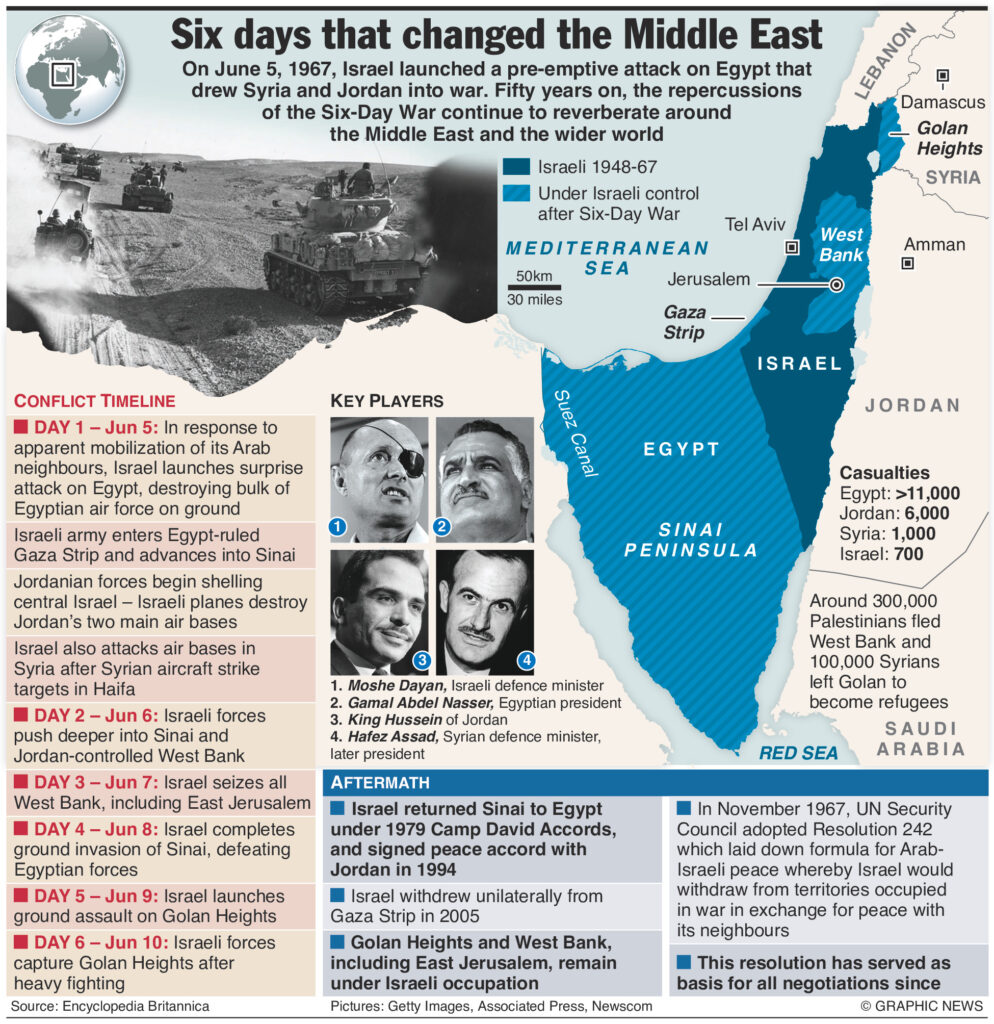
However, in 1967, as a result of the Six-Day War, Israel gained its greatest amount of new territory. In response to increasing threats, intelligence warnings, and the mobilization of major Arab armies on its vulnerable borders, Israel launched a preemptive strike and destroyed the air forces and armies of Egypt, Jordan and Syria.
It then gained control of the West Bank and East Jerusalem from Jordan, the Golan Heights from Syria, and the Gaza Strip and the Sinai Peninsula from Egypt.
The Sinai was fully returned to Egypt in 1982 as part of the Egypt-Israel peace treaty. But Israel formally annexed the strategic Golan Heights in 1981. The area serves as a buffer zone against potential attacks from its neighbors, particularly Syria.
The U.S. recognized this annexation in 2019.
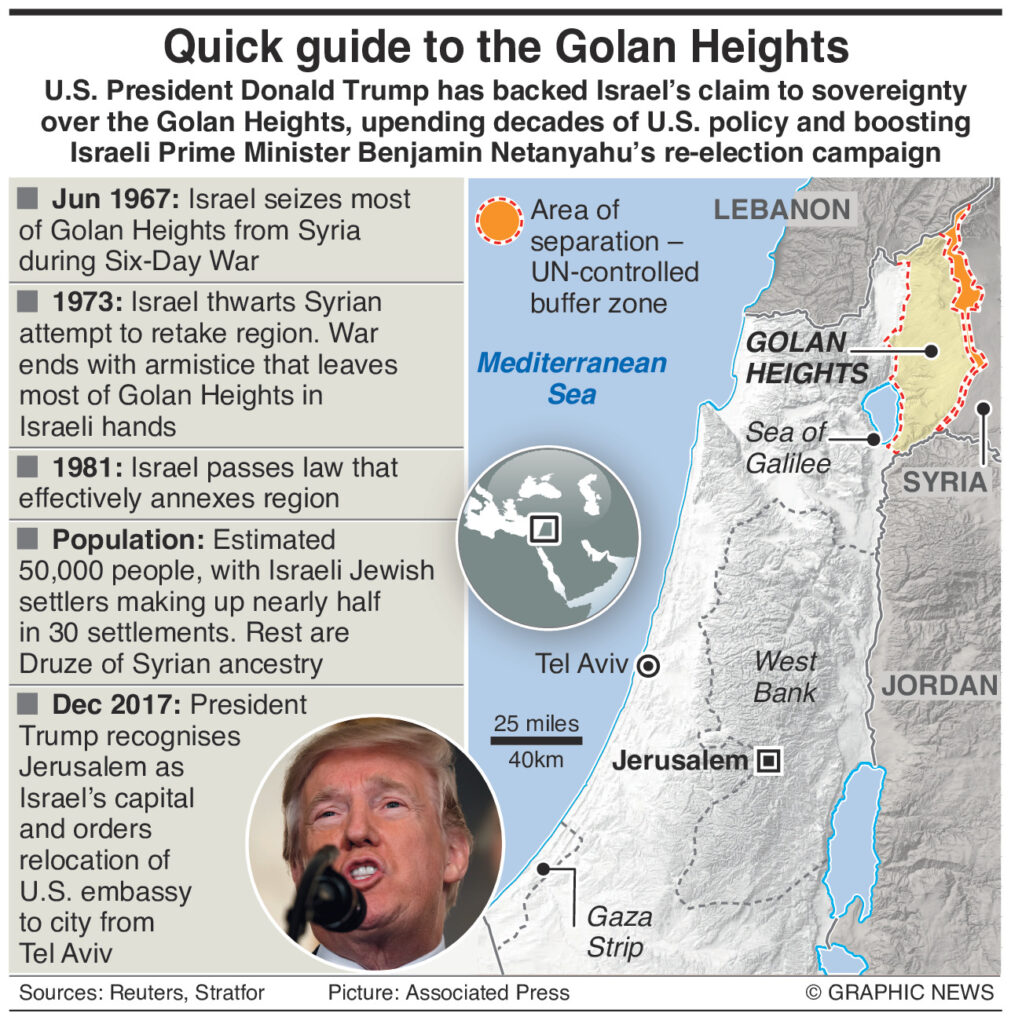
These conquered territories in 1967 have since become the focal point of the Israeli Palestinian conflict and the broader Arab Israeli dispute and continue to be highly contested with constant calls for Israel to return to its pre-1967 borders.
In 1973, a massive surprise attack by Egyptian and Syrian armies led to initial setbacks for Israel in the Sinai and Golan Heights. However, Israel mounted a successful counteroffensive, pushing into Egyptian and Syrian territory.
While Israel did gain some territory, particularly expanding its presence in the Golan Heights beyond the 1967 ceasefire line, a series of disengagement agreements in 1974 and 1975 led to some return of territory, particularly along the Suez Canal to Egypt.
In the end, while providing Israel significant strategic advantages, its victory in the so-called Yom Kippur War of 1973 did not involve a large-scale expansion of territory like the 1967 War had.
Meanwhile, after a failed uprising against the king, the PLO was expelled from Jordan in 1970 and soon set up operations in Lebanon. In response to Palestinian attacks from Lebanon, Israel invaded the country in 1978 and again in 1982. Israel then defensively occupied southern Lebanon until 2000, while fighting a counter insurgency conflict against Shia paramilitaries.
After Israel’s withdrawal in 2000, the Iran-backed Hezbollah terror group occupied much of southern Lebanon and its attacks against Israel sparked the short fought 2006 Lebanon War. With massive Iranian support, Hezbollah continued attacking Israel until just recently when Israeli counter attacks effectively neutralized the terror group.
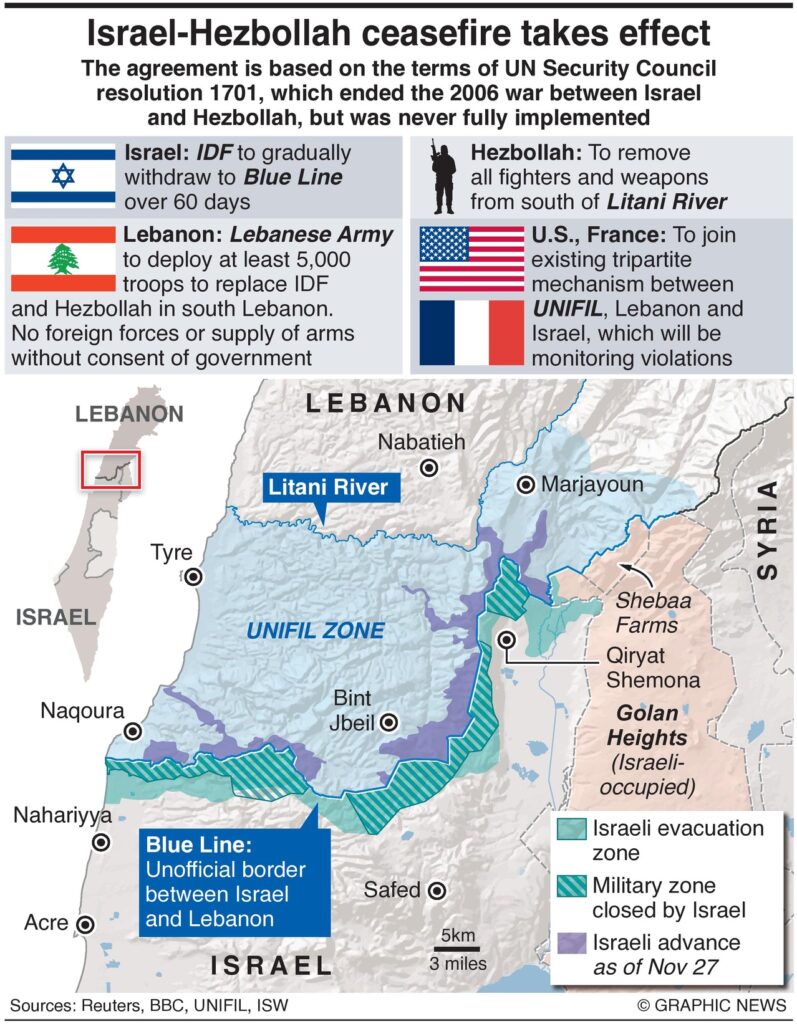
In one sign of maor Israeli territorial retrenchment, in 2005 Israel officially removed all its settlements and disengaged from the Gaza Strip in 2005. This was followed soon after by Hamas taking control of the enclave.
In the ensuing two decades, Hamas terrorists with Iranian support, and international aid, turned Gaza into a launch pad for hundreds, if not thousands, of attacks on Israel, creating a sprawling, fortified underground bunker and tunnel system, and amassing an arsenal of missiles and other arms.
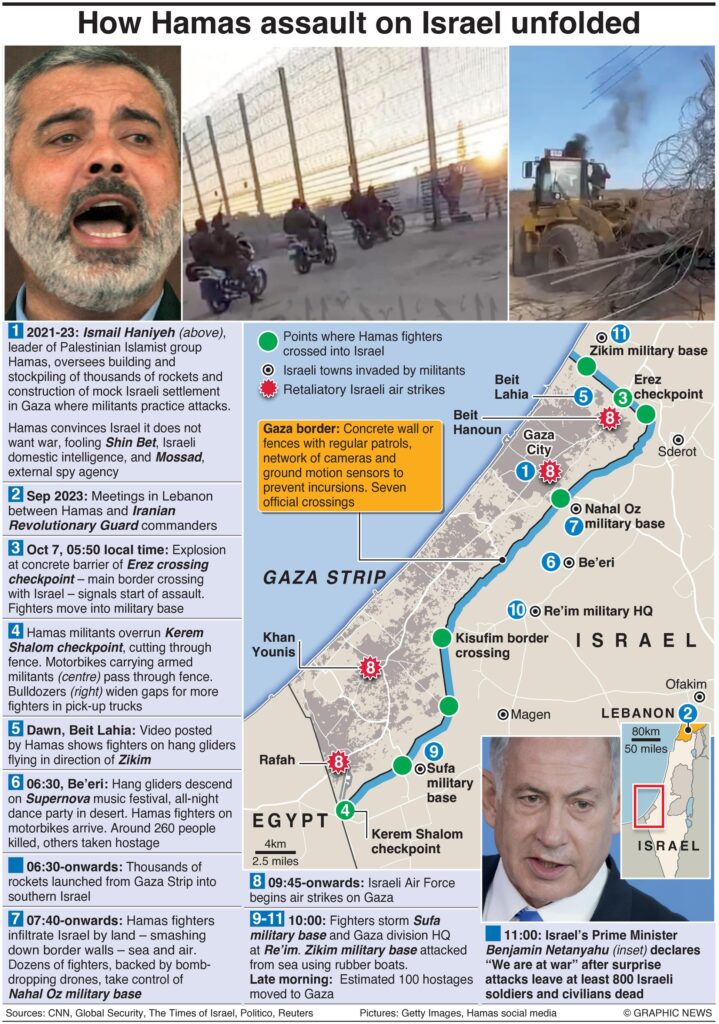
But now, after the brutal October 7, 2023, Hamas terror attack on Israel that killed 1,200, and the ferocious Israeli counterattack, in which Hamas has refused to surrender or agree to a cease fire, Gaza will now likely be permanently occupied by Israel.
LESSON NOT LEARNED — STOP ATTACKING ISRAEL.
The opinions expressed in this article are those of the author and do not necessarily reflect the positions of American Liberty News.
READ NEXT: Bombshell DOJ Transcript May Be Released To Soothe MAGA
Sponsored
This Isn’t Gamesmanship — It’s Principle. Mike Huckabee Stands With Trump and Israel. Do You?



















We should pursue an international law to help ensure a case like this in all conflicts. That law should state that an aggressor can gain no territory, but will lose any of it’s territory that is occupied or controlled by it’s victim or allies of the victim for at least (?) hours (or maybe days). Such territory will be awarded to the attacked country, Any such territory not contiguous to the attacked country will be augmented with an access corridor chosen by the attacked country of at least 10% of the aggressor’s remaining land, but not less than 100 kilometers wide. The attacker has no say in the selection or allocation of the land.