
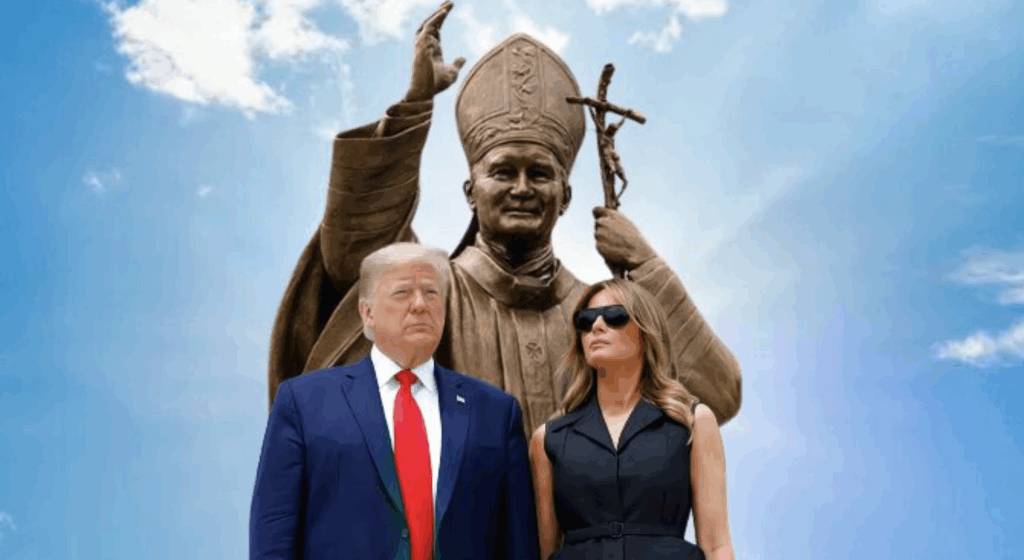
The most common way this story is told is as gossip. It appears as conversion rumors, saint memes circulating on 𝕏, or speculation about whether Donald Trump might one day cross the Tiber. That framing misses what matters. The story is not about Trump’s personal faith, which remains ambiguous by his own description. The story is about power. In Trump’s second term, Catholics have become the most operationally important moral bloc in the American right, not by evangelizing, but by governing.
I did not arrive at this conclusion by reading social media tea leaves. Two developments forced the question in a more concrete way. The first was the appointment of Colin McDonald to the newly created assistant attorney general role for national fraud enforcement. In every conversation I had with people close to the administration, the same thing surfaced again and again. Competence mattered, experience mattered, but what they emphasized most was McDonald’s moral seriousness, his formation, and his devotion to the Catholic Church. Whether or not that language ever appears in a press release, it was striking how often faith was treated as an operational credential.
The second development was closer to home. My own children, raised in the Baptist church, have both chosen to enter the Catholic Church. My son, after being invited to study at the Angelicum in Rome following his first year in a Ph.D. program, began a serious intellectual and spiritual inquiry. That inquiry ended with a decision to convert, with baptism scheduled for Easter. My daughter, now a high school senior, followed independently. She, too, will be baptized this Easter. Watching these parallel journeys unfold inside my family sharpened a question that was already forming from my conversations in Washington. What is happening right now that makes Catholicism feel, to so many serious people, like the place where order, meaning, and moral structure actually reside?
To see the answer, one has to step back and look at Trump 2.0 as a governing coalition rather than a personality cult. This administration is not a carbon copy of the first. It is more disciplined, more institutionally aware, and far more attentive to staffing leverage points. When you examine who occupies those leverage points, the Catholic footprint is unmistakable.
Catholics are no longer a side faction inside the Trump coalition. They occupy the posts where power is converted into policy. The Vice President is JD Vance, a Catholic convert shaped intellectually by Catholic social thought. The Secretary of State is Marco Rubio, raised Catholic and returned to the Church, now directing U.S. diplomacy at a moment of civilizational strain. The CIA is led by John Ratcliffe, a Catholic entrusted with the nation’s most sensitive intelligence apparatus. Transportation is run by Sean Duffy. Labor by Lori Chavez DeRemer. Health and Human Services by Robert F. Kennedy Jr., whose views are heterodox in places but whose moral framework is recognizably Catholic. Education is overseen by Linda McMahon. The U.S. mission to the U.N. is led by Elise Stefanik. Even the connective tissue between movement and government, most notably the ambassadorship to the Holy See, runs through Catholic leadership with Brian Burch.
This concentration matters because these are not decorative posts. They are offices where institutional power is exercised. National security, foreign policy, labor regulation, health governance, education standards, and international legitimacy all flow through them. In earlier Republican administrations, Catholics were present but rarely dominant in this way. In Trump 2.0, they form a governing spine.
At this point, a reader might reasonably ask whether this is simply demographic happenstance. After all, Catholics have long been a substantial part of the American population. But American political history suggests otherwise. When John F. Kennedy ran for president, his Catholicism was treated as a constitutional problem. Voters were warned that a Catholic president would be submissive to the Pope, that Rome would sit behind the Resolute Desk, and that Catholic formation was incompatible with republican self-government. What makes the present moment striking is how completely that anxiety has inverted. The pattern here is not raw numbers. It is placement. Catholics in this administration disproportionately occupy roles that require sustained bureaucratic engagement, legal reasoning, and moral argumentation. That distribution is not accidental. It reflects a preference for a particular kind of formation, one once feared as disqualifying and now treated as an asset.
Evangelical populism was indispensable to Trump’s rise. It supplied energy, loyalty, and a powerful electoral base. But populism is not the same thing as governance. Governing requires institutions, habits, and constraints. Catholicism, for all its internal tensions, is an institutionally serious tradition. It has a theory of law, a theory of authority, a theory of human dignity, and a theory of limits. Those theories are not always perfectly aligned with Trump’s policy, especially on immigration and refugees, but they are coherent. Coherence matters when a movement transitions from protest to power.
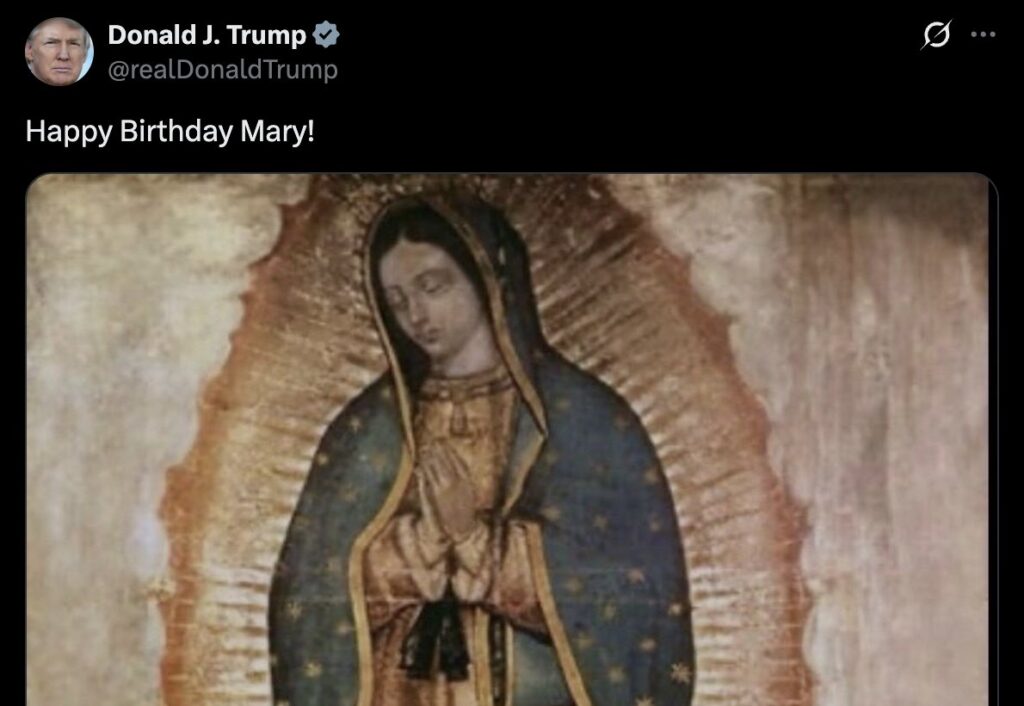
This is why Catholic influence in Trump 2.0 shows up not just in personnel but in policy language. Life issues are framed less as slogans and more as civilizational commitments. Religious liberty is argued in terms of institutional autonomy rather than individual sentiment. Education debates increasingly reference formation rather than mere credentialing. Even the language of state power has shifted toward arguments about order, continuity, and responsibility that would have been unfamiliar in a purely evangelical idiom.
The Church itself is not a monolith, and tensions with Rome remain real. Immigration is the obvious flashpoint. Catholic social teaching on migration often clashes with administration priorities. But this tension does not negate Catholic influence. In some respects, it sharpens it. Disagreement with the Vatican can strengthen a distinctly American Catholic political identity, one that emphasizes subsidiarity, national sovereignty, and the moral obligations of citizenship.
Trump’s own family illustrates the distinction between personal faith and institutional alignment. Melania Trump is Catholic. Ivana Trump received a Roman Catholic funeral Mass at St Vincent Ferrer in New York. The president himself was confirmed Presbyterian and now identifies as a nondenominational Christian. Barron Trump has been publicly reported as baptized Episcopalian. Ivanka Trump converted to Judaism. This is not a Catholic family in any simple sense. Yet Catholicism surrounds the presidency as a governing culture.
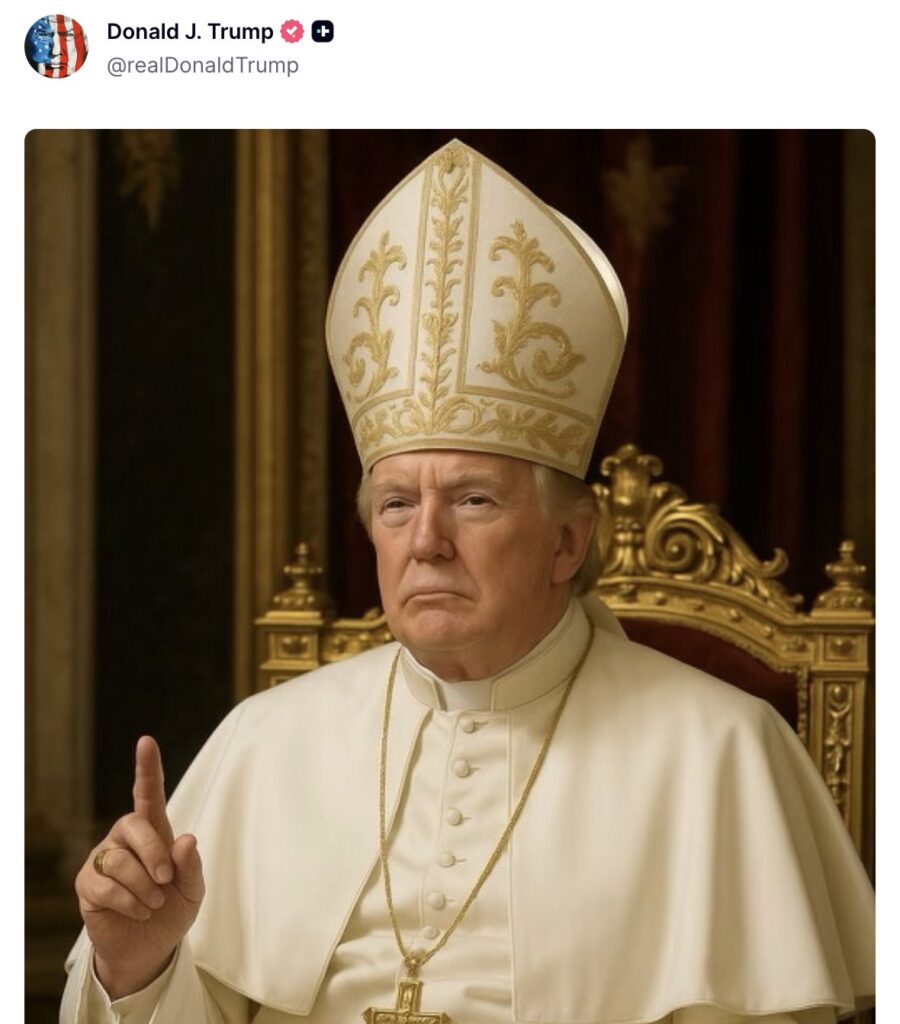
This brings us back to the conversion rumors. There is no credible evidence that Trump is preparing to convert or receiving instruction. Online speculation, fueled by saint imagery and Catholic themed posts, has outpaced reality. But focusing on whether Trump personally converts misses the deeper dynamic. Conversion, in the most important sense, has already occurred at the level of governance.
Catholicism did not win influence in Trump 2.0 by preaching at Trump. It won by supplying people who can run institutions, argue coherently about moral limits, and translate abstract principles into enforceable policy. That is why so many Catholics appear in national security, foreign policy, and culture policy lanes. These are arenas where seriousness is tested daily.
Seen this way, my children’s conversions feel less like anomalies and more like signals. Young people who are intellectually serious and who are disillusioned with expressive religion untethered from structure are looking for a tradition that can sustain both reason and authority. Catholicism offers that synthesis. It is demanding, hierarchical, and unapologetic about truth claims. In a culture exhausted by endless choice, those features are not liabilities.
The same hunger is visible inside the administration. After decades of evangelical populism, with its emphasis on authenticity and emotion, there is a turn toward form. Form is what allows power to endure. Catholicism is a tradition of form. It teaches how to live inside institutions without dissolving into relativism or raw will.
This also explains a final, more speculative claim that many in Trump world quietly share. There is a widespread belief that after leaving office, Trump himself will convert to Catholicism. Not because of memes, and not because of political calculation, but because he will have spent years immersed in a governing culture shaped by Catholic minds. Whether that prediction proves true is ultimately less important than what it reveals. Catholicism is now perceived, even by non-Catholics, as the tradition most capable of giving moral structure to power.
That is the real story of faith in Trump 2.0. Not rumor, not aesthetics, not personal piety, but governance. Catholicism won not by preaching, but by governing.
If you enjoy my work, please subscribe: https://x.com/amuse.
Sponsored by the John Milton Freedom Foundation, a nonprofit dedicated to helping independent journalists overcome formidable challenges in today’s media landscape and bring crucial stories to you.
READ NEXT: US Bishop Sounds Alarm Over ‘New Era Of Martyrdom’
Sponsored
Turning Point is on the front lines for America First. Help power the grassroots movement to elect real conservative fighters. Donate NOW to save America — one precinct at a time.















Question – were your children Baptized in the Baptist faith?